
A daily, pocket-sized history of America's working people, brought to you by The Rick Smith Show team.
Episodes
Thursday May 13, 2021
Thursday May 13, 2021
On this day in labor history, the year was 1975.
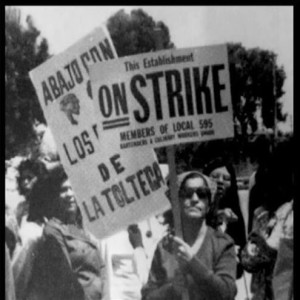
That was the day workers at Tolteca Foods in Richmond, California went on strike.
Many were undocumented Mexican women who helped organize the plant in 1969.
In his book, The Revolutionary Imaginations of Greater Mexico, historian Alan Eladio Gomez states that the women had grown increasingly frustrated with the lack of union response regarding “speed-ups, immigration raids, discretionary firings, substandard wages and unsafe working conditions and began to look elsewhere for support.”
They reached out to the organization CASA, which provided legal and social services for undocumented immigrants.
The women decided to strike without authorization form the Contra Costa Labor Council.
They packed the council’s emergency meeting, where they put their scarred bodies on display to attest to the dangerous and abusive working conditions and poor wages.
Just as the council sanctioned the strike, workers learned the company started removing machinery from the factory.
They packed the picket lines to stop the trucks from taking out the equipment.
The first driver stopped, the second plowed through several women.
The strike committee won an injunction to prevent removal of equipment and after three weeks, workers won their demands.
Gomez argues the strike was important for several reasons.
It demonstrated that a largely female and undocumented workforce could organize and win a strike against a transnational company, at a moment when unions were increasingly under attack.
They maintained a rank-and-file independence that built support for their demands from their union leaders and the broader community.
The women workers at La Tolteca fought for bread and butter issues.
They also worked to reshape their union to take on broader issues of social justice that included immigration rights and women’s rights.
Wednesday May 12, 2021
Wednesday May 12, 2021
On this day in labor history, the year was 2008.
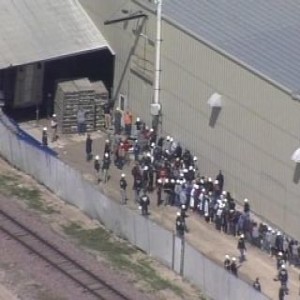
That was the day Immigration and Customs Enforcement agents besieged the Agriprocessors meatpacking plant in Postville, Iowa.
At the time, it was the largest immigration raid in U.S. history.
Nearly 400 workers, mostly from Guatemala and Mexico were rounded up, detained and arrested on charges of identity fraud and entering the United States illegally.
The raid was part of a nationwide campaign targeting suspected undocumented workers.
The raid essentially killed two birds with one stone.
It quashed the union organizing campaign the UFCW had been waging for over two years.
It also dashed the hopes of Department of Labor investigators looking into allegations of substantial abuses at the plant.
UFCW leaders noted the raid served to eliminate hundreds of witnesses to labor violations at the plant.
The raid did uncover at least 29 cases of child labor violations, with children as young as 13 working on the killing floor.
But Minneapolis UFCW organizers maintained that company agents routinely followed UFCW reps on home visits and threatened workers they spoke with.
They noted that “wages are extraordinarily low, basic worker safety and protection is miserable.
It’s intensified by the fact that this employer was able to come up with a more vulnerable workforce and abuse it over the long haul.”
These workers were quickly convicted, jailed and then deported.
They were soon replaced by a fresh wave of Somali refugees, who complained of the same low wages and poor working conditions.
The company was eventually fined for countless violations and its CEO arrested. It emerged from bankruptcy under new ownership and has yet to be organized.
Tuesday May 11, 2021
Tuesday May 11, 2021
On this day in labor history, the year was 1967.
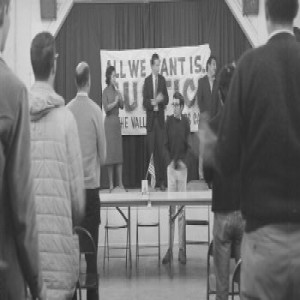
That was the day the United Farm Workers’ Sons of Zapata joined with the Confederation of Mexican Workers in establishing an international picket line across the Rio Grande Valley.
A push to organize farm workers at six major growers began the year before, in the spring of 1966. Wages in Starr County ranged from 40-85 cents an hour.
Farm workers began their strike in June 1966 for wage increases and union recognition.
But growers would rather see their crops rot than recognize the union.
They did grant wage increases but immediately ran to the courts for injunctions.
One district judge outlawed all picketing, while police instructed county workers to spray strikers with insecticide.
That August, workers voted to organize with the United Farm Workers and began a pilgrimage march to the state capitol to popularize their cause.
15,000 workers and their supporters reached Austin on Labor Day to demand their right to organize.
They returned to Starr County to continue their strike.
The growers turned to Mexican commuters holding green cards to break the strike.
The UFW began picketing at the Roma and Rio Grande City bridges and were often successful in turning back green card workers.
By May 1967, melon harvest had begun.
After months of negotiations with the CTM, picket lines went up on both sides of the international bridges.
The picketing was 100% successful for two days.
But the Mexican government and Starr County Sheriff’s department soon intervened to break up the picket lines.
Texas Rangers were brought in to arrest and brutalize strikers.
The strike was broken but organizing continued throughout the region.
Picketing across borders was itself an important act of international solidarity.
Monday May 10, 2021
Monday May 10, 2021
On this day in labor history, the year was 2005.
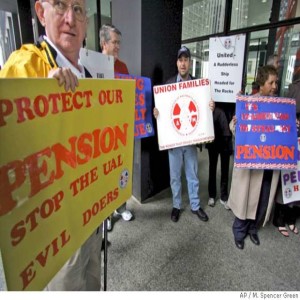
That was the day United Airlines got the OK to ditch its pension obligations in federal bankruptcy court.
Workers were dragged through years of employee ownership schemes, massive layoffs and concessions, and the gambling away of hard-earned pensions on the stock market.
Then in 2002, United filed bankruptcy.
Many asked, how could this happen at an airline owned by its workers?
By 2005, creditors like Citigroup and J.P. Morgan were fully in control. ‘Employee ownership’ had meant trading billions of dollars in deep wage cuts and givebacks for stock ownership and a couple of seats on the board.
‘Controlling interest’ meant a six-year no-strike pledge, the slashing of tens of thousands of jobs and massive outsourcing.
By 2005 the stock was worthless.
Then United moved to weasel out of union contracts just 24 hours after the court ruled on the pension default!
Some 130,000 pilots, flight attendants, mechanics and ground service workers found their employee stock ownership plans empty.
United executives turned billions over to the federal government who then administered what was left through the Pension Benefit Guaranty Corporation.
In most cases, those pensions were slashed in half and monthly retiree health insurance costs exploded by 700%.
One pilot stated: “I call it legalized crime. I lost almost all my United stock value in the bankruptcy, and here’s another part of the retirement I was promised that is gone. Where does it all end? You feel brutalized by the system.”
Somehow, the $6 million in benefits then CEO Glenn Tilton received, wasn’t affected by the default.
Now that United is swimming in hundreds of millions in profits, many retirees have demanded the restoration of their original pension plans.
Sunday May 09, 2021
Sunday May 09, 2021
On this day in labor history, the year was 1934.
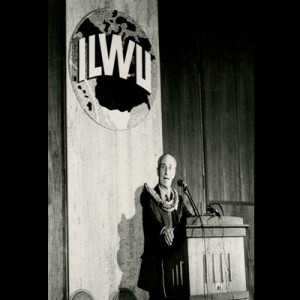
That was the day the West Coast Maritime strike began.
It was an historic strike that shut down the major ports along the Pacific coast.
The strike also coincided with the pivotal Minneapolis Teamsters Strike and Toledo Auto-Lite Strike.
From Seattle to San Diego, longshoreman walked off the job.
Harry Bridges led the Albion Hall caucus in San Francisco.
They demanded higher wages, shorter hours and union representation.
They also demanded a coast-wide agreement and a union hiring hall to replace the hated daily ‘shapeup.’
Longshoremen were fed up with the gangster-run, company union that controlled the arbitrary, day labor hiring on the docks.
From the pages of the Waterfront Worker newsletter, militant longshoremen took on the shippers, the government, craft unionism and racism of the union.
On the first day of the strike, dozens of black longshoremen joined the union and convinced others not to scab.
Soon all unions on the docks walked out in solidarity.
By May 15 all west coast ports were completely shut down and 25,000 were out on strike by the end of the month.
In his book, Workers on the Waterfront, Bruce Nelson notes the qualities that made the strike a success.
He points to the militancy and discipline required to stand up to the National Guard during the deadly, main battle of July 5, the workers solidarity across craft lines necessary for the San Francisco general strike that followed, a defiant rank-and-file independence, and the understanding that intensive red-baiting could only serve the bosses.
Though workers were forced back to work through arbitration, they were awarded their demands that fall.
It would take more job actions to make those awards a reality.
Saturday May 08, 2021
Saturday May 08, 2021
On this day in labor history, the year was 1877.
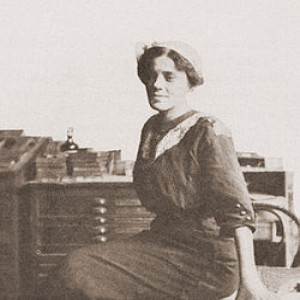
That was the day American socialist Mary Marcy was born.
Raised in Belleville, Illinois, Mary moved to Kansas City and joined the Socialist Party.
She found work as a secretary to meatpacking executives at Swift and then Armour.
Her 1904 investigative series, “Letters of a Pork-Packing Stenographer,” published in the International Socialist Review, revealed the inner workings of the “Big Five” trust.
Marcy described how the packinghouse bosses manipulated markets, set rates and prices, and created an industrial monopoly.
She also exposed low wages and dangerous working conditions in the industry.
Months later, she provided testimony and secret correspondence of executives to a Grand Jury investigation.
The case made a big splash in the press, though packers would win immunity from prosecution a year later.
Mary lost her job and hired on with the Associated Charities of Kansas City.
There she became critical of philanthropic forces that lectured the poor on morals rather than provide concrete aid.
She serialized her experiences in the fictional account, Out of the Dump.Returning to Chicago, Mary worked as assistant editor to the International Socialist Review.
Her wildly popular book, Shop Talks on Economics, served as a primer on socialism.
She continued to agitate against World War I, publishing articles like “You Have No Country!”
Mary threw her lot in with the IWW in 1918, though the split in the Socialist movement soon after affected her deeply.
She and her husband lost their home after mortgaging it to provide bail for numerous Wobblies, including Bill Haywood, then swept up in Red Scare conspiracy trials.
The period proved too much for her and in 1922 she took her own life.
Friday May 07, 2021
Friday May 07, 2021
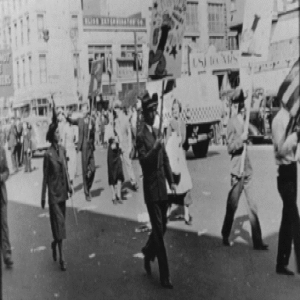
On this day in labor history, the year was 1937. That was the day animators struck Fleischer Studio in New York City. It was the industry’s first strike.
Creators of Popeye the Sailor Man and Betty Boop were fed up with working conditions at Fleischer. They were sick of long hours, low pay, no paid sick leave or even vacation time. Some had worked years without a day off. As well, they resented having to ask permission to use the bathroom.
Animation workers wanted better working conditions and medical insurance. Two animators had recently died of tuberculosis and workers linked their deaths to poor ventilation in the studio. They had been trying to organize with the Commercial Artists and Designers Union for over a year.
Two leading animators were fired for union activity a month earlier and another 13 were fired when CADU approached the studio demanding their reinstatement, union recognition, wage increases and benefits.
In his book, Drawing the Line, Tom Sito writes that picketers were soon marching on Broadway, singing, “We’re Popeye the Union Man, We’ll Fight to the Finish, Because We Can’t Live on Spinach.”
One picket sign read, “I make millions laugh but the real joke is my salary.” Strikers received support from the Screen Actors Guild. The musicians union refused to provide soundtracks for the studio and many union projectionists refused to show Fleischer cartoons across the country.
The AFL organized a boycott of Paramount Pictures, which financed the studio and area longshoremen frequently joined picket lines.
After five months, the studio finally caved, granting strikers demands. But the victory was short-lived. Fleischer made moves to relocate to Florida within a year, in part to bust the union.
Thursday May 06, 2021
Thursday May 06, 2021
On this day in labor history, the year was 1935.
That was the day President Franklin Roosevelt issued Executive Order 7034, establishing the Works Progress Administration.
The WPA employed millions in public works projects during the Great Depression.
As many as 8.5 million Americans worked for the WPA at some point, between the years 1935 and 1943.
At its height, over 3 million Americans were working WPA jobs.
These jobs included the construction of roads, bridges, utilities and parks.
It also meant the construction of new schools, libraries, public buildings and housing.
Many WPA jobs also employed musicians, artists and writers in literacy and art projects.
The program’s goals were to provide one job to every household suffering long-term unemployment.
Some of the most famous projects include LaGuardia Airport in New York City, Blue Ridge Parkway and Great Smokey Mountain National Park.
Artists like Jacob Lawrence and Mark Rothko were employed at the Federal Arts Project.
Historian Erik Loomis notes that the Federal Writers Project began the field of oral history with extensive interviews of surviving ex-slaves.
The Household Service Demonstration Project trained tens of thousands of women for domestic employment.
The WPA also bolstered federal funding for school lunches.
The program was initially criticized for underemployment of African-Americans, who suffered disproportionately during the Depression.
But many black leaders later hailed the WPA as providing job opportunities to blacks and keeping race discrimination to a minimum, at least in the North.
The Right attacked the program as a hotbed for Communists and a scheme to build Democratic Party patronage.
By 1940, WPA projects shifted toward war preparation and defense-related projects.
When the country reached full employment in 1942, the WPA ceased to exist by July of 1943.
Wednesday May 05, 2021
Wednesday May 05, 2021
On this day in labor history, the year was 1886.
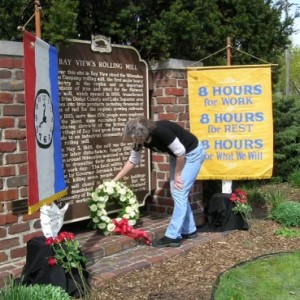
That was the day Wisconsin State Militia shot down workers striking for the eight-hour day in Milwaukee, killing seven.
It is known as the Bay View Massacre.
As cities across America erupted into strikes for the eight-hour day, municipal workers in Milwaukee had already won shorter working hours.
Many private employers had followed suit.
The Central Labor Union and the Knights of Labor mobilized thousands in the campaign to bring the rest of the city’s employers into line.
Building tradesmen joined Polish, German and Native American laborers in strikes and marches across the city for nearly a week
They marched to area factories, calling out to workers to join the strike.
By May 3, every factory in town was shut down except for the Milwaukee Iron Company Rolling Mill in Bay View.
Workers marched to the mills and demanded workers join them.
At this point, Governor Rusk called out the militia.
They formed a line just inside the gates to prevent strikers from reaching mill workers.
As the events of Haymarket unfolded in Chicago that evening, area businessmen became increasingly fearful of upheaval brewing in the city.
Governor Rusk gave the ‘shoot to kill’ orders should any striker attempt to enter the mills.
The next morning, as 1500 strikers marched towards the mill, they were fired upon by the militia.
Seven were killed, many more injured.
Strikes for the eight-hour day ended abruptly.
Many union leaders were indicted and Polish workers were practically blacklisted from working in the city for their radicalism.
Though the massacre shattered hopes for the eight-hour day, Milwaukeeans responded by electing Populists and Socialists in local and regional elections for years to come.
Tuesday May 04, 2021
Tuesday May 04, 2021
On this day in labor history, the year was 1948.
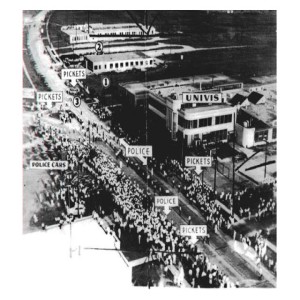
That was the day United Electrical workers voted to strike at Univis Lens Company in Dayton, Ohio.
Univis made safety lenses and instrumental optics.
The UE was well established in area manufacturing plants.
Once organized, Univis fought the UE’s presence every chance they could.
When the contract expired at the end of April, Univis refused to negotiate.
First came the injunction limiting picketing.
This was followed by a vigorous decertification campaign
Foremen made intimidating, personal visits to workers’ homes, offering raises and personal loans to coerce ‘no’ votes.
When the UE lost the election in late July, the company announced wage increases for returning workers and firings for remaining strikers.
Workers stuck together and the strike continued.
By the 26th, police swarmed the picket lines, beating top UE organizers and arresting hundreds.
Two days later, the company offered a settlement for all but 11 strikers.
The members refused.
Then House Un-American Activities Committee came to town to begin a red baiting inquisition of the UE district.
The city’s unions were outraged at the beatings and arrests.
They walked off their jobs to bolster the picket lines and were met with tear gas.
Governor Herbert called in the National Guard on August 2.
1500 troops rolled into town in Sherman tanks with machine guns trained on the strikers.
Scabs were escorted through plant gates between rows of fixed bayonets.
Area residents, furious at the virtual martial law established, flooded the governor with angry protests until troops were finally withdrawn.
The strike ended in victory, with workers winning most of their demands.
All but five were reinstated and by the following April, the NLRB voided the decertification election.