
A daily, pocket-sized history of America's working people, brought to you by The Rick Smith Show team.
Episodes
Friday Dec 24, 2021
Friday Dec 24, 2021
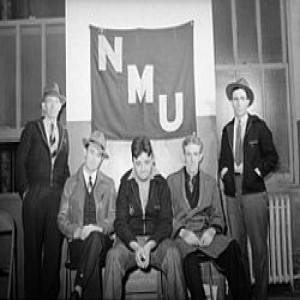
On this day in labor history, the year was 1936.
That was the day some fifty policemen wielding blackjacks, attacked picketers from the National Maritime Union on the Houston docks.
West Coast Maritime workers had shut down ports that fall. The East Coast maritime unions called their members out in sympathy and the strike soon spread to Gulf ports as well.
In many ports around the country, workers were fighting shippers and the AFL-led, International Seaman’s Union.
Sailors in Houston complained of atrocious working conditions, where rotting food and disease, including tuberculosis were widespread on board most ships.
When in port, they suffered exploitation at the hands of shipping agents who also acted as boardinghouse keepers.
They found the ISU was incapable of defending their interests and readily struck when organizers from the new, CIO-led, National Maritime Union put out the call.
During the strike, NMU and ISU organizers clashed, and strikers faced repression.
Early in December, ISU business agent shot down NMU militant John Kane in Houston.
During the same month, ISU seaman Peter Banfield died in Galveston after a brawl with NMU strikers.
According to historians, George Norris and Michael Botson Jr., many NMU seamen came to believe “there wasn’t much difference between Port Arthur under the oil companies and Hamburg under the Nazis.”
Then on Christmas Eve, police attacked about 150 strikers, and eighteen were sent to the hospital for their injuries.
The nationwide strikes were called off the following February, with mixed results.
But the NMU won union recognition that summer.
They succeeded in establishing union hiring halls and fought hard against segregation, racial discrimination and Jim Crow hiring practices in Texas ports and nationwide.
Thursday Dec 23, 2021
Thursday Dec 23, 2021
On this day in labor history, the year was 2008.
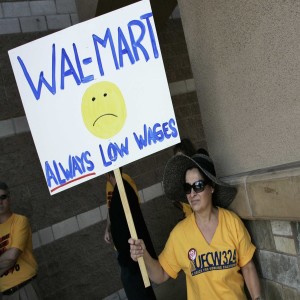
That was the day that Wal-Mart Stores agreed to settle sixty-three wage and hour lawsuits, across forty-two states, for at least $352 million and possibly as much as $640 million.
Wal-Mart and Sam’s Clubs were accused of failing to pay overtime, requiring workers to work off-the-clock, erasing hours from time cards and preventing workers from taking meal and rest breaks, as guaranteed by state laws.
The lawsuits involved hundreds of thousands of then current and former employees.
You’d think they would have learned their lesson after having to shell out that amount of money.
In fact, they have had to settle at least seven more class action, wage and hour lawsuits and remain a defendant in dozens more!
By 2012, Wal-Mart had settled at least nine Equal Employment Opportunity Commission cases related to disability, gender, racial and religious discrimination in hiring and sexual harassment.
Egregious labor violations have persisted throughout their stores.
Systematic wage theft, health and safety dangers and abusive conditions on the job have continued for years.
Chronic short staffing creates unsafe working conditions.
In 2012 alone, they were repeatedly cited and fined by OSHA for serious violations such as blocked emergency exits, lack of safety procedures for control of power hazards, and other problems.
Employees who worked with OurWalmart organizers often found they were targeted with threats, reduction in hours and terminations.
More recently, Wal-Mart has had to settle a discrimination suit over health insurance benefits for same-sex spouses.
The high cost of labor violations and low wages at Wal-Mart cost taxpayers on average, $6.2 Billion a year in public assistance for many of their workers.
Tuesday Dec 21, 2021
Tuesday Dec 21, 2021
On this day in labor history, the year was 1919.
That was the day Red Scare deportations began.
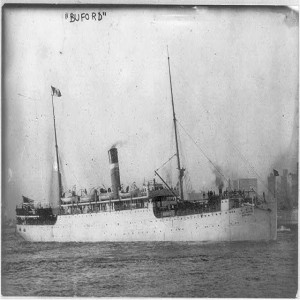
Two hundred forty-nine radicals, including anarcho-feminist, Emma Goldman, were packed onto the USS Buford and deported to Russia.
The year 1919 had seen massive social convulsions.
The Seattle General strike had kicked off the year.
It was followed by coal strikes and steel strikes, bombings and race riots.
There were increasing fears of Communist ideas and influence in the wake of the Bolshevik Revolution.
These events touched off a draconian response by the US federal government.
Together with the young J. Edgar Hoover, Attorney General, A. Mitchell Palmer conducted mass raids and arrests of more than a thousand “suspected” working class radicals.
The Department of Labor agreed that proclaimed membership in the Union of Russian Workers was a deportable offense and received the USS Buford on loan from the War Department to carry out the deportations.
The ship set sail and docked in Finland, where trains transferred the deportees into the Soviet Union.
The vast majority of those deported had no criminal records, and had never participated in acts of terrorism.
They were expelled for speaking out about their political opinions.
According to Regin Schmidt, author of Red Scare: FBI and the Origins of Anti-Communism in the United States, Employers’ Association fueled the anti-radical climate.
They were engaged in an intense open-shop counter-attack against post-war organizing campaigns and strike activity.
“The main goal was to discredit unions as subversive, Bolshevistic and alien to basic American values.”
Donning the name, ‘The American Plan,’ closed shops were referred to as ‘Sovietism in disguise,’ and propaganda campaigns were waged to ensure blacklists, internal union dissension, yellow dog contracts and strikebreaking.
Monday Dec 20, 2021
Monday Dec 20, 2021
On this day in labor history, the year was 1860.
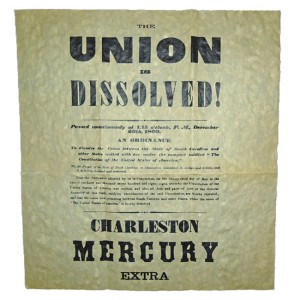
That was the day South Carolina announced, “The Union is Dissolved!”
The pronouncement was a direct response to the presidential election of Abraham Lincoln a month earlier.
South Carolina was the first of eleven states to secede from the Union.
They were resolved to preserve their system of slave labor.
Many debate the reasons why and will cite States’ rights or tariffs and taxes as primary causes.
But South Carolina issued a “Declaration of Immediate Causes” just four days after its State legislature passed the Ordinance of Secession.
According to James Loewen, author of The Confederate and Neo-Confederate Reader, this declaration opposed Northern states’ right of refusal to support slavery.
It stated there was “an increasing hostility on the part of the non-slaveholding States to the institution of slavery… that the Northern states had failed to fulfill their constitutional obligations” by interfering with the return of fugitive slaves to bondage.
South Carolinians were also upset they could no longer travel to Northern states with their slaves in tow.
They were furious that New England states allowed black men to vote.
The declaration complains that Northern states have “denounced as sinful the institution of Slavery; They have permitted the open establishment among them of societies whose avowed object is to disturb the peace and eloign the property of the citizens of other states.
They have encouraged and assisted thousands of our slaves to leave their homes: and those who have remained, have been incited by emissaries, books and pictures to servile insurrection.”
Other Confederate states would craft similar documents.
The Civil War to end slavery would begin in Charleston, South Carolina the following April.
Sunday Dec 19, 2021
Sunday Dec 19, 2021
On this day in labor history, the year was 1945.
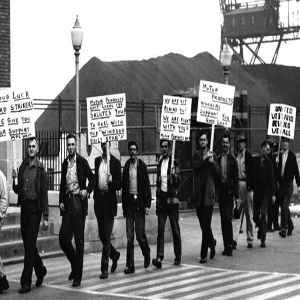
That was the day workers ended their ninety-nine-day strike against the Ford Motor Company in Windsor, Ontario.
Just across the river from Detroit, workers from UAW Local 200 fought and won a union shop and dues check off.
They had to fight hard to get it.
The plant was organized during World War II.
Workers put off many demands to help with the war effort.
After the war, Ford refused to agree to a new contract and laid off 1,500 workers.
Workers voiced their rage and issued new demands.
They wanted vacation and layoff pay, better grievance procedures and medical benefits.
They also wanted compensation for work on Sundays and holidays.
When Ford wouldn’t budge, 14,000 workers took to the picket line and went on strike.
By October, they also shut down the powerhouse that brought light, heat and power to the plant.
Management complained machinery would be damaged if the power remained off.
The Ontario Provincial Police and Royal Canadian Mounted Police were called in to reopen the plant.
When they arrived, they found a barricade of some 2000 cars and trucks reinforcing the picket lines.
Then, 8,000 workers from Amalgamated Local 195, which included Chrysler workers, walked out in sympathy, joined the picket lines and stayed out for a month.
The women’s auxiliary organized to feed strikers.
They had financial support from unions, churches and small businesses from across the country.
Returning soldiers marched in solidarity rallies along with much of the community.
Because of this strong show of support, negotiations were jump-started and soon workers were ratifying a new contract.
This victory allowed what is now UNIFOR 584 to win unprecedented gains for its members for more than three decades.
Saturday Dec 18, 2021
Saturday Dec 18, 2021
On this day in labor history, the year was 1917.
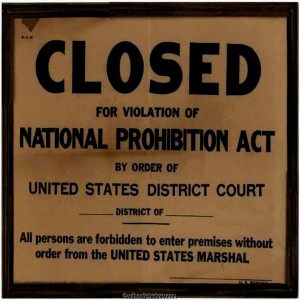
That was the day that Congress passed the Eighteenth Amendment, which outlawed the transportation, manufacture and sale of alcohol.
The amendment went into effect thirteen months later.
According to John Rumbarger, author of Profits, Power and Prohibition, the temperance movement centered on tightening social control of working people.
Workers often met in bars and saloons to unwind after work and to socialize.
But in the days before union halls, the saloon doubled as a headquarters where workers could talk about problems on the job like mistreatment and poor working conditions.
They used the saloon as place to plan and organize strikes.
It also served as a site for workers to talk politics and organize around political parties.
Many prominent industrialists complained that saloons were breeding grounds for labor unrest and radical politics.
They also feared a growing immigrant working class that tied its fate to powerful political machines in cities like Chicago, New York and Boston.
The Anti-Saloon movement brought a strange mix into its coalition.
It included the KKK who worried of the growing power of immigrant workers.
But it also included Progressives who worked for labor harmony and sobriety as a means of public health.
The anti-Saloon movement also targeted German Brewers.
The United States had just entered World War I and Anti-German sentiment was so high that many considered German Brewers to be working for the Kaiser, their product a sap on the energies of servicemen and grain production to feed the US troops.
But alcohol flowed freely throughout the 20s, creating both the Jazz speakeasy and bootlegging syndicates.
It would ultimately be repealed by 1933.
Friday Dec 17, 2021
Friday Dec 17, 2021
On this day in labor history, the year was 1944.
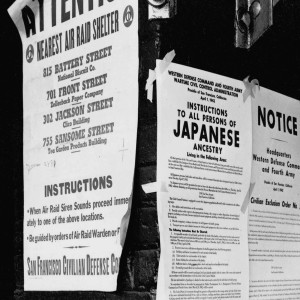
That was the day President Franklin Delano Roosevelt rescinded Executive Order 9066.
It had forcibly relocated over 120,000 Japanese-Americans into internment camps.
After the bombing of Pearl Harbor, the government considered Japanese-Americans a national security threat.
By 1942, many were given less than a week’s notice to sell and store all property
Whole families were rounded up and taken away to desolate areas in the West and Southwest.
Up to this point, many Japanese-Americans in California were employed in the agricultural industry, some as tenant farmers.
They were responsible for 40% of all produce grown in that state, whose crops were valued as $40 million annually.
Over 6000 farms, consisting of 200,000 acres were confiscated.
Once interred, they were subjected to dire living conditions with little in the way of running water, sanitary facilities or medical care.
They were subject to forced labor in the construction of camp buildings and cultivation of near-barren lands.
The government hoped to make the camps self-sufficient.
In Poston, Arizona, they were made to build the infrastructure for Colorado River Tribes reservation in order to consolidate other tribes onto the land.
When Japanese-Americans were finally released, most found their stored belongings stolen and their homes, jobs and farms confiscated and redistributed.
After the war, they continued to face violence, job and housing shortages, and racial discrimination.
Ronald Reagan would sign the Civil Liberties Act in 1988.
It acknowledged that internment was based on “race prejudice, war hysteria and a failure of political leadership.”
The act served as a formal apology and sought to distribute billions in reparations.
Thursday Dec 16, 2021
Thursday Dec 16, 2021
On this day in labor history, the year was 1951.
That was the day New York City was struck by the Great Bagel Famine.
Three hundred members across thirty-two bakeries, of the Bagel Bakers of America, local 338 walked off the job over wages and working conditions.
Morris Siegal, business agent for the local, stated that the Bakers Association had been “lax in living up to the welfare-fund payments and sanitary provisions of the contract.”
The bagel bakers produced 1.2 million bagels weekly for New York City consumers.
The Wisconsin Jewish Chronicle noted “the only ones welcoming this respite are the salmon.”
Diners, delicatessens, and Teamster delivery drivers were all rocked by the strike, which lasted for six weeks.
The two sides were so deadlocked that a mediator who had effectively settled a smoked salmon dispute three years earlier, was brought in to help settle the conflict.
The bagel bakers won a $3 day wage increase and we're ready to return to work.
But the Teamsters would not begin deliveries until they were paid for lost wages due to lack of deliveries made during the strike.
The bagel bakers would engage in job actions effectively over the course of the next fifteen years until they too suffered the fate of many an industrial worker, that of automation.
Their labor would eventually be replaced by labor-saving bagel making machines by the late 1960s.

Wednesday Dec 15, 2021
Wednesday Dec 15, 2021
On this day in labor history, the year was 1921.
That was the day Kansas National Guard troops marched into Crawford County coal fields to quell the “Mothers March.”
8000 miners went on strike that September to protest the jailing of their UMW district leader, Alexander Howat.
Howat was found guilty of violating a statewide strike injunction for calling workers out on strike in 1919.
Governor Henry Justin Allen had established a state industrial court which ruled strikes illegal.
Howat’s members considered it a new kind of fugitive slave act.
They likened their jailed leader to a modern-day John Brown.
The UMW opposed the court and the increasing number of unauthorized strikes.
Many district leaders were divided over this protest strike and chose not to support it.
The strike also divided the membership and some went back to work.
Conditions worsened after three months until the striking miners’ wives took matters into their own hands.
They met in Franklin to organize a march that would effectively shut down the mines.
Their numbers grew from 500 the first day to over 4000.
According to Benjamin Goosen, “for three days the women stormed area mines, obstructed traffic, and assaulted workers. When met with resistance, they threw red pepper at “scab” workers and overturned their lunch buckets, showering the miners with coffee and what had been intended as their midday meals.”
Four companies of National Guard troops, including a machine gun division, arrived to stop the march and break the strike.
The press derisively referred to the women as the “Amazon Army.”
Many women were arrested but mobilized their newly won voting power to unseat anti-labor politicians the next spring.
As a result, the state industrial court was ruled unconstitutional.

Tuesday Dec 14, 2021
Tuesday Dec 14, 2021
On this day in labor history, the year was 1852.
That was the day Socialist leader Daniel De Leon was born in Curaçao to Dutch Jewish parents. As a young man, he traveled Europe.
He settled in New York City, and earned a law degree from Columbia University in 1878.
De Leon joined the Socialist Labor Party in 1890 and became the editor of its newspaper, The People. His book, Socialist Landmarks, consisting of a series of lectures, became wildly popular.
These lectures included Reform or Revolution, What Means This Strike?, The Burning Questions of Trade Unionism, and Socialist Reconstruction of Society.
De Leon warned of reforms under capitalism as illusory.
He argued for revolutionary socialism and soon assumed leadership of the SLP. As a former Knights of Labor, he was critical of the American labor movement, often referring to the AFL as the American Separation of Labor for its business unionism and refusal to organize any but the most highly skilled, white craft workers.
De Leon also took a strong stand against racism in the Socialist movement, stating “Why should a truly Socialist organization of whites not take in Negro members, but organize these in separate bodies? On account of outside prejudice?
Then the body is not truly Socialist.” De Leon was among the socialist leaders at the founding 1905 conference of the Industrial Workers of the World.
By 1908, he and others looked to effect social change through the Socialist Party and existing trade union movement.
This put them at odds with the direct action perspective of the IWW.
Many left the IWW at this point, including De Leon and Socialist leader Eugene Debs. When he died in 1914, more than 30,000 turned out for his funeral