
A daily, pocket-sized history of America's working people, brought to you by The Rick Smith Show team.
Episodes
Friday Feb 15, 2019
Friday Feb 15, 2019
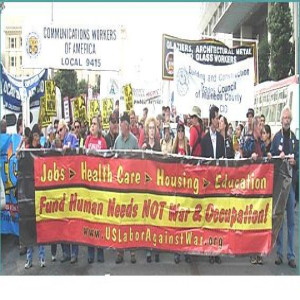
“We need to spend money on health care, schools, housing--not a war budget.” This was the statement of Fred Pecker, a member of the International Longshore and Warehouse Union Local 6,
On this day in labor history, the year was 2003.
Fred, who was protesting in San Francisco, was just one of the estimated 10 million people in 800 cities across the globe that protested the U.S. War in Iraq that day.
Wednesday Feb 13, 2019
Wednesday Feb 13, 2019
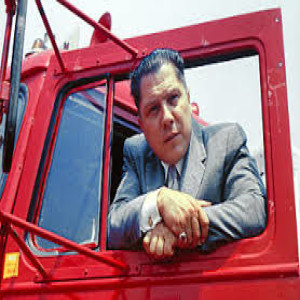
On this day in labor history, the year was 1913, James Riddle Hoffa was born to a coal miner in Brazil, Indiana. Tragedy struck the Hoffa home in 1920 when at age 7 young Jimmy lost his father.
In 1924, like many families in Brazil the Hoffa family moved to Detroit, Michigan in search of work.
Wednesday Feb 13, 2019
Wednesday Feb 13, 2019
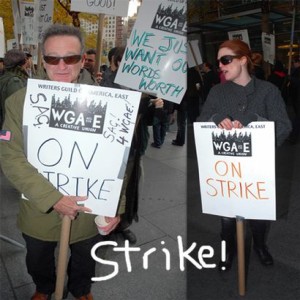
If you turned on your T.V. in the winter of 2007-2008, you probably couldn’t find new episodes of your favorite programs.
That winter some 12,000 writers represented by the Writers Guild of America took to the picket lines holding a 100 day strike.
Thursday Dec 14, 2017
Thursday Dec 14, 2017
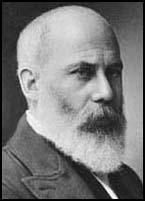
On this day in labor history, the year was 1852.
That was the day Socialist leader Daniel De Leon was born in Curaçao to Dutch Jewish parents. As a young man, he traveled Europe.
He settled in New York City, and earned a law degree from Columbia University in 1878.
De Leon joined the Socialist Labor Party in 1890 and became the editor of its newspaper, The People. His book, Socialist Landmarks, consisting of a series of lectures, became wildly popular.
These lectures included Reform or Revolution, What Means This Strike?, The Burning Questions of Trade Unionism, and Socialist Reconstruction of Society.
De Leon warned of reforms under capitalism as illusory.
He argued for revolutionary socialism and soon assumed leadership of the SLP. As a former Knights of Labor, he was critical of the American labor movement, often referring to the AFL as the American Separation of Labor for its business unionism and refusal to organize any but the most highly skilled, white craft workers.
De Leon also took a strong stand against racism in the Socialist movement, stating “Why should a truly Socialist organization of whites not take in Negro members, but organize these in separate bodies? On account of outside prejudice?
Then the body is not truly Socialist.” De Leon was among the socialist leaders at the founding 1905 conference of the Industrial Workers of the World.
By 1908, he and others looked to effect social change through the Socialist Party and existing trade union movement.
This put them at odds with the direct action perspective of the IWW.
Many left the IWW at this point, including De Leon and Socialist leader Eugene Debs. When he died in 1914, more than 30,000 turned out for his funeral.
Wednesday Dec 13, 2017
Wednesday Dec 13, 2017
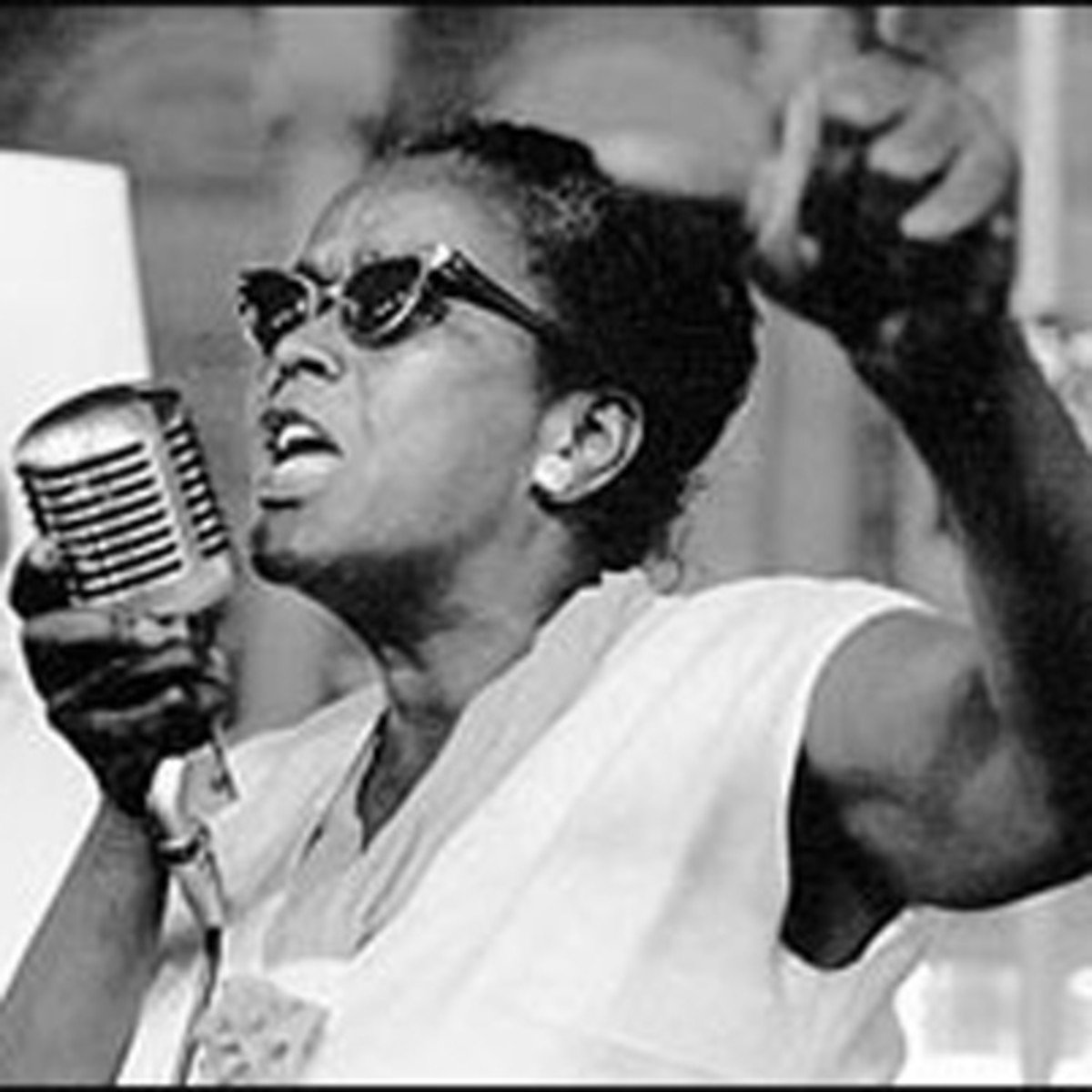
On this day in labor history, the year was 1903.
That was the day prominent civil rights activist Ella Baker was born in Norfolk, Virginia.
Her parents moved to Littleton, North Carolina when she was young. She often listened to her grandmother’s stories of slave revolts and of the brutality she endured under slavery.
Ella attended the historically black college, Shaw University, graduating in 1927.
After college, she moved to New York City and worked as a journalist.
Ella was profoundly impacted by the Harlem Renaissance and became an educator for the WPA, teaching African and labor history.
She immersed herself in the activism of the period and worked on the Scottsboro Boys defense campaign.
By 1938, she had joined the NAACP, traveling across the country to direct membership recruitment, fundraising and building of local branches.
In 1952, Ella became the president of New York City’s NAACP chapter, working for desegregation and on police brutality cases.
Baker went to Alabama to help found the Southern Christian Leadership Conference after the successful Montgomery Bus Boycott to organize voter registration drives throughout the South.
From there, she formed and led the Student Nonviolent Coordinating Committee. Ella trained young, committed Civil Rights activists in a collectivist model of organizing and in participatory democracy.
By 1964, she helped to organize the Mississippi Democratic Freedom Party and its fight to be seated at the 1964 Democratic National Convention.
She was involved in the defense of activist and friend Anne Braden, then targeted by HUAC and later, the Free Angela! Movement in defense of then jailed activist, Angela Davis.
She was instrumental in founding the Third World Women’s Alliance and supported various independence movements throughout the world.
She died on her birthday in 1986.
Tuesday Dec 12, 2017
Tuesday Dec 12, 2017
On this day in labor history, the year was 1945.
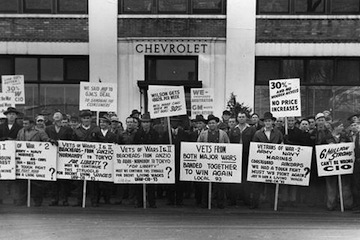
That was the day President Truman appointed a fact-finding panel to investigate the General Motors strike.
As many as 320,000 UAW GM workers had been on strike for nearly three weeks. They had suffered deep wage cuts, deteriorating working conditions and endless contract violations during the war. UAW now demanded 30% wage increases.
But President Truman and GM acted as if it was still wartime.
Truman ordered a 30 day cooling off period to be followed by compulsory arbitration.
Just two days earlier, 10,000 strikers picketed GM, encircling their downtown headquarters for over an hour.
The CIO held an emergency conference, vowing to continue and spread the strike. CIO president Philip Murray took to the radio in defense of the strike.
He noted that corporations had made millions in wartime profits, that wage cuts since V-J Day had been as high as 50% and denounced Congress for burdensome new tax laws.
Murray added that Truman’s proposed “Fact-Finding Act” and other anti-labor laws served “to weaken and ultimately to destroy labor union organizations.”
Bob Carter, chairman of the AC Spark Plug strike committee and chairman of the Greater Flint CIO Council remarked, “I am against arbitration and will oppose the setting up of fact-finding committees.
Anyone acquainted with the labor history of this country knows that those committees are used by political stooges of the corporations to cheat workers out of their just demands.”
The strike ended in partial victory the following March, with strikers winning a 17.5% raise, just over half their original demand.
But UAW members demonstrated their solidarity and their refusal to be cowed into going back to work on the government’s terms.
Monday Dec 11, 2017
Monday Dec 11, 2017
On this day in labor history, the year was 1918.
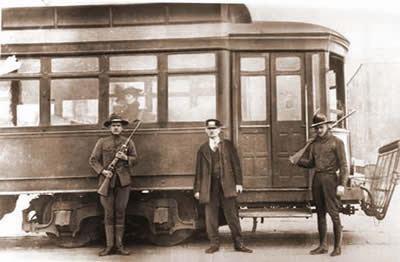
That was the day streetcar workers in Kansas City walked off the job.
It was the third strike since August 1917. Workers had previously struck for union recognition and joined the city general strike that Spring.
By summer, the city was so desperate for wartime labor, the transit company began hiring women. Though women faced initial opposition, by fall, the union demanded they receive equal pay for equal work.
The company had been paying them $15 dollars less a month than their male coworkers. The Amalgamated filed charges with the National War Labor Board, demanding a general wage increase and equal wages for women.
The Board quickly ruled in the union’s favor. But Kansas City Railway refused to abide by the decision. On this day, 2675 men and 127 women walked off the job, demanding the company honor the board’s ruling. Instead the company hired scabs.
In the rush to restore service, the company failed to properly train the scab drivers and a number of streetcar crashes reduced the transit company’s fleet by 300 cars. According to Maurine Weiner Greenwald, author of Women, War and Work, the company alleged in the press that the strike was an attack against the entire community.
On the Missouri side, state militia guarded the strikebreakers while U.S. Marshals guarded rail tracks on the Kansas side.
By April 1919, “a federal grand jury indicted union leaders for obstructing a vital industry during wartime,” even though the war had been over for six months!
By May, the strike was lost and the union busted. It would take another 20 years before Kansas City Transit would finally be organized.
Sunday Dec 10, 2017
Sunday Dec 10, 2017
On this day in labor history, the year was 1915.
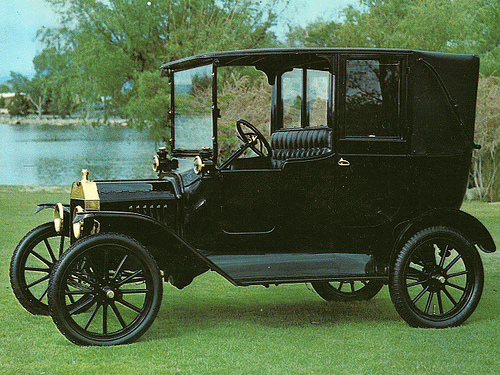
That was the day the one millionth Model T rolled off the Ford assembly line in Highland Park, near Detroit.
Henry Ford started Model T production seven years earlier. For nearly 20 years, the Tin Lizzie served as the first affordable vehicle, opening up travel and leisure to a new middle class.
Ford refashioned the packing house conveyor to develop the assembly line.
Before production moved to the sprawling modern River Rouge complex, the Highland Park plant was considered the factory that changed the world.
Ford’s ambition to produce cars for the multitudes extended to his workers. As part of his campaign to beat back organizing drives by the Industrial Workers of the World, Ford instituted the $5 day at the Highland Park plant.
For auto workers, buying a Model T even with the $5 day wasn't so easy.
The $5 day actually amounted to $2.34 in wages and an additional $2.66 a day in profit sharing if Ford determined the worker was actually “living right.”
Investigators from his Sociological Department visited workers in their homes.
The routine intrusions into the personal lives of workers away from the job included determining spending and cleanliness habits, whether they drank or smoked, whether they were married or single, the state of workers’ marital relations and family values.
Workers who failed these home inspections were given six months to shape up or be fired.
Ford ruled young single men, women and blacks completely ineligible from the wage program. For a time, employee turnover plummeted and production increased.
But wartime inflation and deteriorating working conditions all but killed the $5 day, which ended in 1921.
Saturday Dec 09, 2017
Saturday Dec 09, 2017
On this day in labor history, the year was 1958.
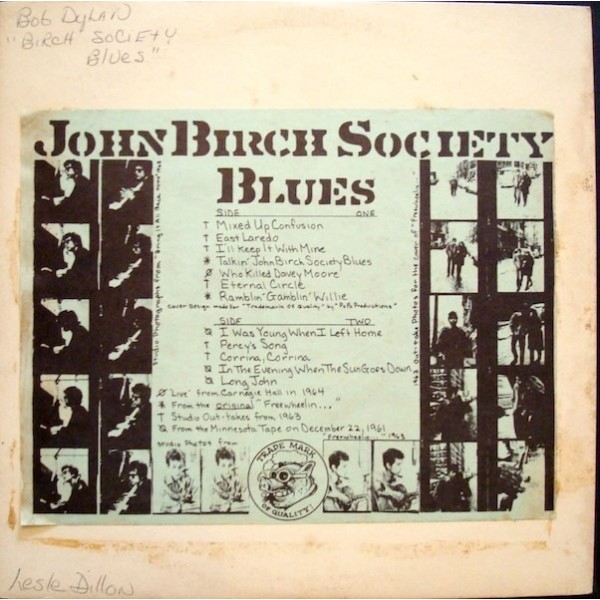
That was the day twelve ultra-conservatives, including industrialists Robert Welch, Fred Koch and Harry Lynde Bradley gathered in Indianapolis to found the John Birch Society.
These men saw secret cabals and communist conspiracy everywhere.
They mobilized their vast financial resources to fuel Cold War paranoia.
They opposed New Deal policies, the Civil Rights Movement, President Lyndon Johnson’s Great Society programs and the Equal Rights Amendment. They funded Barry Goldwater’s presidential bid
in 1964, denounced Nixon as a fake and warned of his establishment of diplomatic ties with China. The Birchers also opposed water fluoridation, the Environmental Protection Agency and the Occupational Safety and Health Administration.
They pressed for the U.S to withdraw from the United Nations and viewed the U.S. war in Vietnam as a plot to bring Communism to the United States.
Welch, a candy manufacturer, even asserted that President Dwight Eisenhower was a simply a tool for the communists and advocate of a “One-World New Order.”
More recently, many Birchers have also helped to found and fund the National Right to Work Committee, whose legal defense arm has pushed hard for anti-union legislation.
Prominent members like the Koch Brothers have funneled millions into the NWRC in order to bust unions, kill the Employee Free Choice Act and weaken the regulatory authority of the National Labor Relations Board.
Their current headquarters are in Appleton, Wisconsin, hometown of Red Scare warrior, Senator Joseph McCarthy.
Friday Dec 08, 2017
Friday Dec 08, 2017
On this day in labor history, the year was 1941.
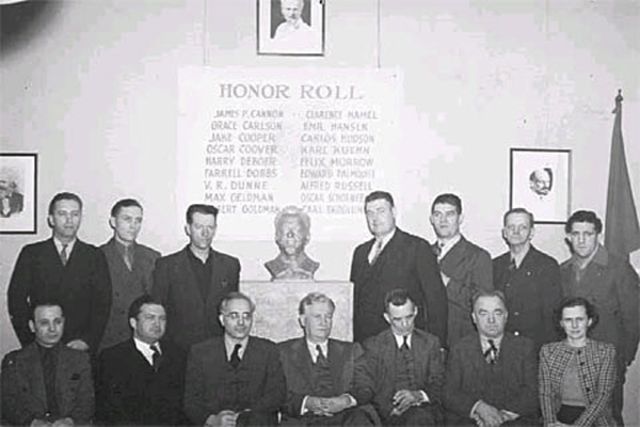
That was the day eighteen supporters of the Socialist Workers Party were sentenced in the first Smith Act trial.
Earlier that summer, twenty-nine militants had been targeted and arrested for their leadership of events in Minneapolis during the 30s.
They had led the 1934 Teamsters strikes that made Minneapolis a union town, successfully confronted the fascist Silver Shirts in 1938 and led a WPA strike the following year.
By 1941, federal agents were raiding SWP offices in Minneapolis and St. Paul, seizing boxes of documents, books, pamphlets and other material.
The trial began October 27. The prosecution alleged the 29 had conspired to advocate the violent overthrow of the government, were stockpiling weapons and encouraging insubordination among the armed forces.
The defendants insisted that advocating class struggle to achieve a peaceful transition to socialism was not the equivalent of violent overthrow.
They added the trial was a government witch hunt, bent on suppressing their first amendment rights. Six were released, another five were acquitted.
But the remaining 18 were sentenced to between twelve and sixteen months in jail. Dozens of CIO unions including the UAW, USWA, URW and UE all rallied to the defense of the convicted militants.
The ACLU, central in the defense case, now mounted the appeals campaign. They failed to overturn the convictions and the 18 surrendered to authorities two years later to begin serving their sentences.
For historian Donna Haverty-Stacke, the case showed “how far the Roosevelt administration went to prosecute political dissent—even to the point of targeting the labor-liberal left.”
The Act would be repealed in 1952 and hundreds of convictions under the Act would finally be reversed as unconstitutional by 1957.