
A daily, pocket-sized history of America's working people, brought to you by The Rick Smith Show team.
Episodes

Saturday Nov 13, 2021
Saturday Nov 13, 2021
On this day in labor history, the year was 1974.
That was the day Karen Silkwood was killed in a mysterious car crash.
Though her death was ruled a one car accident, some maintain she was forced off the road.
Silkwood was a union activist and representative for Local 5-283 of the Oil, Chemical and Atomic Workers.
She worked at Kerr McGee’s Cimarron plutonium plant in Crescent, Oklahoma, making plutonium pellets for nuclear reactor fuel rods.
Meryl Streep popularized her life in the 1983 film, Silkwood.
Karen’s union loyalty only grew after the company crushed a strike in 1972.
She was elected to the union bargaining committee just as the company moved to force a decertification election.
She also served as a union health and safety rep.
Silkwood found a number of apparent violations: routine contamination exposure, faulty respiratory equipment, falsified inspection records, and improper storage of radioactive material.
She met with OCAW leader, Tony Mazzocchi to highlight safety issues in a campaign to beat back decertification.
It worked.
Then Karen testified before the Atomic Energy Commission, worried about her own contamination.
It was clear her home was contaminated too.
She worked tirelessly to gather the documentation and the evidence, detailing the company’s life-threatening negligence.
And on this day, Karen Silkwood was headed to Oklahoma City to meet Mazzocchi’s assistant, Steve Wodka and a New York Times reporter to present evidence she collected.
She never made it.
Her car was found with rear end damage, near skid marks, in a ditch along Route 74.
While the company attempted to smear her as a drug addicted lesbian who deliberately contaminated herself, they would eventually settle with her family for nearly $1.4 million.
Karen Silkwood became a model and a hero for women workers and all those who fight for safe workplaces.
Friday Nov 12, 2021
Friday Nov 12, 2021
On this day in labor history, the year was 1954.
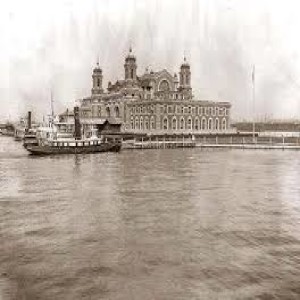
That was the day Ellis Island closed its doors.
More than 12 million immigrants had passed through its gates since its opening in 1892.
Those steerage and third-class passengers coming to America were processed at the island between 1892 and 1924.
They were routinely subject to medical inspections to determine they were free of disease.
Legal inspections included questions regarding birth, occupation, destination, finances and criminal record.
Its busiest year was 1907 with more than a million arriving to enter the United States.
During World War I, the Island was used as a detention center for presumed enemies and those considered foreign-born subversives.
After Congress passed the restrictive Immigration Act of 1924, arrivals entering the country slowed to a trickle.
Then Ellis Island became primarily a detention and deportation center.
During World War II, thousands of Germans, Italians and Japanese made up the majority of those detained, awaiting deportation.
It also served as a military hospital for returning servicemen and training center for the Coast Guard.
By 1950, Ellis Island served as a holding center for arriving Communists and Fascists, who were prevented entrance under the recently passed Internal Security Act.
A Norwegian seaman who had overstayed his leave was released the day the Island closed and told to catch the next ship back to Norway.
In 1965, President Johnson made Ellis Island part of the National Park Service.
A massive restoration of the Island began in 1984, organized by Lee Iacocca’s Statue of Liberty-Ellis Island Foundation.
It reopened as the Ellis Island Immigration Museum in 1990, featuring numerous exhibits, publicly accessible immigration records and the award-winning film documentary, “Island of Hope, Island of Tears.”
Thursday Nov 11, 2021
Thursday Nov 11, 2021
On this day in Labor History the year was 1887.
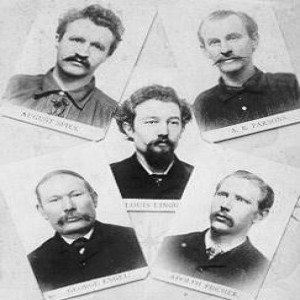
That was the day that four men were hung in Chicago for their alleged role in the bombing at a labor rally at the city’s Haymarket Square a year earlier.
Eight men were put on trial.
Although the prosecution did not prove any of the men had ties to the bombing, five were sentenced to die.
Louis Lingg died in jail before the execution could take place.
The others were martyred for their support of the labor movement and the fight for the eight-hour day.
Three of those executed were born in Germany.
August Spies and Adolph Fischer, worked for a Chicago German-language, worker’s newspaper.
George Engel owned a toy store.
Backlash against foreign-born anarchists helped stoke public hysteria over Haymarket.
The final martyr was southern-born Albert Parsons, the editor of The Alarm, an English-language workers paper.
The day after they died, the Chicago Tribunereported on the brutality of their execution, “Then begins a scene of horror that freezes the blood. The loosely-adjusted nooses remain behind the left ear and do not slip to the back of the neck. Not a single neck is broken, and the horrors of a death by strangulation begin....”
Thousands of mourners joined the funeral procession of the five slain men.
In 1893, Governor John Peter Altgeld granted the three defendants still a jail a full pardon.
The monument to the Haymarket eight stands at Forest Home Cemetery, just west of Chicago—drawing visitors from across the world to remember these martyrs for the eight-hour movement.
May Day is celebrated as the worker’s holiday around the world in commemoration of the events in Chicago.
Wednesday Nov 10, 2021
Wednesday Nov 10, 2021
On this day in Labor History the year was 1887.
That was the day that Louis Lingg died in prison, awaiting execution for his alleged role in a bombing at a worker’s rally at Haymarket Square in Chicago the year before.
Louis was born in Germany.
His father worked for a lumber mill.
One day, while trying to clear a log jam, his father fell into an icy river.
Although Louis’ father lived, he could no longer carry the same work load.
The company fired him, despite his twenty years of service.
Louis began to question a labor system that would let this happen.
He became a carpenter’s apprentice.
Louis then traveled to Switzerland, where he became acquainted with anarchist worker groups.
Finally, in 1885, Louis made his way to the United States and Chicago.
There he joined the Carpenters and Joiners Union.
He became an outspoken advocate for the cause of the eight-hour day.
The movement had great success in Chicago and on May 1st, or May Day, thousands marched in the streets for the eight-hour cause.
But when a bomb was thrown at a workers’ rally three day later, the backlash against the labor movement was swift and brutal.
Eight men, including Louis, stood trial and were convicted despite a lack of evidence tying them to the bombing.
Louis Lingg and four others were sentenced to death by hanging.
But the day before the sentence was to be carried out, Louis lit a cigar in his prison cell.
The cigar was packed with explosives.
The explosion left Louis in agony for hours before he finally died.
Some believe he committed suicide rather than die at the hands of the legal system.
Others believe he was murdered.
Tuesday Nov 09, 2021
Tuesday Nov 09, 2021
On this day in Labor History the year was 1952.
That was the day that the labor movement lost Philip Murray.
Philip was born in Scotland in 1886 to an Irish Catholic family.
His father was a coal miner and a union leader.
Philip followed his father into the mines at just the age of ten years old.
The Father and son made the trip to the Pennsylvania coal fields together, when Philp was sixteen.
They saved enough money, and then sent for the rest of their family.
One day Philip got into an altercation with one of his bosses.
Not only was he fired, his family was kicked out of their company home.
From that point on Philip was dedicated to the union cause as the only hope for working people.
He rose through the ranks of the United Mine Workers, becoming Vice President by the time he was thirty-three.
He worked closely with legendary United Mine Workers President John L. Lewis.
During the 1930s there became a nation-wide drive to organize industrial workers.
Philip was appointed to lead the Steel Workers Organizing Committee, a key sector for the industrial effort.
The steelworker campaign met with historic success.
They reached a collective bargaining agreement with U.S. Steel, the giant of the industry.
Philip went on to become the first President of the United Steelworkers of America, as well as President of the Congress of Industrial Organizations.
Under his leadership industrial labor became a powerful force.
But that force was checked by the passage of the anti-union Taft-Hartley Act in 1947.
The anti-communist hysteria of the Red Scare also took its toll on the CIO, forcing Philip to expel some of the most radical unions from the organization.
Monday Nov 08, 2021
Monday Nov 08, 2021
On this day in Labor History the year was 1897.
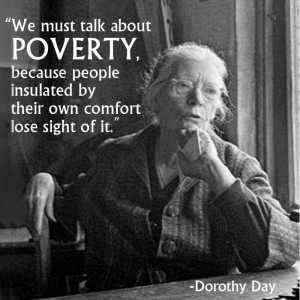
That was the day that Dorothy Day, a leader of the Catholic Worker Movement, was born in Brooklyn, New York.
As a young girl her family moved to San Francisco.
Her father lost his job as a sportswriter due to the devastating earthquake of 1906, and the family relocated again to Chicago.
In 1932 she met Peter Maurin, and together they founded the Catholic Worker Movement, a faith-based social justice effort.
The Catholic Workers opened what they called houses of hospitality to serve those in need.
Dorothy also helped co-found the Catholic Worker, a monthly newspaper that became a voice for poor and working people.
While writing for the paper, Dorothy traveled and visited with some of the most exploited workers in the country.
She talked with migrant agricultural workers in California, and was arrested for supporting the United Farm Workers in 1973.
In 1940, she visited the Hooverville encampment in Seattle, Washington.
Dorothy’s reporting vividly demonstrated how her faith informed her activism.
She wrote, “The rain poured down. Underneath was mud, ankle deep, and the long lane that cut between the rows of shacks reflected the grey clouds in its pools… But Christ is there, I thought sadly, there in the mud, in the shacks with His poor. With them he is trying to find a place to lay His head. With them, He hungers and with them He suffers fatigue of body and soul. “Behold, Oh God, our Redeemer, and look upon the face of Thy Christ ,” there in the dumps, among the creatures who still are men. Have pity on them, and on us, who permit such things to be.”
Sunday Nov 07, 2021
Sunday Nov 07, 2021
On this day in Labor History the year was 1959.
That was the day that the US Supreme Court handed down a decision that would be a blow to the cause of labor.
Striving for the kind of major gains they had won in 1956.
The half a million members of United Steelworkers of America once again went out on strike.
The steel industry was extremely profitable and the workers demanded to share in the fruits of their labor.
Management wanted the ability to introduce new technology and policies to cut hours and employees.
The strike wore on for more than 100 days.
President Dwight D. Eisenhower ordered the steelworkers back to the plants.
He argued that the Taft-Hartley act gave him the legal means to issue the order.
A decade earlier Congress passed the Taft-Hartley Act over President Harry Truman’s veto as a way to curtail union rights.
The Steelworkers protested the constitutionality of the law, all the way to the Supreme Court.
The union lost.
In making its decision, the court referenced President Eisenhower’s explanation of the impact of the strike. “The strike has closed 85 percent of the nation's steel mills, shutting off practically all new supplies of steel. Over 500,000 steel workers and about 200,000 workers in related industries, together with their families, have been deprived of their usual means of support. Present steel supplies are low, and the resumption of full-scale production will require some weeks. If production is not quickly resumed, severe effects upon the economy will endanger the economic health of the nation."
The next January, the union and management signed a new contract.
The workers received a 7 cents an hour raise, a new automatic cost-of-living adjustment, improvements to their pension and health care benefits, job protections against proposed automation.

Saturday Nov 06, 2021
Saturday Nov 06, 2021
On this day in Labor History the year was 1982.
That was the day that eleven women graduated from the New York City Fire Academy.
They were the first women firefighters ever to serve in the city of New York since the department was founded in 1865.
The inclusion of women firefighters did not come easily to New York.
In 1977 for the first-time women were allowed to apply to be firefighters.
Although many women had passed the written part of the exam they were continually denied employment because all failed the physical test.
The women sued citing discrimination.
One of the leaders of the suit was applicant Brenda Berman.
The Federal District Court in Brooklyn sided with the women.
Not everyone was happy about the decision.
A group of demonstrators came to City Hall before the graduation, with signs reading “I want to be save by Firemen.”
The Uniformed Firefighters Association challenged the ruling.
They tried to block the ceremony in the courts, arguing that training requirement had been changed to accommodate the women.
Despite the legal challenges the ceremony went on as scheduled.
In his speech Mayor Ed Koch said, “As all of us have known all along, bravery and valor know no sex.”
After the graduation, the controversy over women firefighters continued.
The women often faced sexual harassment on the job, and vilification on the editorial pages of city newspapers.
Bumper stickers reading “Don’t send a girl to do a man’s job” could be seen on the car bumpers of many male firefighters and at the city firehouses.
The women firefighters stood up to the harassment, testifying before the City Council and holding street demonstrations to bring awareness to their plight.
Friday Nov 05, 2021
Friday Nov 05, 2021
On this day in Labor History, the year was 1916.
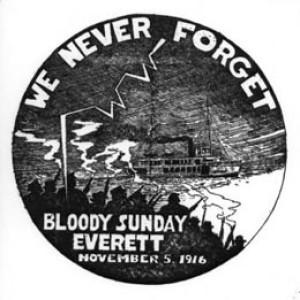
That was the day, when what came to be known as the Everett Massacre, took place in Washington State.
The Everett Shingle Workers Union had gone out on strike in May.
Organizers from the Industrial Workers of the World came to the area to support the strike and to make a stand for free speech.
Over the summer, tensions began to mount.
The police began to arrest IWW speech makers.
Then, in August, violence erupted between strike breakers and picketers at the Jamison Mill.
The IWW decided to bring in a group of about 300 members for a free speech rally.
They came from Seattle by two steamer boats.
But the first boat was met at the docks by the sheriff and a large group of armed deputies.
A gun battle broke out.
One passenger, Ernest Nordstrom, told the harrowing tale of what happened to the Seattle Union Record saying, “I couldn’t swear to where the first shot came from, but as it comes to me, I thought the first shot was a warning shot not to go ashore. After that there were shots—gee whiz—all kinds of shots, and when they commenced, all ran to the other side and the boat began to tip.”
The passengers avoided capsizing the boat, and turned around to flee back to Seattle.
At least five IWW members on board were killed, along with two of the deputies.
After the violence, the Shingle Workers union called off their strike.
74 IWW members were arrested, but only one stood trial. None were convicted.
Ernest Nordstrom followed up with, “I am sure there is no excuse for this whatsoever-there need have been no bloodshed.”
Thursday Nov 04, 2021
Thursday Nov 04, 2021
On this day in Labor History the year was 1879.
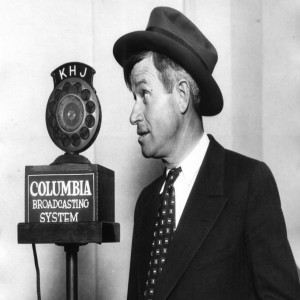
That was the day that Will Rogers was born in Oologah, Indian Territory, in what later became Oklahoma.
Rogers grew up on a ranch, and by 10th grade had dropped out of school to be a cowboy.
Skilled with a lasso, he became a cowboy entertainer first in vaudeville then in silent film.
Rogers also had a syndicated column and a radio show where he became a popular political commentator.
With quick wit and humor Rogers helped to shape public opinion.
He brought humor to serious issues in a way later echoed by the likes of John Stewart and Stephen Colbert.
Rogers often talked about the plight of the American worker.
In 1931 he was asked to give a radio address for President Herbert Hoover’s Organization on Unemployment.
Rogers expressed the urgency of the unemployment that was sweeping the nation during the Great Depression.
He said, “The only problem that confronts this country today is at least 7,000,000 people are out of work.
That’s our only problem. There is no other one before us at all. It's to see that every man that wants to is able to work, is allowed to find a place to go to work, and also to arrange some way of getting a more equal distribution of the wealth in country…So here we are in a country with more wheat and more corn and more money in the bank, more cotton, more everything in the world—there’s not a product that you can name that we haven't got more of it than any other country ever had on the face of the earth—and yet we’ve got people starving.”