
A daily, pocket-sized history of America's working people, brought to you by The Rick Smith Show team.
Episodes
Sunday Jan 24, 2021
Sunday Jan 24, 2021
On this day in labor history, the year was 1874.
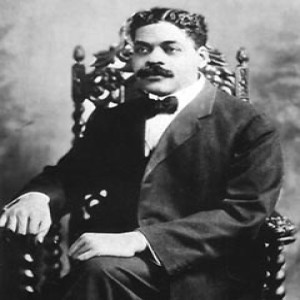
That was the day Arturo Alfonso Schomburg was born.
Schomburg was an important figure in the Harlem Renaissance.
He is also considered a premier historian and collector of material on black life in America.
Born and raised in Puerto Rico, he arrived in the United States in 1891 and soon settled into the Cuban and Puerto Rican working class neighborhoods of New York City.
Schomburg initially involved himself in the Cuban and Puerto Rican Independence movements.
When he traveled to New Orleans, he experienced Jim Crow discrimination and witnessed black disenfranchisement firsthand.
He reacted strongly to the increased racial tensions, lynchings and race riots of the period and believed that “history must restore what slavery took away.”
In 1911, Schomburg and his friend, John Edward Bruce founded the Negro Society for Historical Research and established lasting friendships with intellectuals like W.E.B. DuBois.
He worked for the inclusion of black history into the educational system and continued to amass a wide collection of literature, art, books, pamphlets and manuscripts on black life and history.
His collection spanned material from across the world.
It included letters of Haitian revolutionary leader Toussaint L’Ouverture, poetry by Phyllis Wheatley, artifacts from Fredrick Douglass and other black leaders.
Schomburg’s private collection became the basis for the 135th Street Branch of the New York Public Library’s Division of Negro Literature, History, and Prints, which opened in 1925.
The division served as a pivotal resource for Harlem Renaissance writers, poets and artists.
Known today as the Schomburg Center for Research in Black Culture, it is recognized as a leading repository for materials and artifacts on black cultural life.
Saturday Jan 23, 2021
Saturday Jan 23, 2021
On this day in labor history, the year was 1933.
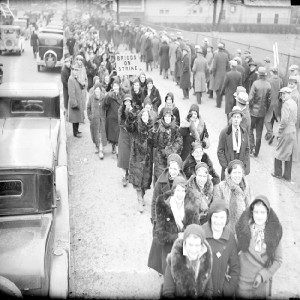
That was the day 6,000 workers at Briggs Manufacturing in Detroit walked off the job and sparked a strike wave of 15,000 auto body workers.
Briggs made auto bodies for Ford, Chrysler and Hudson in four Detroit-area plants.
Their pay and working conditions were considered among the worst in the nation, inspiring the adage, “if poison doesn’t work, try Briggs.”
Earlier in the month, workers at the Waterloo plant, under the leadership of the short-lived Automobile Workers Union, struck against company-wide wage cuts and won.
Their victory encouraged workers at the Highland Park and Mack Avenue Briggs plants to walk out over additional demands, which they joined in solidarity.
Workers demanded the recognition of shop committees and pushed back against starvation wages.
They also protested the hated “dead-time” policy, which required workers to stay on the job, unpaid, waiting for material or production lines.
They wanted an end to pay deductions for tools and a worthless health insurance policy that left some with bi-weekly pay as low as 49 cents!
Briggs quickly conceded to a wage increase and the end of “dead-time.”
But they would not budge on recognizing the union.
As the strike dragged on, strikebreaking under police escort increased, as did the redbaiting of union organizers.
Workers gained nothing more and ended their walkout in early May.
According to historian Joyce Shaw Peterson, the walkout had been the most significant auto strike up to that point.
Worker militancy and public support were impressive.
As one worker recalled, after the Ford Hunger March the year before, workers took to the picket lines, facing down fears of physical injury or even death to fight for a better life.
Friday Jan 22, 2021
Friday Jan 22, 2021
On this day in labor history, the year was 1959.
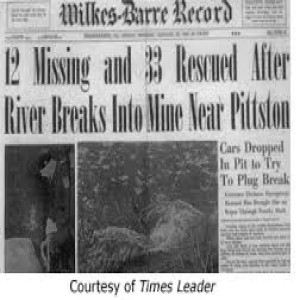
That was the day the Susquehanna River flooded several mines throughout the Wyoming Valley of Pennsylvania.
It marked the virtual end to coal mining in the Northern Anthracite Region, whose coalmines provided some 11,000 jobs.
Knox Coal Company, owned by reputed mobster, John Sciandra, ordered workers to illegally excavate underneath the river to get at new coal seams, near Port Griffith.
The company hit the jackpot, and mined rich new veins.
Even though state regulations mandated a rock cover of 35 feet when tunneling underneath a waterway, theirs was only about six feet thick.
The roof of Knox Coal’s River Slope Mine soon collapsed and a reported 10 billion gallons of water, ice and debris from the river came smashing through.
The collapse created a whirlpool and dams were built to divert the river.
81 miners were trapped and many desperately searched for hours for an escape.
Some were able to get out through an abandoned airshaft.
The bodies of another 12 miners were never recovered.
Audrey Baloga Calvey recalled in an interview that her father, a miner who died in the flooding, predicted trouble at the mine before his death.
Saying "When the water would get high, he'd say, 'God, if that river ever breaks in, we'll be drowned like rats,.
Ten were indicted, including the mine’s president, Louis Fabrizio, Knox’s superintendent, and incredibly, UMWA District 1 president AND secret partner in the mine, August Lippi.
Several would serve prison time.
Four owners were convicted of tax evasion and four local union 8005 officials were convicted of taking bribes in sweetheart deal contracts, including Lippi.
Thursday Jan 21, 2021
Thursday Jan 21, 2021
On this day in labor history, the year was 1973.
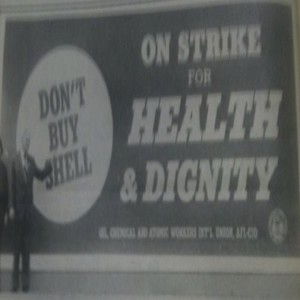
That was the day Oil, Chemical and Atomic Workers struck Shell Oil over health and safety issues.
OCAW had been involved in lobbying for the passage of OSHA and other environmentally related Acts.
Their members worked in some of the most dangerous, most toxic industries in the country.
By 1972, they demanded contract language for health and safety committees on the job.
The oil companies countered with accusations that improved safety proved too expensive and that OCAW used the issue to assert union control over the production process.
The other oil companies eventually settled in OCAW’s favor.
But Shell would not budge.
And so, the OCAW called a strike at eight facilities and a boycott of all Shell products.
They also successfully enlisted the support of environmental organizations by stressing toxic chemical exposure and hazards faced by workers and the public alike.
Picket lines were solid and thousands honored the boycott.
Sales for Shell fell by 25%.
After four months, the strike fund was nearly drained.
Shell exploited internal divisions among members at a Texas plant and negotiated a separate settlement.
What health and safety language Shell agreed to, was non-binding.
The union was broke and the strike ended in compromise in early June.
Despite this, as historian Robert Gordon notes, OCAW was able to “gain strong health and safety language at all other oil companies for the first time, heightened public awareness of health hazards confronting millions of workers…and pressured OSHA into adopting stricter standards. Perhaps more importantly, the strike solidified the tentative labor-environmental alliance.”
Having merged with the United Steelworkers, the union continues to secure safe working conditions through contracts and alliances today.
Wednesday Jan 20, 2021
Wednesday Jan 20, 2021
On this day in labor history, the year was 1937.
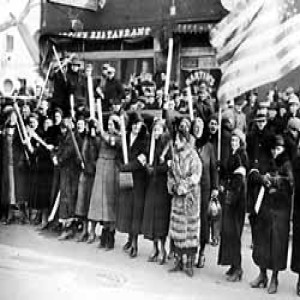
That was the day the Flint Women’s Emergency Brigades was founded.
Genora Johnson, a socialist, was a main leader of the Women’s Auxiliary Number 10 throughout the strike.
A different kind of auxiliary, it built the leadership skills of women through classes in labor history and public speaking.
It also set up a first-aid station and child-care center, raised strike funds and walked picket lines.
According to Janice Hassett, “the women moved beyond supporting the strike to participating in it.”
Fifty women signed up the next day.
By the end of the strike, over 300 women would join.
The women adopted an official uniform of red berets and red armbands.
They were armed with clubs to smash factory windows when police gassed sit-downers.
Their participation in the strike was heroic and their work continued after victory.
They sought to represent the interests of women autoworkers, who often found coworkers less than welcoming and experienced sexual harassment and occupational discrimination at the hands of supervision.
Many women autoworkers formed the core leadership of several chapters.
Historian Nancy Gabin notes that this was not always the appropriate arena for advocacy saying; “By encouraging women workers to participate in the auxiliaries, the UAW abdicated its responsibility to these workers.”
However, Johnson emphasized, “It was a radical change.... To give women a right to participate in discussions with their husbands, with other union members, with other women, to express their views... that was a radical change for those women at that time.”
Tuesday Jan 19, 2021
Tuesday Jan 19, 2021
On this day in labor history, the year was 1909.
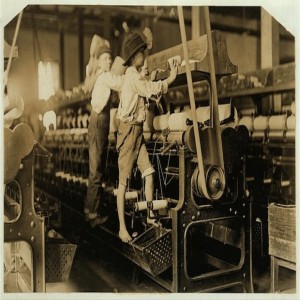
That was the day Lewis Hine photographed child workers standing on spinning frames to mend threads and replace empty bobbins at the Bibb Mill No.1 in Macon, GA.
It was just one example of the appalling use of children in industrial labor.
Hine built his career on photographic portraits of young miners and mill workers, child cotton pickers and factory workers.
In 1908, he was hired by the National Child Labor Committee to document child laborers across the country.
For the next fifteen years, Hine would contribute over 5000 photographs to the cause of ending child labor.
Photo historian Daile Kaplan described the ways in which Hines captured these images writing: “…Hine the gentleman actor and mimic assumed a variety of personas--including Bible salesman, postcard salesman, and industrial photographer making a record of factory machinery--to gain entrance to the workplace. When unable to deflect his confrontations with management, he simply waited outside the canneries, mines, factories, farms, and sweatshops with his fifty pounds of photographic equipment and photographed children as they entered and exited the workplace.”
NCLC investigators referenced the photographs in reports on particular industries and locations.
The NCLC used the photos to illustrate its own publications and succeeded in placing them in newspapers, progressive publications and exhibits.
One NCLC poster that featured Hine’s portraits read, “Making Human Junk: Shall Industry Be Allowed To Put This Cost On Society?”
By 1912, the NCLC persuaded Congress to create a United States Children’s Bureau.
The two organizations worked together to investigate abuses of child laborers.
Years of legislative and judicial battles followed, until finally in 1938 Congress passed the Fair Labor Standards Act.

Monday Jan 18, 2021
Monday Jan 18, 2021
On this day in labor history the year was 1909.
That was the day the United States Supreme Court decided the case of Moyers v. Peabody.
The case grew out of the Colorado Labor Wars, a series of back-to-back strikes in 1903 and 1904 in precious metals mines and ore mills.
The Colorado National Guard meted out violent assaults, arrests and deportations against strikers, often on orders from Governor James Peabody.
The state militia routinely rounded up strikers and union leaders, detained them for weeks in bullpens and ignored habeas corpus petitions.
Western Federation of Miners president, Charles Moyer arrived in Telluride during a strike to find these repressive conditions.
He signed a poster that read, “Is Colorado in America?”
The poster included an image listing the many violations of basic democratic rights on the American flag.
Moyer was arrested in March 1904 for desecration of the American flag on the poster.
He was detained on the grounds of military necessity, even after the courts ordered his release.
His case traveled through the state and federal courts until the Supreme Court ruled.
They held that “the governor and officers of a state National Guard, acting in good faith and under authority of law, may imprison without probable cause a citizen of the United States in a time of insurrection and deny that citizen the right of habeas corpus.”
The ruling radicalized the labor movement.
Many concluded there could be no justice through the court system.
A later case successfully challenged the ruling on the basis that claims of insurrection were subject to judicial review.
The ruling, however controversial, still stands and was invoked after 9/11 in the 2004 ruling Hamdi v Rumsfeld.
Sunday Jan 17, 2021
Sunday Jan 17, 2021
On this day in labor history, the year was 1898.
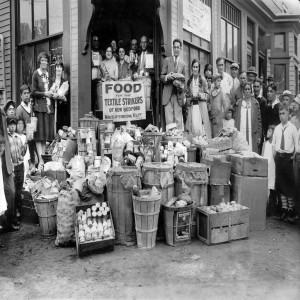
That was the day workers in the textile mills of New Bedford, MA walked out on strike.
They were organized along craft lines into five different unions.
Regardless of craft, mill owners inflicted a 10% wage cut, which would prove devastating, given whole families worked in the mills.
When the wage cut took effect, spinners effectively shut down twenty-two mills owned by nine companies.
Having formed an amalgamated strike committee, weavers, loom fixers, carders and slasher-tenders all stayed away in support.
Workers leaders like Samuel Gompers, Eugene V. Debs and Daniel De Leon of the Socialist Labor Party all visited the strikers to give encouragement and inspiration.
Debs alone acknowledged the role of women in the strike as workers and not just as wives, mothers, daughters or sisters.
Before the strike, there had already been discord over strike demands.
The weavers insisted on adding the fines issue.
They constituted 40% of mill workers and their job duties included correcting the mistakes of other trades.
Manufacturers routinely fined weavers for material deemed imperfect, yet still profited from selling their products.
The fines system wrought havoc on weaver families and they wanted it abolished.
The rest of the unions sympathized with their plight, but insisted the strike would fail unless they focused solely on the issue of wage cuts.
The weavers persisted and the demand stuck.
By April, the strike collapsed.
Workers went back with nothing gained.
But the strike proved that workers across craft lines could strike and support each other in an industrial manner.
It also proved that men and women workers could effectively organize a strike and picket together.
*The Photo is from the 1928 strike of Textile workers in New Bedford MA

Friday Jan 15, 2021
Friday Jan 15, 2021
That was the day the United Electrical Workers joined the national post-war strike wave.
200,000 UE members walked off the job at General Electric, Westinghouse, and General Motors’ Electrical Division.
Across the country, reduction of hours and phony job reclassifications led to a 30% wage cut, while years of wartime grievances piled up.
All this led to the demand for $2 a day pay raises.
Many of these workers were young women on strike for the first time.
They had spent much of the war fighting piecework and gender based divisions of labor.
Reports from the picket lines showed overwhelming support among the strikers and from the general public.
Older male coworkers who built the UE joined young women strikers on the line.
At the GE Mazda Lamp Works in Youngstown, Ohio, steelworkers joined women strikers to bolster picket lines.
In Lynn, MA, signs of women picketers read, “We Want to Live, Not Just Exist,” and “Let the Pipes Freeze-They Don’t Care If We Freeze,” in response to maintenance crews allowed to pass.
In Bloomfield, N.J., six restaurants turned their establishments over to the strikers.
GE president Charles Wilson complained bitterly of the 12,000 or so picketers that blocked the gates of the GE Schenectady Plant.
Strikers across the country faced violent confrontations and beatings as police on horseback waded through crowds.
Philadelphia strikers retaliated by pouring marbles onto the street.
Workers at GE and Westinghouse would eventually settle for 18 cents an hour, less than what they had hoped but more than either company had been willing to give.
Management would remain in shock for years at the level of solidarity among strikers and the community.

Thursday Jan 14, 2021
Thursday Jan 14, 2021
On this day in labor history, the year was 1888
That was the day novelist, Edward Bellamy published his futuristic, utopian novel, Looking Backward, 2000-1887.
The protagonist, Julian West, wakes up in the year 2000, to find that industry has been nationalized and wealth, goods and services have been equitably distributed.
People work less, retire early and enjoy greater leisure.
Looking Backwards was so popular that by 1900 only Uncle Tom’s Cabin and Ben-Hur had sold more copies.
Bellamy’s utopia solved problems of capitalism through development of a socialistic society.
Bellamy denied he was a socialist and instead referred to his vision as Nationalist.
The novel sparked a political movement virtually overnight.
Bellamyites, as they were called, formed Nationalist Clubs across the country.
They attempted to organize a Peoples’ Party around these clubs, which soon dissolved into the Populist movement of the 1890s.
Looking Backwards was a response to the Gilded Age world of monopolies and trusts, depressions and often-violent class convulsions.
Bellamy was quick to indict the banks, the railroads and the corrupt political system that served them.
Sociologist Arthur Lipow argues in his book, Authoritarian Socialism in America: Edward Bellamy and the Nationalist Movement, that while Bellamy may have expressed anti-capitalist sentiments, his future is one in which there is no democratic public life or political process.
For Lipow, Bellamy’s particular collectivist view is militaristic and bureaucratic, and does away with representative bodies of any kind.
However, Socialist Party leader Eugene V. Debs credited his own political development in part, to reading Looking Backwards.
He noted that, regardless of whether Bellamy considered himself a socialist, his novel generated popularity and enthusiasm for socialist ideas, causes and politics.