
A daily, pocket-sized history of America's working people, brought to you by The Rick Smith Show team.
Episodes

Friday Dec 03, 2021
Friday Dec 03, 2021
On this day in labor history, the year was 1946. That was the day a general strike erupted in Oakland, California.
Workers, mostly women, had been on strike for a month at two downtown department stores.
Teamsters honored their picket lines and refused to make deliveries. Infuriated owners of Hastings and Kahn’s demanded their merchandise and turned to the city for help.
On this day, police assembled early in the morning to clear the streets of picketers. They attacked strikers, forced them off the streets and set up a perimeter of machine guns to escort scab delivery trucks through.
One striker recalled, “I was black and blue for six months from their clubs.” Outraged truck drivers, bus drivers and streetcar operators all stopped, got out of their vehicles and joined the strikers, quickly filling downtown Oakland.
By the end of the day, the city was completely shut down. 142 AFL unions called for a labor holiday in support of the strikers and now 130,000 workers were on strike in solidarity.
UAW member Stan Weir recalled that it was the bus drivers, many just returned from the war, who led the strike. The streets that night had a carnival like atmosphere. War vets led a march to City Hall to demand the resignation of the Mayor and the City Council for their attempts to break the strike.
The general strike quickly forced the administration to stop the scabhearding. But local labor leaders were divided over what some considered a near insurrection and called the strike off 54 hours later.
The retail workers were left to fight on their own for another five months. But for a few days, workers got a taste of their own power.
Thursday Dec 02, 2021
Thursday Dec 02, 2021
On this day in labor history, the year was 1859.
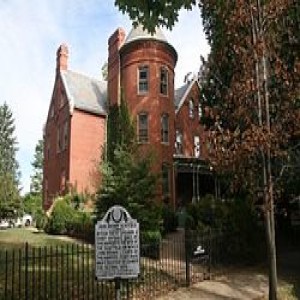
That was the day John Brown was hanged in Charles Town, Virginia in what is now West Virginia.
He had been sentenced to death on charges of treason, murder and insurrection for his role in the raid on the United States Federal Armory at Harper’s Ferry.
Brown and twenty-one abolitionists intended to seize the arsenal there, then build a free settlement in the Appalachian Mountains.
From there, abolitionists and free people of color would wage a guerrilla war against the slave labor system throughout the South.
Convicted on November 2, Brown resisted plans for rescue and prepared to die a martyr.
On this day, John Brown wrote his last statement: “I, John Brown, am now quite certain that the crimes of this guilty land will never be purged away but with blood. I had, as I now think, vainly flattered myself that without very much bloodshed, it might be done.”
He was marched out of the Jefferson County Jail through a crowd of onlookers that included Stonewall Jackson and John Wilkes Booth to the gallows, where he was hanged.
While many abolitionists distanced themselves from his actions, they defended him and memorialized him after his death.
Fredrick Douglass remarked many years later, “His zeal in the cause of my race was far greater than mine-it was as the burning sun to my taper light-mine was bounded by time, his stretched away to the boundless shores of eternity. I could live for the slave, but he could die for him.”
Wednesday Dec 01, 2021
Wednesday Dec 01, 2021
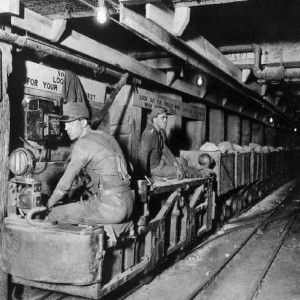
On this day in labor history, the year was 1912. That was the day the Anaconda Copper Company instituted its rustling card system at its copper mines in Butte, Montana. The company used the rustling card in two ways: as a work permit and as way to keep track of miners. A miner looking for work would first have to apply for a card. Miners had to present information about citizenship status, English literacy skills, work history and two years of employer references. Once the card was approved, the miner would then be allowed to apply for work. The Butte Miners’ Union charged it was the company’s way of blacklisting those who had quit, been fired or known as a union militant. By 1917, the Metal Mine Workers Union and the IWW added that the company was looking to “nip agitation in the bud.” They alleged employers were holding on to cards or denying them altogether for no reason. According to historian Paul Brissenden, both unions maintained the company was looking “to punish those who were at one time active in the socialist administration of Butte Mayor Lewis J. Duncan, to prevent the Socialist Party from again securing a foothold in Butte, to strengthen the hands of the more conservative unions and to curb the industrial unionism of the IWW and Metal Mine Workers Union.” The company asserted its right to keep its enemies out of the mines, alleging they presented a danger to mine safety. But the unions shot back, stating the blacklist meant the hiring of untrained, inexperienced workers who presented the real danger. Brissenden notes that many union radicals continued to work in the mines despite the card system.
Tuesday Nov 30, 2021
Tuesday Nov 30, 2021
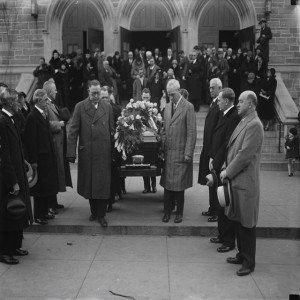
On this day in labor history, the year was 1930. That was the day the world lost the miners’ angel, Mother Jones. She had crossed the country many times over, been involved in practically every strike that built the labor movement; stood with miners and steel workers and mill children everywhere. Mother Jones had asked to be buried with the Virden Martyrs, killed in the Massacre of 1898, at Union Miners Cemetery in Mt. Olive, Illinois. Dozens of labor leaders including AFL president William Green, attended her funeral in Maryland, where she had been living. Then, AFL representatives, several Illinois miners and others boarded the Baltimore and Ohio train to accompany her body to Mt. Olive. Historian Dale Fetherling describes the scene as her body arrived. A band played “Nearer, My God, To Thee” as onlookers bowed their heads and wept. Survivors of the Virden Riot bore the casket to the Odd Fellows’ Hall where it lay in state… The town of 3,500 with its strong and violent heritage, was thronged by thousands of coal diggers.” At least 15,000 turned out for the funeral, broadcast on WCFL, the Chicago Federation of Labor’s radio station. The labor priest, Reverend John Maguire gave the memorial address and officiated at the funeral in Mt. Olive’s Roman Catholic Church of the Ascension. He asked: “What weapons had she to fight the fight against oppression of working men? Only a great and burning conviction that oppression must end. Only an eloquent and flaming tongue that won men to her cause. Only a mother’s heart torn by the suffering of the poor. Only a towering courage that made her carry on in the face of insuperable odds. Only a consuming love for the poor.”
Monday Nov 29, 2021
Monday Nov 29, 2021
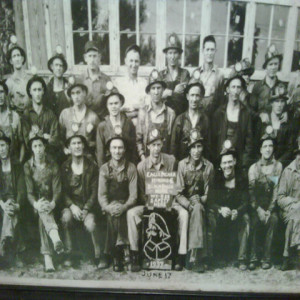
On this day in labor history, the year was 1937. That was the day the National Labor Relations Board began hearings on an unfair labor practice brought by the International Union Mine, Mill and Smelters. Mine, Mill had been fighting the union busting tactics at Eagle-Picher Lead Company. The union had been organizing lead and zinc miners in the Tri-State area of Kansas, Missouri and Oklahoma. During the Great Depression, they built the union by emphasizing safer working conditions, stressing the hazards of silicosis and tuberculosis. In their book, Deadly Dust: Silicosis and the Politics of Occupational Disease, Gerald Markowitz and David Rosmer note that one of Mine Mill’s demands included the elimination of the company clinic. They argued it was used to target and fire diseased workers, rather than provide a safe work environment. Mine Mill also organized other area industries, to counteract the near total power of the mine owners in the region. When the union called a strike at area mines in May 1935, the area’s largest producer, Eagle Picher Lead moved quickly to force a lockout and establish a company union. During the hearings, the union was limited in its ability to raise health and safety issues. They did win reinstatement and back pay for workers fired during the strike. But the case brought national attention to silicosis in the Tri-State area. In a letter to Francis Perkins the following year, the head of the Cherokee County Central Labor Body hoped to secure legislation to compel the companies to install ventilation systems and safety devices. He noted the average life of a miner was 7-10 years, with many dying in 2 or 3 years. But a federal standard on silica was still decades away.
Sunday Nov 28, 2021
Sunday Nov 28, 2021
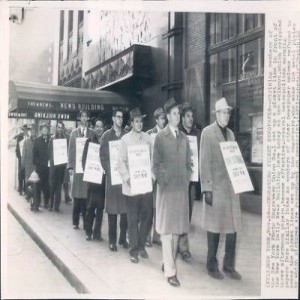
On this day in labor history, the year was 1953. That was the day 400 photo-engravers at six New York City newspapers walked off the job. Members of the AFL’s International Photo-Engravers Union had just voted down arbitration. All but one local newspaper, The New York Herald Tribune were idled as 20,000 newspaper workers refused to cross the engravers picket lines. Six days into the strike, that newspaper suspended operations as well. Writers at The New Yorker magazine remarked they were “curled up with the Wall Street Journal, The Daily Worker and a two-day old copy of La Prense.” In the decades before digital images, photoengraving was a labor-intensive process. Highly skilled workers made metal plates from which newspaper images were printed. Photo-Engravers had been working without a contract since the end of October. They demanded a $15 a week raise. The Newspapers Association was only willing to grant $3.75. The other newspaper unions had been offered similar wage and benefit packages, far below their demands. They knew that whatever they won or lost depended on the victory of the Photo-Engravers strike. So they walked out in solidarity. Federal mediators intervened in an attempt to settle the strike. Hysteric newspaper editors across the country shrieked that the union had accomplished what the government would never dare to do: subvert the freedom of the press! They sulked that the strike had broken 35 years of industrial harmony and peace; adding that the ungrateful workers didn’t appreciate just how good they had it. After eleven days, members voted to end the walkout and let a fact-finding board solve the dispute. Three months later, that board upheld the Newspaper’s Association original offer of $3.75 a week plus benefits.
Saturday Nov 27, 2021
Saturday Nov 27, 2021
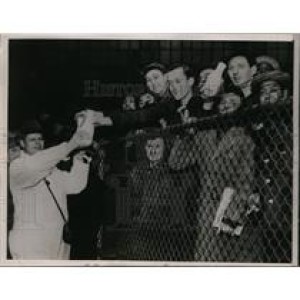
On this day in labor history, the year was 1936. That was the day 1200 production workers at Detroit’s Midland Steel sat-down for higher wages, an end to piecework and union recognition. The strike was called just before noon. When 800 on the second shift arrived for work, they readily handed their lunches, cigarettes and newspapers through the windows to the sit-downers. The UAW had embarked on a massive organizing drive throughout the country. Days earlier, the GM sit-down strike had begun in Atlanta, spread to Kansas City and would eventually reach Flint, Michigan. But the UAW was also organizing parts suppliers like Midland, who produced car body frames for the industry. The UAW first used the tactic of the sit-down strike ten days earlier at the Bendix Products brake plant in South Bend, Indiana. There, workers had just organized with the UAW. They braved eight days in an unheated factory during winter, demanding the company union be dismantled. At Midland, workers stayed in the plant, stating they would hold out till Christmas if they had to. Within a week, the Midland strike had idled 72,000 workers at Chrysler, Plymouth, Dodge, Desoto, Briggs and Ford’s Lincoln-Zephyr plants. Stakes were so high at Midland that strikers threw a suspected company spy out a second story plant window. Just as Midland workers returned victorious to their job ten days later, thousands of others began sitting down at their jobs. Rubber workers in Akron, glass workers in Ottawa, Illinois, bus drivers in Flint, Kelsey Hayes brake workers and aluminum workers just two blocks from Midland were all sitting down for union recognition, wage increases and better working conditions. The massive strike wave had begun.

Friday Nov 26, 2021
Friday Nov 26, 2021
On this day in Labor History the year was 1829.
That was the day that William Sylvis was born in Armagh, Pennsylvania.
Growing up he was one of twelve children.
His father was a wagon maker and taught him the trade.
At the age of eighteen he became an iron working apprentice.
His skill took him to Philadelphia, where he found work.
But iron work was changing.
More and more foundries were hiring unskilled labor, or helpers, to assist in production.
They could pay these workers significantly less, and undercut the wages of the skilled iron moulders.
In response William joined his local iron moulders union.
But he knew if they were to really have any power as workers, they would need to join together with other locals.
In 1863 he brought together 21 locals to form the Iron Moulders International Union.
Three years later, he embarked on an even more ambitious project—forming a national labor organization for workers across the trades.
Under his leadership the National Labor Union grew to 300,000 members strong.
William shared his thoughts on the importance of labor in a speech to the Iron Moulders Union in 1864 saying quote,
“If workingmen and capitalists are equal co-partners, composing one vast firm by which the industry of the world is carried on and controlled, why do they not share equally in the profits? Why does capital take to itself the whole loaf, while labor is left to gather up the crumbs? Why does capital roll in luxury and wealth, while labor is left to eke out a miserable existence in poverty and want?”
Sadly after all these years, William’s questions are still being asked today.
Thursday Nov 25, 2021
Thursday Nov 25, 2021
On this day in Labor History the year was 1947.
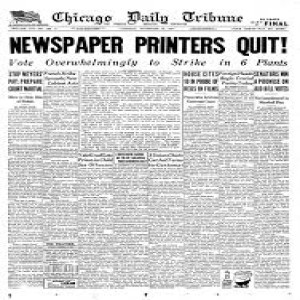
That was the day that front page of the Chicago Tribune printed a banner headline “Newspaper Printers Quit!”
1,600 members of the International Typographical Union Local 16 had gone out on strike against six Chicago newspapers.
The key reason for the strike was wages.
The union also wanted the publishers to agree to only hire union labor.
The walkout was part of a wave of printers’ strikes in the United States and Canada.
In all, union members from 43 newspapers from 27 cities went on strike.
Most newspapers were able to keep printing during the walkouts.
But many had to reduce the number of editions or make changes in how the paper was produced.
According to the an article published by the Associated Press, “Some are using a photoengraving process to circumvent their composing rooms while others continue to the use of normal methods.”
The Chicago strike wore on for twenty-two months.
The strike also became an important labor struggle after the passage of the Taft-Hartley legislation.
The legislation, approved by Congress earlier that year over President Harry Truman’s Veto, restricted the rights of labor unions including outlawing the closed shop.
Since the typographical unions were some of the oldest trade unions in the country, the strike became an important battleground over how Taft-Hartley would be interpreted.
The American Newspaper Publishers Association hoped that Taft-Hartley could be a tool in smashing the strike.
The courts sided with the publishers and demanded the union drop their demand for a closed shop.
The union did win a ten-dollar raise, a little more than two-thirds the amount they asked for during the strike.
Wednesday Nov 24, 2021
Wednesday Nov 24, 2021
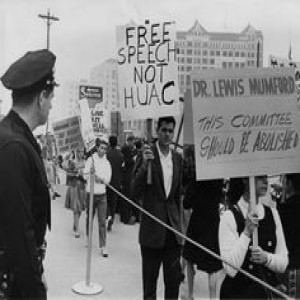
On this day in Labor History the year was 1947 that was the day that the US House of Representatives found ten Hollywood writers and directors in contempt for their alleged ties to Communism.
The decision was based on the House Un-American Activities Committee’s finding the ten to be in contempt the week before.
More than forty screenwriters, directors and producers were brought before the committee to testify about allegations of rampant Communist activities in the movie-making industry.
During the Cold War fear of Communism reached a fevered pitch.
This included the fear that Communists were infiltrating Hollywood to spread their message to the public through the movies.
Ten refused to answer the committee’s questions or to name names of other potential Communists.
Each of the ten was fined $1,000, sentenced to a year in prison, and blacklisted from working in Hollywood.
Perhaps the most well-known of the ten was one of Hollywood’s leading screenwriters, Dalton Trumbo.
He served 11 months in federal prison for refusing to cooperate with House Un-American Activities Committee.
While he was blacklisted he wrote the screen play for Roman Holiday, the romantic film starring Gregory Peck and Audrey Hepburn.
Since Trumbo could not take credit for the film, another screenwriter friend put his name on it.
Roman Holiday won the 1953 Academy Award for best screenplay.
Three years later another Trumbo script, The Brave One also received the Academy Award.
Finally, in 1960 Trumbo worked on Stanley Kubrick’s acclaimed film Spartacus.
Kubrick refused to remove Trumbo from the credits—busting the blacklist.
In 2015, actor Bryan Cranston starred in a film about Trumbo’s life.
During the House Un-American Activities Committee’s hearings, the Screen Actors Guild passed a resolution that members had to disavow any ties to the Communist Party.
They also elected actor Ronald Regan president of their union.