
A daily, pocket-sized history of America's working people, brought to you by The Rick Smith Show team.
Episodes
Dec 9, 2023
Dec 9, 2023
1 min
On this day in labor history, the year was 1953.
That was the day Ralph Cordiner, president of General Electric issued his “Cordiner Doctrine.”
It was the height of McCarthyism and the Second Red Scare.
The House Un-American Activities Committee persisted in its witch hunting of trade unionists, labor militants and alleged communists.
It targeted many of the unions purged from the CIO in 1949.
The United Electrical Workers was one of those unions.
The UE had organized the electrical manufacturing industry, including General Electric.
Wisconsin Senator Joe McCarthy and HUAC each began investigating UE local 301 at the General Electric plant in Schenectady, New York.
GE didn’t like the militancy of the UE or the bad publicity McCarthy generated about the company harboring subversives.
So President Cordiner issued a memo, which stated that any employee called before a Senate or legislative committee hearing, who invoked the Fifth Amendment in response to inquiries regarding alleged Communist ties, shall be terminated.
When McCarthy came to Albany, New York to hold hearings on alleged subversive activities three months later, hundreds of UE members packed the room, booing and jeering the senator and cheering the defendants.
One African-American worker demanded “Why don’t you investigate subversion by GE of the Jim Crow system, of the profits taken from the sweat of my people?”
McCarthy abruptly ended the hearings.
But twenty-eight UE members would be fired at GE.
Other electrical manufacturers like Westinghouse followed suit.
It was a devastating blow to the union and to the fired members who had helped build the UE from ground up.
But the union persevered and remains a powerful representative for workers in the industry to this day.
Dec 8, 2023
Dec 8, 2023
1 min
On this day in labor history, the year was 1886.
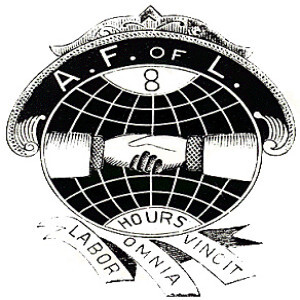
That was the day thirty-eight tradesmen met in Columbus, Ohio to found the American Federation of Labor.
There was an urgent need to form a new national organization for skilled workers.
The Knights of Labor had organized workers regardless of skill.
They included women and African-Americans among their ranks.
But they were rocked by a sharp and swift decline that year.
There was an anti-labor backlash after the Haymarket incident the previous spring.
Many tradesmen were looking to form a different kind of federation than the Knights had offered.
Julie Greene, author of Pure and Simple Politics, states the new AFL differed from the Knights of Labor on three core issues:
First, these trade unionists were less concerned with the broad social reforms the Knights promoted.
Instead, they wanted to work towards the economic concerns of their members.
They didn’t like the mixed assemblies the Knights insisted upon, which often included nonworkers.
Second, craftsmen hoped for full autonomy of the trade unions within a loose federation.
They didn’t like the centralized structure of the Knights and the dominant role Terrance Powderly played.
Finally, they didn’t like the jurisdictional subordination the Knights subjected the trade unions to.
They elected Samuel Gompers of the Cigar Makers International Union as their first president, who served until his death in 1924.
The early AFL reflected many of the Knight’s traditions, including industrial unions and socialist politics.
They fought for injunction reform and the eight-hour day.
Within fifteen years, the AFL would grow to represent millions in predominantly white, skilled craft unions that embodied business unionism.
In 1935 demands for industrial organizing would split the house of labor and the AFL.
Dec 7, 2023
Dec 7, 2023
1 min
On this day in labor history, the year was 1907.
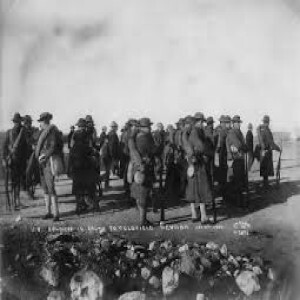
That was the day troops from the 22ndInfantry arrived in Goldfield, Nevada on orders from President Teddy Roosevelt
1,900 gold miners organized by the Western Federation of Miners were on strike.
They walked out in late November when cash-strapped mining operators began paying them in scrip.
Local 77 held considerable power in the mines and the town for two years.
They had won the eight-hour day both for their members and established it as an industrial standard throughout Goldfield.
By 1907, the mine operators and Nevada Governor John T. Sparks had had enough.
Wobblies were on trial elsewhere, falsely accused of murdering Idaho Governor Frank Steunenberg for his role in the 1899 miners strike in Coeur D’Alene.
Many miners in Goldfield had been active in that strike.
Sparks feared that with no force capable of protecting the operators, another mine war was inevitable.
The mine owners convinced Sparks that miners were heavily armed and capable of dynamiting mine property.
At the same time, the operators tried to provoke Local 77 miners to engage in illegal activity for which they could then be arrested.
They also used the Financial Panic of 1907 to pay workers in scrip and as a pretext to smash the union, even though the gold standard remained relatively stable.
The owners made their moves.
They reduced wages and threatened workers with mass firings and strikebreakers.
But the union remained disciplined and peaceful during the strike.
It was clear by the following March, that the presence of federal troops gave the mine owners the impetus they needed to drive Local 77 members out of the mines and out of Goldfield.
Dec 6, 2023
Dec 6, 2023
1 min
On this day in labor history, the year was 1869.
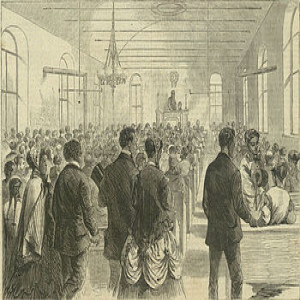
That was the day black workers met in Washington D.C. to found the Colored National Labor Union.
214 black trades people hoped to work towards equal representation in the workforce.
They also demanded antidiscrimination legislation, federally funded education and fulfillment of the promise of forty acres and a mule for Southern farmers.
34-year old black caulker, Isaac Myers, was elected president.
He had organized black caulkers in the Chesapeake shipyards.
Myers hoped to lead black workers into the National Labor Union, an early effort and building a national labor movement.
NLU founder William Sylvis insisted there should be no “distinction of race or nationality” among the ranks.
Myers added that white and black workers must come together in solidarity and organize for higher wages and living standards.
Many members of the NLU were not so progressive when it came to integrated unions.
Some of these organizations had whites-only clauses in their by-laws.
Others feared competition from black workers and voted not to extend membership. Myers understood the need to organize black workers.
While the NLU did not live up to its stated ideal of inclusion,
Myer’s effort welcomed all workers regardless of race, gender or occupation and represented workers across 21 states.
They were soon confronted with the full weight of resistance and hostile bosses, media and the government brought down upon them when they tried to push for reforms of any kind.
Though the CNLU soon fell into decline, black workers carried on its ideals of interracial solidarity, during the Great Strikes of 1877.
So did the new Knights of Labor who insisted, “An injury to one is an injury to all.”
Dec 5, 2023
Dec 5, 2023
1 min
On this day in labor history, the year was 1944.
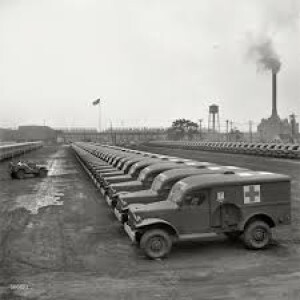
That was the day seven employees at Detroit’s Dodge Truck plant stopped working to protest the firing of a union brother.
When five of the seven were fired for the stoppage, it sparked a wildcat strike.
Another 320 workers downed their tools and left the plant. It was World War II.
The Dodge Truck plant had been converted to wartime production.
Workers there built heavy trucks to ship to allies in China.
The unions had signed onto a no-strike pledge after Pearl Harbor was bombed.
President Roosevelt demanded labor peace to aid the war effort. Leaders of the AFL and CIO agreed to no strike, no lockout clauses.
The CIO went further and agreed to give up overtime pay.
Most union members were not consulted on the pledge and did not vote on it.
When they learned about the pledge after the fact, many workers, who had just come off victorious organizing drives, were in no mood to make concessions.
They witnessed surging wartime profits for their employers and no cap on executive salaries, while they had to deal with wage freezes and inflation.
Many were confronted with increasingly unsafe working conditions, violations of newly won contracts and arbitrary discipline and firings. Despite the no-strike pledge, wildcat strikes were common.
During the war, there were over 14,000 strikes involving more than 6 million workers. In 1944 alone, when workers walked out at Dodge Truck, there had been more strikes in auto plants than at any other time in the industry.
Workers found that short, spontaneous walkouts quickly resolved their grievances, regardless of the no-strike pledge
Dec 5, 2023
Dec 5, 2023
1 min
On this day in Labor History the year was 1833.
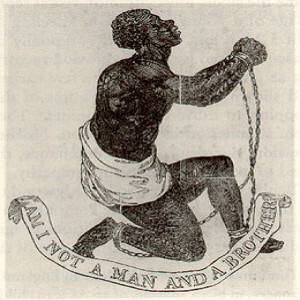
That was the day prominent abolitionists convened in Philadelphia, Pennsylvania to found the American Anti-Slavery Society.
They drew up a constitution, demanding an immediate end to slavery.
They also demanded full civil rights for people of color.
These activists distinguished themselves from the American Colonization Society, which advocated repatriation of free blacks to Liberia.
Coming off the heels of the Nat Turner Rebellion in 1831, much of the Societies’ work consisted of organizing petitions, meetings, and lecture tours.
These activities emphasized slavery’s brutality and inhumanity, and its immoral nature.
They also printed and distributed anti-slavery literature, like The National Anti-Slavery Standard newspaper.
The Society claimed 250,000 members by 1840.
They formed 2000 local chapters and published 20 journals.
Founders included prominent abolitionists like William Lloyd Garrison, Arthur and Lewis Tappan, Theodore Weld and many Quakers and free blacks.
Fiery orators like Fredrick Douglass and the Grimke sisters soon emerged as key leaders.
These anti-slavery fighters endured mob violence, including riots and even murder, like that of Elijah Lovejoy in 1837.
The Society split in 1840.
Garrison condemned the US Constitution for its denial of freedom to African-Americans.
He and his supporters pushed for secession from the South if they would not abolish slavery.
They also promoted women into leadership positions.
More conservative elements considered this too radical.
They split to form the American and Foreign Anti-Slavery Society.
Despite this, the abolitionist movement grew exponentially.
Anti-slavery ideas gained traction in new political parties and the movement’s work culminated in the enactment of the 13th, 14thand 15th amendments to the US Constitution in the aftermath of the Civil War.
Dec 5, 2023
Dec 5, 2023
1 min
On this day in Labor History the year was 1833.
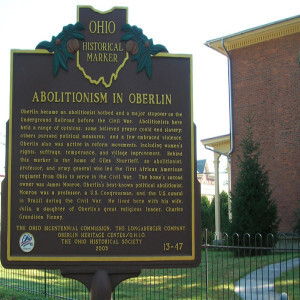
That was the day that the Oberlin Collegiate Institute was founded in northcentral Ohio.
Today it is known as Oberlin College.
The college was the project of two Presbyterian ministers John Jay Sipherd and Philo Stewart.
Their goal was to form a college based on Christian principals.
In the early days, tuition was free and students were expected to give their labor to help sustain the school and community.
The College motto “Learning and Labor” harkens back to that time.
From early on the college was different than many other institutions of higher learning of its day.
In 1835. Oberlin became the first predominantly white college admit black male students.
Two years later, Oberlin broke new ground again, letting in women and becoming the first coed college in the nation.
By opening its doors to black and women enrollees, Oberlin gave these students a chance to study and pursue careers that might otherwise have been closed to them.
By the turn of the twentieth century, one third of all black professionals in the United States had graduated from Oberlin.
In 1862, Mary Jane Patterson became the first African American woman to earn her bachelorette degree from Oberlin.
She became a teacher and principal.
Another black graduate, John Mercer Langston, would become the first black lawyer in Ohio and the first black congressman to represent Virginia in Washington, D.C.
Oberlin College was also known for its stance supporting the abolition of slavery and later for supporting Civil Rights.
The school was a stop on the Underground Railroad, which helped enslaved people escape into freedom in Canada.
Oberlin gave people the opportunity of an education.
Dec 2, 2023
Dec 2, 2023
1 min
On this day in Labor History the year was 2001.
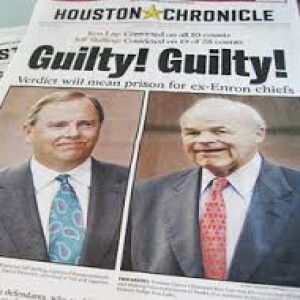
That was the day that the energy trading giant Enron filed for chapter 11 bankruptcy.
It was the biggest bankruptcy in U.S. history up to that time.
At its peak, the Houston based Enron was the seventh largest company in the country.
A combination of mismanagement and all-out greed sank Enron.
The company used numerous accounting tricks and loopholes to hide billions of dollars of debt from its shareholders.
In August of 2000 shares in the company were worth $90.75.
By November 30, 2001, they had plummeted to just 26 cents.
After filing bankruptcy thousands of Enron employees were left to go down with the ship.
Many employees and retirees held thousands of dollars’ worth of Enron stock.
Employees were told the company would recover.
They were encouraged not to sell off their stock, and even to buy more.
At the same time top executives were dumping their stock holdings.
When the company went under, the employees’ retirement accounts were wiped out.
Some who had already retired had to reenter the workforce.
The following January, a New York Timesreport shared the stories of some of the 4,000 employees laid off in the immediate aftermath of the bankruptcy.
One was told he lost his job by voicemail.
Another was told he had 30 minutes to clear out his desk.
Multiple law suits won a portion of the money back for Enron stockholders.
But employees lost more than $2 billion in retirement funds.
More than twenty top executives were found guilty for the crimes they committed while running the company.
Enron became synonymous with the corporate greed that has been the hallmark of twenty-first century America.
Dec 1, 2023
Dec 1, 2023
1 min
On this day in Labor History the year was 1966.
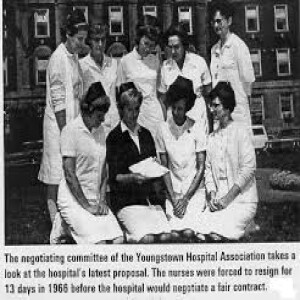
That was the day the registered nurses of the Youngstown General Duty Nurses Association walked out of their jobs.
Nursing could be a grueling profession, with long hours of physical labor for low pay.
In Youngstown, the nurses were frustrated because there were inconsistencies in pay.
Some recently hired nurses made more than those who had been working for years.
Part time nurses did not receive the same wage increases as full time employees.
They also did not feel that they had enough say in delivering quality care for their patients.
When they asked to meet with the hospitals executive director to discuss their concerns, the nurses were rebuffed.
They then contacted the Ohio Nurses Association union and asked for help.
Youngstown was a steel town, a union town, and the nurses were ready to join in the local labor movement.
At first the Youngstown Hospital Association refused to bargain with the union.
But when the nurses threatened to walk out, negotiations began.
After two months of talking at the bargaining table, major issues remained unsettled, including pay and union recognition.
Fed up, the nurses called for a mass resignation.
305 of 433 nurses turned in their resignations.
Two thirds of them were part time nurses.
They formed informational picket lines outside the hospitals.
A federal mediator was brought in to settle the dispute.
The nurses won significant gains.
They received a more than 25 percent over two years.
A grievance procedure was established for the first time.
But most importantly, the union gained recognition and the right to bargain for better wages, hours, and work conditions for nurses and their patients.
Dec 1, 2023
Dec 1, 2023
1 min
On this day in Labor History the year was 1854.
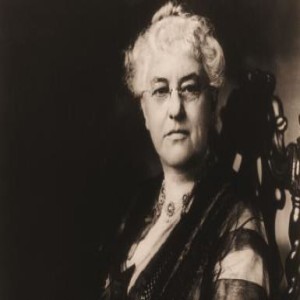
That was the day that Mary McDowell, known as the Angel of the Chicago stockyards was born.
Mary’s father brought the family to Chicago from Cincinnati after the Civil War.
Her family was friends with US President Rutherford B Hayes, and as a young woman she spent a month in the White House as a guest.
Mary received her college degree and worked as a teacher for a wealthy family in New York.
But living and working among the wealthy was not be the course of her life.
She returned to Chicago and became a kindergarten teacher at the famed Hull House.
Then she became the head of the University of Chicago Settlement House in the back of the yards.
The settlement house served the diverse neighborhoods around the Chicago Stockyards.
The community center included a library, play lots, gymnasiums and classrooms.
Mary and her settlement house supported the rights of workers to form unions and to have safe working conditions.
In 1903, Mary became the head of Illinois chapter of the National Women’s Trade Union League.
The Pittsburgh Press reported on an incident that captured the spirit of Mary McDowell.
The city of Chicago had a practice of using garbage to fill holes in the streets surrounding the stockyards.
Mary showed up at the Mayor’s office with a group of women from the neighborhood and demanded, “All right, we want the rest of it dumped on Lake Shore drive.
It it’s good enough for the stockyards it’s good for the drive, too.”
The city stopped using garbage for street repairs.