
A daily, pocket-sized history of America's working people, brought to you by The Rick Smith Show team.
Episodes
Saturday Nov 18, 2023
Saturday Nov 18, 2023
On this day in Labor History the year was 1929.
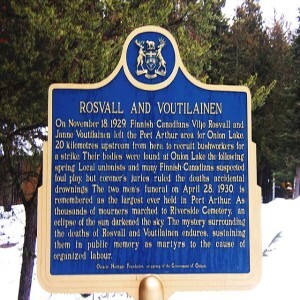
That was the day that Viljo Rosvall and Janne Voutilainen disappeared on their way to recruit workers at a bushcamp during a strike in northwestern Ontario, Canada near Thunder Bay.
They were both Finnish-Canadians.
Viljo Rosvall was an organizer for the Lumber Workers Industrial Union of Canada.
The union included many Finnish lumber workers and had ties to the Canadian Communist Party.
Janne Voutilainen was an experienced trapper.
The two men never made it to their destination—the Pigeon Timber Company Camp, located north of Onion Lake.
It was unknown what happened to them until the next April.
Voutilainen’s body was found in shallow water at the edge of Onion Lake.
A few days later Rosvall was found, also drowned, in a nearby creek that emptied into the lake.
The Finnish workers blamed the deaths of the two men on the conservative Finnish camp boss, who oversaw the Onion Lake encampment.
The coroner’s autopsies ruled the deaths accidental drownings.
But many remained unconvinced and suspected foul play.
They questioned how an experience trapper such as Voutilainen could fall through the ice and drown in such shallow water.
Thousands attended the funeral for the martyrs.
The debate over what happened to the two men continues to this day.
An historical marker reads “The mystery surrounding the deaths of Rosvall and Voutilainen endures, sustaining them in public memory as martyrs to the cause of organized labor.”
A headstone donated by the Thunder Bay and District Labor Council was erected in 1993, to honor the graves which had gone previously unmarked.
The deaths of the two men travelling to organize workers remains a mystery of the Canadian labor movement to this day.
Saturday Nov 18, 2023
Saturday Nov 18, 2023
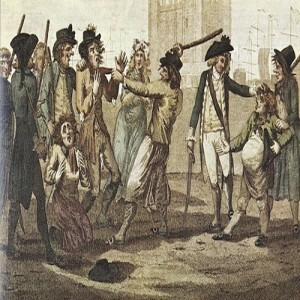
That was the day that a crowd of Boston workers took British officers as hostage and held them for three days.
The workers were outraged that fellow Bostonians had been pressed into service on British Navy ship against their will.
Impressing ship crews was one of the ways the British manned their ships when there were not enough willing crew members.
The seaport at Boston had become so notorious for this kind of worker kidnapping that other merchant vessels had begun to avoid the area for fear their crews might be taken by the British Navy.
Bostonians became increasingly vocal against the practice, and worried about its impact on the local economy.
In 1745 the local Selectmen petitioned for “immediate relief” from impressment.
They wrote that it was a matter that “nearest effects the Libertys of the People and is a great insult upon this government.”
Two years later, Commodore Charles Knowles sailed into Boston on his way to the West Indies.
While he resupplied and refit his ships, some of his crewmembers escaped from service.
To make up his diminished crew, on November 16 Knowles ordered local workers to be rounded up as replacements.
Fed up Bostonians detained members of the British fleet including one of Knowles lieutenants.
The Massachusetts Governor William Shirley was able to persuade Knowles not to retaliate.
He helped facilitate an exchange the impressed Bostonians for the British hostages.
That January a young Samuel Adams founded the newspaper the Independent Advertiser, published to “defend the rights and liberties of mankind.”
The paper commended the mob for standing up to impressment.
Samuel Adams would go on to become a leader in the American Revolution.
Saturday Nov 18, 2023
Saturday Nov 18, 2023
On this day in Labor History the year as 1982.
That Tuesday the National Football League players ended their fifty-seven-day strike.
The league scrambled to get the new season going, scheduling games for that very next Sunday.
The shortened nine-game season included two games played before the walkout, and the rest after the strike ended.
The biggest issue that lead to the strike was pay.
The NFL had seen a surge in television revenue with a new five-year contract worth $2.1 billion.
The players asked for 55% of the leagues’ growing profits.
The players’ association also wanted a minimum pay scale based on years of service, and improved health and retirement benefits.
The owners flatly refused.
On September 20, the Green Bay Packers beat the New York Giants in a Monday Night Football game.
The next day the New York Daily News reported, “For the first time in its 63-year history, labor troubles will throw the NFL for a loss. By a unanimous vote of its executive committee, the league’s Players Association yesterday voted to call a strike.”
The article continued by writing, “The players stressed that they had been forced to call the strike in frustration over what they termed management’s twin failures to take them seriously and to bargain in good faith.”
Sports Illustrated summed up fan sentiments about the strike with a cover headline reading pffffft! over the image of a deflated football.
Finally, the two sides came to an agreement.
The players won raises, bonuses based on years in the league, and severance packages for retiring players.
But the gains were far below the union’s goals.
Bitterness lingered, and five years later the players would be on strike again.
Wednesday Nov 15, 2023
Wednesday Nov 15, 2023
That was the day that federal agents stormed the offices of the Industrial Workers of the World in New York City, looking for evidence connecting the organization to radical Communists or Anarchists.
The ransacked office was part of the infamous “Palmer Raids,” when Attorney General Alexander Palmer responded to the growing Red Scare hysteria by raiding the offices of leftist organizations and arresting thousands.
Hundreds of immigrants to the United States were deported during the raids without legal due process.
The 1917 Russian Revolution had stoked fears about a spreading communist threat.
Newspaper headlines helped to drum up public panic.
A week before the IWW raid, a headline on the front page of the Evening World, published in New York City declared, “Reds in U.S. Plotted Revolution; Deportation for All Radicals.”
The day after the IWW raid, a Washington Post headline read “Law to Crush Reds.”
Writing in 1920, Attorney General Palmer warned “The chief appeal communism makes is to “The Worker.” If they can lure the wage-earner to join their own gang of thieves, if they can show him that he will be rich if he steals, so far they have succeeded in betraying him to their own criminal course.”
Palmer went on to describe how Communists had “stirred discontent,” “caused irritating strikes,” and “infected our social ideas with the disease of their own minds and their unclean morals.”
Palmers’ references to workers and irritating strikes demonstrate that he perceived the labor movement as part of the communist threat.
Anti-Communist hysteria took its toll on the most radical elements of the U.S. labor movement, especially the IWW.
Tuesday Nov 14, 2023
Tuesday Nov 14, 2023
On this day in Labor History the year was 1938.
That was the day that the National Federation of Telephone Workers was founded in New Orleans, Louisiana.
Today the union is known as the Communication Workers of America, and represents 700,000 workers in a wide range of communication fields.
Attempts to organize the telephone industry began as early as 1910, by the International Brotherhood of Electrical Workers.
Yet the women who worked as telephone operators were not included in the union until two years later.
By the end of the decade, the IBEW had more than 200 telephone unions.
Growth in the number of union members in the telephone industry was great impeded due to World War I.
During the war, President Woodrow Wilson issued an order to “herby take possession and assume control and supervision of each and every telegraph and telephone system, and every part thereof, within the jurisdiction of the United States.”
He placed control of the industry under the authority of the Postmaster General.
After the war ended, telephone companies increasingly installed company unions as a way to control workers organizing efforts.
Their aim was stave off unionism from outside organizations.
Nearly all of the IBEW locals lost their membership to the company unions.
But when Congress passed the Wagner Act in 1935, supporting the rights of workers to join and form independent unions, a new surge of independent unionism began in the telephone industry.
In 1938, thirty-one organizations joined together in New Orleans to form the National Federation of Telephone workers.
It was a loose association of locally independent unions.
By 1947, it became clear that the union would have to form a strong national presence to negotiate with nation-wide companies, and the Communication of Workers of America was born.
Monday Nov 13, 2023
Monday Nov 13, 2023
On this day in Labor History the year was 1927.
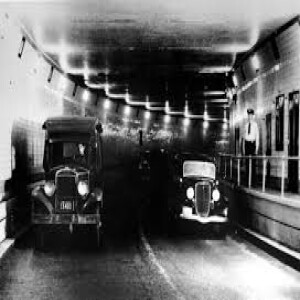
That was the day that the Holland Tunnel, connecting New York City and New Jersey, opened for traffic.
Before the tunnel, the only way to cross the Hudson River from the city to New Jersey was by ferry.
City officials decided to build a tunnel to alleviate congestion—but they had a problem.
All those cars driving underground would cause a potentially deadly build-up of carbon monoxide.
There had to be a way to ventilate the tunnel.
Engineer Clifford Holland came up with the solution.
Big fans located at each end of the tunnel could draw fresh air into the passage. The giant fans were nearly as tall as a ten-story building.
In honor of his engineering work, the tunnel was named after Holland, but he did not live to see the completion of his vision.
The tunnel also owes its existence to unionized labor.
The workers who performed the backbreaking work of digging New York’s vehicle and subway tunnels called themselves the “sandhogs.”
In a 1983 book about the union written by Paul Delaney, a worker recounted his memories of the Holland project saying quote, “The turnover in workers was unbelievable. Men would work an hour or maybe a shift, and they’d never be seen on the job again. Even the strongest men were tired after fifteen or twenty minutes in the air. And there as always the worry of being fired. If a man went for more than two sips of water during a shift, he was told to collect his wages and go home.”
Fourteen workers died on the project.
More than a billion cars have made the trip under the Hudson since it first opened.

Sunday Nov 12, 2023
Sunday Nov 12, 2023
On this day in Labor History the year was 1995.
That was the day that healthcare workers in Calgary, Alberta, Canada walked off the job in a wildcat strike.
Budget cuts in Alberta, under the leadership of Premier Ralph Klein, had hit healthcare particularly hard.
A massive restructuring plan called for deep cuts, privatization, and reducing services.
As part of this trend, the Calgary Regional Health Authority had decided to contract out the work of 120 laundry personnel.
The workers were members of the Canadian Union of Public Employees Local 8.
The laundry workers walked off the job in protest.
Soon they were joined in solidarity on the picket line by housekeepers, orderlies, nurses and other hospital workers.
Eight hospitals across the city were impacted by the walk out.
Community members joined in and marched on the picket lines, frustrated by the government cuts.
Twice the Labour Relations Board ordered the workers to go back to their jobs.
Twice the workers refused.
The strike spread to Calgary, where more than 2,500 healthcare workers walked off the job.
In Edmonton, workers stood ready to strike.
Talk of general strike began circulating.
In Calgary the union met with management for a nineteen-hour marathon bargaining session and the ten-day strike ended.
The Health Authority agreed to wait eight months before contracting out any labor.
Workers were given severance packages.
And the government stopped any further cuts to the industry.
But the settlement did little to appease the dissatisfaction of the health care workers.
The strike had also shown the potential connections between workers’ issues on the jobs and concerns of community members.
The cutbacks hurt both labor and the general public, and brought them together to stand in solidarity.
Saturday Nov 11, 2023
Saturday Nov 11, 2023
On this day in Labor History the year was 1887.
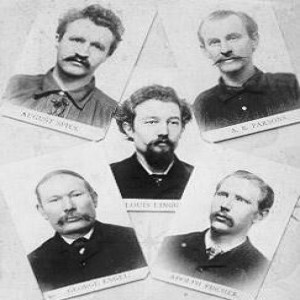
That was the day that four men were hung in Chicago for their alleged role in the bombing at a labor rally at the city’s Haymarket Square a year earlier.
Eight men were put on trial.
Although the prosecution did not prove any of the men had ties to the bombing, five were sentenced to die.
Louis Lingg died in jail before the execution could take place.
The others were martyred for their support of the labor movement and the fight for the eight-hour day.
Three of those executed were born in Germany.
August Spies and Adolph Fischer, worked for a Chicago German-language, worker’s newspaper.
George Engel owned a toy store.
Backlash against foreign-born anarchists helped stoke public hysteria over Haymarket.
The final martyr was southern-born Albert Parsons, the editor of The Alarm, an English-language workers paper.
The day after they died, the Chicago Tribunereported on the brutality of their execution, “Then begins a scene of horror that freezes the blood. The loosely-adjusted nooses remain behind the left ear and do not slip to the back of the neck. Not a single neck is broken, and the horrors of a death by strangulation begin....”
Thousands of mourners joined the funeral procession of the five slain men.
In 1893, Governor John Peter Altgeld granted the three defendants still a jail a full pardon.
The monument to the Haymarket eight stands at Forest Home Cemetery, just west of Chicago—drawing visitors from across the world to remember these martyrs for the eight-hour movement.
May Day is celebrated as the worker’s holiday around the world in commemoration of the events in Chicago.
Friday Nov 10, 2023
Friday Nov 10, 2023
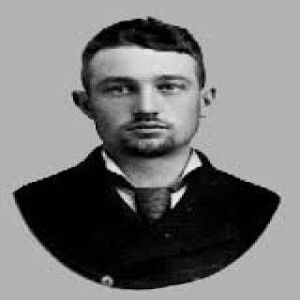
On this day in Labor History the year was 1887. That was the day that Louis Lingg died in prison, awaiting execution for his alleged role in a bombing at a worker’s rally at Haymarket Square in Chicago the year before.
Louis was born in Germany. His father worked for a lumber mill. One day, while trying to clear a log jam, his father fell into an icy river. Although Louis’ father lived, he could no longer carry the same work load. The company fired him, despite his twenty years of service.
Louis began to question a labor system that would let this happen. He became a carpenter’s apprentice. Louis then traveled to Switzerland, where he became acquainted with anarchist worker groups.
Finally, in 1885, Louis made his way to the United States and Chicago. There he joined the Carpenters and Joiners Union. He became an outspoken advocate for the cause of the eight-hour day. The movement had great success in Chicago and on May 1st, or May Day, thousands marched in the streets for the eight-hour cause.
But when a bomb was thrown at a workers’ rally three day later, the backlash against the labor movement was swift and brutal. Eight men, including Louis, stood trial and were convicted despite a lack of evidence tying them to the bombing. Louis Lingg and four others were sentenced to death by hanging.
But the day before the sentence was to be carried out, Louis lit a cigar in his prison cell. The cigar was packed with explosives. The explosion left Louis in agony for hours before he finally died.
Some believe he committed suicide rather than die at the hands of the legal system. Others believe he was murdered.
Friday Nov 10, 2023
Friday Nov 10, 2023
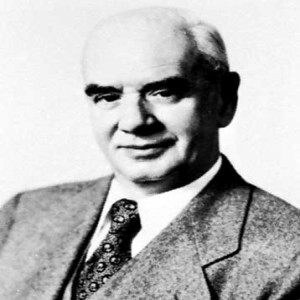
On this day in Labor History the year was 1952.
That was the day that the labor movement lost Philip Murray.
Philip was born in Scotland in 1886 to an Irish Catholic family.
His father was a coal miner and a union leader.
Philip followed his father into the mines at just the age of ten years old.
The Father and son made the trip to the Pennsylvania coal fields together, when Philp was sixteen.
They saved enough money, and then sent for the rest of their family.
One day Philip got into an altercation with one of his bosses.
Not only was he fired, his family was kicked out of their company home.
From that point on Philip was dedicated to the union cause as the only hope for working people.
He rose through the ranks of the United Mine Workers, becoming Vice President by the time he was thirty-three.
He worked closely with legendary United Mine Workers President John L. Lewis.
During the 1930s there became a nation-wide drive to organize industrial workers.
Philip was appointed to lead the Steel Workers Organizing Committee, a key sector for the industrial effort.
The steelworker campaign met with historic success.
They reached a collective bargaining agreement with U.S. Steel, the giant of the industry.
Philip went on to become the first President of the United Steelworkers of America, as well as President of the Congress of Industrial Organizations.
Under his leadership industrial labor became a powerful force.
But that force was checked by the passage of the anti-union Taft-Hartley Act in 1947.
The anti-communist hysteria of the Red Scare also took its toll on the CIO, forcing Philip to expel some of the most radical unions from the organization.