
A daily, pocket-sized history of America's working people, brought to you by The Rick Smith Show team.
Episodes
Tuesday Dec 19, 2023
Tuesday Dec 19, 2023
On this day in labor history, the year was 1917.
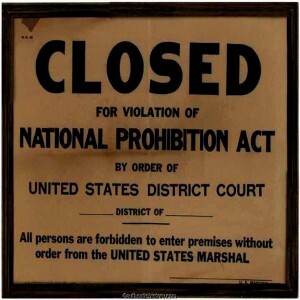
That was the day that Congress passed the Eighteenth Amendment, which outlawed the transportation, manufacture and sale of alcohol.
The amendment went into effect thirteen months later.
According to John Rumbarger, author of Profits, Power and Prohibition, the temperance movement centered on tightening social control of working people.
Workers often met in bars and saloons to unwind after work and to socialize.
But in the days before union halls, the saloon doubled as a headquarters where workers could talk about problems on the job like mistreatment and poor working conditions.
They used the saloon as place to plan and organize strikes.
It also served as a site for workers to talk politics and organize around political parties.
Many prominent industrialists complained that saloons were breeding grounds for labor unrest and radical politics.
They also feared a growing immigrant working class that tied its fate to powerful political machines in cities like Chicago, New York and Boston.
The Anti-Saloon movement brought a strange mix into its coalition.
It included the KKK who worried of the growing power of immigrant workers.
But it also included Progressives who worked for labor harmony and sobriety as a means of public health.
The anti-Saloon movement also targeted German Brewers.
The United States had just entered World War I and Anti-German sentiment was so high that many considered German Brewers to be working for the Kaiser, their product a sap on the energies of servicemen and grain production to feed the US troops.
But alcohol flowed freely throughout the 20s, creating both the Jazz speakeasy and bootlegging syndicates.
It would ultimately be repealed by 1933.
Sunday Dec 17, 2023
Sunday Dec 17, 2023
On this day in labor history, the year was 1944.
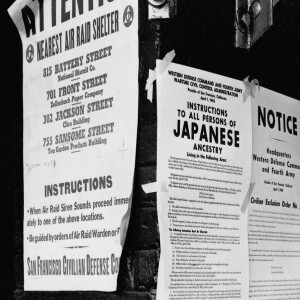
That was the day President Franklin Delano Roosevelt rescinded Executive Order 9066.
It had forcibly relocated over 120,000 Japanese-Americans into internment camps.
After the bombing of Pearl Harbor, the government considered Japanese-Americans a national security threat.
By 1942, many were given less than a week’s notice to sell and store all property
Whole families were rounded up and taken away to desolate areas in the West and Southwest.
Up to this point, many Japanese-Americans in California were employed in the agricultural industry, some as tenant farmers.
They were responsible for 40% of all produce grown in that state, whose crops were valued as $40 million annually.
Over 6000 farms, consisting of 200,000 acres were confiscated.
Once interred, they were subjected to dire living conditions with little in the way of running water, sanitary facilities or medical care.
They were subject to forced labor in the construction of camp buildings and cultivation of near-barren lands.
The government hoped to make the camps self-sufficient.
In Poston, Arizona, they were made to build the infrastructure for Colorado River Tribes reservation in order to consolidate other tribes onto the land.
When Japanese-Americans were finally released, most found their stored belongings stolen and their homes, jobs and farms confiscated and redistributed.
After the war, they continued to face violence, job and housing shortages, and racial discrimination.
Ronald Reagan would sign the Civil Liberties Act in 1988.
It acknowledged that internment was based on “race prejudice, war hysteria and a failure of political leadership.”
The act served as a formal apology and sought to distribute billions in reparations.
Saturday Dec 16, 2023
Saturday Dec 16, 2023
On this day in labor history, the year was 1951.
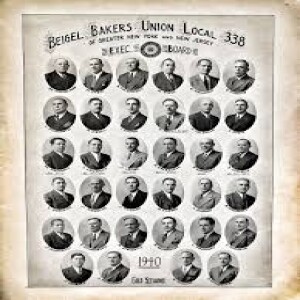
That was the day New York City was struck by the Great Bagel Famine.
Three hundred members across thirty-two bakeries, of the Bagel Bakers of America, local 338 walked off the job over wages and working conditions.
Morris Siegal, business agent for the local, stated that the Bakers Association had been “lax in living up to the welfare-fund payments and sanitary provisions of the contract.”
The bagel bakers produced 1.2 million bagels weekly for New York City consumers.
The Wisconsin Jewish Chronicle noted “the only ones welcoming this respite are the salmon.”
Diners, delicatessens, and Teamster delivery drivers were all rocked by the strike, which lasted for six weeks.
The two sides were so deadlocked that a mediator who had effectively settled a smoked salmon dispute three years earlier, was brought in to help settle the conflict.
The bagel bakers won a $3 day wage increase and we're ready to return to work.
But the Teamsters would not begin deliveries until they were paid for lost wages due to lack of deliveries made during the strike.
The bagel bakers would engage in job actions effectively over the course of the next fifteen years until they too suffered the fate of many an industrial worker, that of automation.
Their labor would eventually be replaced by labor-saving bagel making machines by the late 1960s.
Saturday Dec 16, 2023
Saturday Dec 16, 2023
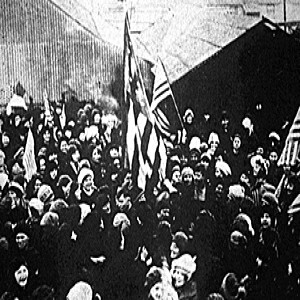
On this day in labor history, the year was 1921.
That was the day Kansas National Guard troops marched into Crawford County coal fields to quell the “Mothers March.”
8000 miners went on strike that September to protest the jailing of their UMW district leader, Alexander Howat.
Howat was found guilty of violating a statewide strike injunction for calling workers out on strike in 1919.
Governor Henry Justin Allen had established a state industrial court which ruled strikes illegal.
Howat’s members considered it a new kind of fugitive slave act.
They likened their jailed leader to a modern-day John Brown.
The UMW opposed the court and the increasing number of unauthorized strikes.
Many district leaders were divided over this protest strike and chose not to support it.
The strike also divided the membership and some went back to work.
Conditions worsened after three months until the striking miners’ wives took matters into their own hands.
They met in Franklin to organize a march that would effectively shut down the mines.
Their numbers grew from 500 the first day to over 4000.
According to Benjamin Goosen, “for three days the women stormed area mines, obstructed traffic, and assaulted workers. When met with resistance, they threw red pepper at “scab” workers and overturned their lunch buckets, showering the miners with coffee and what had been intended as their midday meals.”
Four companies of National Guard troops, including a machine gun division, arrived to stop the march and break the strike.
The press derisively referred to the women as the “Amazon Army.”
Many women were arrested but mobilized their newly won voting power to unseat anti-labor politicians the next spring.
As a result, the state industrial court was ruled unconstitutional.
Saturday Dec 16, 2023
Saturday Dec 16, 2023
On this day in labor history, the year was 1995.
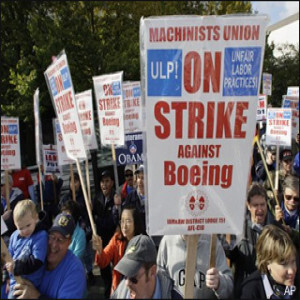
That was the day Machinists at Boeing ended their 69-day strike.
33,000 workers won increased pay and health benefits.
They also won job protections against subcontracting.
Contractual clauses against subcontracting were important, especially given the fact that NAFTA had just been passed two years earlier.
The contract specified that the union be given three months notice regarding any plans to subcontract out work.
It also incentivized keeping work in house by calling for increased benefits to laid-off workers and mandatory retraining and reemployment of workers displaced by subcontracting.
These provisions came after IAM members rejected two previous contract offers.
They were furious at the initial demands for concessions, even as Boeing executives were awarded multimillion-dollar stock options.
At the time, the IAM and its members lauded this as a total victory.
And for a few years, Boeing abided by the contract they signed.
Subsequently, Boeing bosses have routinely violated their agreements.
Many of these provisions were lost in the 2002 contract, and then recaptured in 2008.
But the next contract negotiations witnessed a renewed fight for job security.
Over the past two decades, Boeing workers have seen massive lay-offs, subcontracting, pension freezes and phase-outs, and relocation of their work.
All while the company rakes in billions in profits, gets lucrative tax breaks and subsidies, and has close to 5000 back orders for planes.
Subcontracting clauses are important but can only work when they’re enforced.
Victories like the winning strike in 1995 can serve as a reminder for workers today that if they stand together in solidarity they can win better wages, hours, and conditions at the bargaining table.
Wednesday Dec 13, 2023
Wednesday Dec 13, 2023
On this day in labor history, the year was 1971.
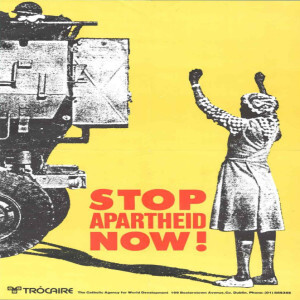
That was the day Namibian workers began a general strike to protest the contract labor system.
As a colony of South Africa until 1990, Namibia faced many of the same apartheid-like measures that blacks faced in South Africa.
Black migrant workers in Namibia comprised the majority of workers in the diamond mines, fisheries and commercial farms.
They were forced to live in the northern third of the country and were subjected to the pass system.
It determined where they could live and work and when they could travel.
Restrictions on their rights as workers were directly tied to restrictions they experienced as colonial subjects.
Because there were no trade unions at the time, this strike is considered to be an important first step in the twenty-year fight for independence.
More than 13,500 black contract workers participated, effectively shutting down 23 key workplaces and 11 mines.
The indigenous Ovambo and Kavongo workers demanded the right to choose jobs, end contracts, to bring their families to distant work locations, a new pass system, and increased wages based on work type, not skin color.
In her book, Labor and Democracy in Namibia, Gretchen Bauer says that while workers did win wage increases, the pass system remained largely intact.
Employers were angry that workers now had the right to bid on jobs, quit at will and receive holiday bonuses and leave pay.
Workers were upset that they were still subjected to restriction of movement and arbitrary arrest and detention.
But the strike began the long process of eroding the pass system, contract labor and second-class citizenship for indigenous workers Namibia.
Tuesday Dec 12, 2023
Tuesday Dec 12, 2023
On this day in labor history, the year was 1947.
That was the day United Mine Workers leader, John L. Lewis wrote the AFL, stating: “We Disaffiliate.”
Lewis had had a stormy history with the American Federation of Labor.
He was central to the 1935 split that soon led to the founding of the Congress of Industrial Organizations.
By 1942, he led the UMW out of the CIO.
Reasons included disagreements over labor’s relationship to President Roosevelt and US entry into World War II, and the running of the CIO itself.
For a brief time, the UMW re-affiliated with the AFL
By the fall of 1947, Lewis found himself in fundamental disagreement with the Federation over its response to the recently passed Taft-Hartley Act.
At the October AFL convention, the discussion centered on the signing of anti-communist affidavits, as required by Taft-Hartley.
Lewis was virtually alone in his refusal to comply with the act.
He noted the act would have been stillborn if labor leaders had stood tall and refused to sign the affidavits.
Further, he said, “This Act is a trap, a pitfall for the organizations of labor... This Act was passed to oppress labor, to make difficult its current enterprises for collective bargaining, to make more difficult the securing of new members for this labor movement, without which our movement will become so possessed of inertia that there is no action and no growth, and in a labor movement where there is no growth there is no security for its existence, because deterioration sets in and unions, like men, retrograde.”
Despite the split the UMW would remain a powerful, independent union for more than 40 years.
Tuesday Dec 12, 2023
Tuesday Dec 12, 2023
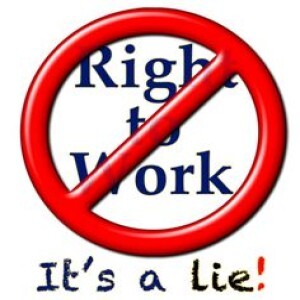
That was the day Michigan Governor Rick Snyder signed Right-to-Work legislation into law.
The birthplace of the United Auto Workers union had just become the 24thstate to pass legislation that guaranteed the open shop and the prohibition of mandatory dues collection.
More than 10,000 trade unionists gathered in Lansing that day to express their outrage.
The only source of income unions have is their dues base.
Without it, unions can’t adequately represent their members.
Work of the unions isn’t just about effectively negotiating a contract.
It also includes fighting contract violations, excessive discipline and wrongful discharges and enforcing safety and good working conditions on the job.
All this suffers under Right-to-Work.
But this is nothing new.
Right to Work laws have their roots in fighting the Wagner Act and CIO organizing drives throughout the South in the 1940s.
The Texan businessman and lobbyist Vance Muse fought hard against child labor laws, the eight-hour day and even the right for striking workers to picket.
Pro-segregationist Democrats, cotton brokers, Fred Koch, the DuPont brothers, Gerald Sloan of GM and others, supported him in his efforts.
His organization, the Christian American Association was closely aligned with the Ku Klux Klan.
Muse argued that segregation could only be maintained by enforcing the open shop.
Otherwise whites would be forced to interact with blacks.
He said, “From now on, white women and white men will be forced into organizations with black African apes whom they will have to call ‘brother’ or lose their jobs.”
The wealth class has spent millions of dollars over over sixty years to defeat working people and reverse hard fought gains.
Now is the time for workers to stand in solidarity against their No Rights at Work agenda.
Sunday Dec 10, 2023
Sunday Dec 10, 2023
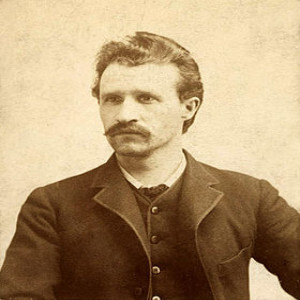
He immigrated to America from Germany in 1872 and became involved in the Chicago labor movement while working as an upholsterer.
The Panic of 1873 and the Great Strikes of 1877 radicalized Spies.
He soon joined the Socialist Labor Party but soon left over the issue of electoral politics.
He and others favored revolutionary action instead and threw their weight to the emerging anarcho-syndicalist movement.
Spies and his comrade, Albert Parsons, believed that trade unions must work towards ending capitalism, rather than simply fighting for economic gains.
They soon became leaders of the International Working People’s Association in Chicago.
Spies became editor of the radical, German language newspaper, Arbeiter-Zeitung.
The worker’s newspaper decried the incredible wealth of a few, amidst the immense poverty and suffering workers faced.
It became a rallying point for the Eight-Hour Day campaign.
Spies and other anarchist leaders, who would soon be known as the Haymarket Martyrs, became involved in organizing the Mayday strike in 1886.
Spies gave the impassioned speech at McCormick Reaper Works
He witnessed the Chicago police shoot down two workers as they confronted scabs at the gate and organized a protest rally in response.
The rally took place at the Haymarket Square the next evening.
When the fateful bomb was thrown, Spies and his comrades were immediately arrested.
They were tried and convicted for their political views.
There was no evidence linking any of them to any crime.
As he walked to the gallows, Spies shouted “The Day Will Come When Our Silence Will Be More Powerful Than the Voices You Are Throttling Today.”
Saturday Dec 09, 2023
Saturday Dec 09, 2023
On this day in labor history, the year was 1953.
That was the day Ralph Cordiner, president of General Electric issued his “Cordiner Doctrine.”
It was the height of McCarthyism and the Second Red Scare.
The House Un-American Activities Committee persisted in its witch hunting of trade unionists, labor militants and alleged communists.
It targeted many of the unions purged from the CIO in 1949.
The United Electrical Workers was one of those unions.
The UE had organized the electrical manufacturing industry, including General Electric.
Wisconsin Senator Joe McCarthy and HUAC each began investigating UE local 301 at the General Electric plant in Schenectady, New York.
GE didn’t like the militancy of the UE or the bad publicity McCarthy generated about the company harboring subversives.
So President Cordiner issued a memo, which stated that any employee called before a Senate or legislative committee hearing, who invoked the Fifth Amendment in response to inquiries regarding alleged Communist ties, shall be terminated.
When McCarthy came to Albany, New York to hold hearings on alleged subversive activities three months later, hundreds of UE members packed the room, booing and jeering the senator and cheering the defendants.
One African-American worker demanded “Why don’t you investigate subversion by GE of the Jim Crow system, of the profits taken from the sweat of my people?”
McCarthy abruptly ended the hearings.
But twenty-eight UE members would be fired at GE.
Other electrical manufacturers like Westinghouse followed suit.
It was a devastating blow to the union and to the fired members who had helped build the UE from ground up.
But the union persevered and remains a powerful representative for workers in the industry to this day.