
A daily, pocket-sized history of America's working people, brought to you by The Rick Smith Show team.
Episodes

Saturday Dec 30, 2023
Saturday Dec 30, 2023
On this day in labor history, the year was 1970.
That was the day President Richard M. Nixon signed the Occupational Safety and Health Act into law. At the time, it was estimated that 14,000 workers died annually on the job, 2.2 million workers were permanently or temporarily disabled and half a million developed occupational diseases each year.
The Department of Labor admitted at the time that at least 25 million serious injuries and deaths went unreported each year.
Statistics like these prompted occupational health and safety expert, Dr. Jeanne Stellman to state, “Each day millions of workers in America enter a battlefield, but they fight no foreign enemy and conquer no foreign lands. The battlefield is the American workplace and the casualties of this war are higher than those of any other in the nation’s history.”
Industrial unions surveyed thousands of members regarding health and safety conditions.
They documented deplorable working conditions, debilitating injuries, mystery diseases and early fatalities of their coworkers.
Their testimonies provided the ammunition necessary to fight for OSHA.
The Act established the Occupational Safety and Health Administration, responsible for standards, regulation and enforcement.
It also established the National Institute of Occupational Safety and Health, responsible for research and recommendations.
The Act served as a milestone. It provided the formal, legal basis for which workers could fight to qualitatively change their lives at the workplace.
The General Duty Clause established that workplaces must be free of hazards, and allowed workers to demand inspections.
The Act also mandated medical record keeping, surprise inspections and enforcement.
Many of the standards, regulations and enforcements OSHA now has, have come as a result of intense, continuous pressure waged by the labor movement.
Thursday Dec 28, 2023
Thursday Dec 28, 2023
On this day in labor history, the year was 1973.
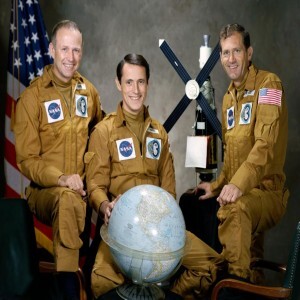
That was the day three astronauts aboard Skylab 4 staged a one-day strike against NASA, while in outer space. It was an 84-day mission, consisting of grueling, 16-hour workdays.
The crew was tasked with spacewalk inspections of the spaceship, comet observations, medical experiments and many projects to photograph the Earth.
Soon, Mission Commander Gerry Carr, Science Pilot Ed Gibson and Pilot William Pogue found themselves behind schedule, exhausted and in Pogue’s case, sick.
NASA insisted they work through meal and rest breaks in order to catch up.
They became increasingly frustrated by endless instructions that micromanaged every move. Infuriated by Mission Control’s eavesdropping on their conversations, Gibson argued the mission felt like a “33 day fire drill.”
Carr stated, “We would never work 16 hours a day for 84 straight days on the ground, and we should not be expected to do it here in space.”
When Mission Control dismissed the three as complainers, the crew demanded a return to rest and meal breaks and an end to their relentless schedule.
Their demands were ignored and so, they simply turned off the radio link with the ground crew.
Relations improved when the crew re-established communications the next day.
Their schedules were adjusted and breaks restored, though none ever went into space again. Debates continue whether this episode is instructive for the labor movement.
Samir Chopra notes, those "fully convinced of the value of their work are likely to push back when placed in an artificially controlled, too-tightly-regulated environment… the lessons here are not just for manned space flight, but for any workplace environment that approximates its conditions."
Thursday Dec 28, 2023
Thursday Dec 28, 2023
On this day in labor history, the year was 2011.
That was the day the National Labor Relations Board ruled that musicians in Lancaster, Pennsylvania were employees, not independent contractors.
Veteran musicians with the Lancaster Symphony Orchestra attempted to organize a union in 2007.
They challenged the dictatorial methods by which musicians were treated.
They wanted a contract to spell out rules for hiring, firing, auditioning, grievance procedures and more.
When it came time to sign union cards, the Symphony opposed the election, claiming the musicians were independent contractors.
The musicians filed with the regional Labor Relations Board. After receiving an unfavorable ruling, they turned to the national offices in Washington, DC.
There, the Board utilized the “common law agency test,” to determine the musicians’ status. Questions discern how much control workers have over the way they work, are they highly skilled, how are they paid, do they provide their own tools, or in this case, instruments.
When more answers tilt towards yes, workers are considered independent contractors.
The NLRB determined that though these workers are paid on a 1099 instead of a W-2 form, they are employees because of their working conditions.
They concluded that orchestral management exerted a great deal of control. Management determined musicians’ dress, their posture and behavior before, during and after rehearsals and concerts.
Management also imposed discipline and firings. Musicians voted to join the Greater Lancaster Federation of Musicians the next spring.
But their victory was soon undercut by management’s refusal to negotiate a first contract.
The musicians filed an unfair labor practice and won. The symphony took the case to a federal appeals court, which settled in the union’s favor in Spring 2016.
Tuesday Dec 26, 2023
Tuesday Dec 26, 2023
That was the day garment workers gathered in New York City to found the Amalgamated Clothing Workers of America.
It was a revolt against the conservative United Garment Workers union. Garment workers across the country had complaints against the UGW.
The new ACWU leaders held a simmering resentment over a bad deal made after the 1910 Chicago strike in the men’s clothing industry.
Then, in 1914, UGW tops refused to seat New York City delegates at the Nashville convention.
Chicago delegates protested and both walked out of the conference.
They had had it with the dominance of white, skilled craftsmen in a union whose members were largely immigrant women.
Early on, the ACWA emphasized industrial organizing and social unionism.
With Sidney Hillman as their first president, the union engaged in many strikes, winning the 44-hour workweek in 1919.
It provided such benefits to its members as cooperative housing, child day care, unemployment insurance, and collectively bargained health and life insurance plans. It also established the Amalgamated Bank.
By the late ‘20s, the union boasted a membership of over 100,000. Having never joined the AFL, it quickly signed up with the new CIO and coordinated its work with the Textile Workers Union of America in 1937.
The ACWA continued to organize successfully.
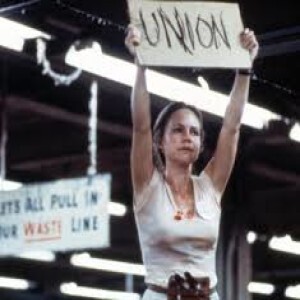
In 1963, these unions embarked on what became a 17-year organizing drive and boycott at J.P. Stevens, popularized in the movie, Norma Rae.
They led other successful campaigns in the ‘70s, including at Farah clothing and championed investigations into “brown lung” disease.
The union has since undergone a number of mergers and splits, and is now known as Workers United.
Monday Dec 25, 2023
Monday Dec 25, 2023
On this day in labor history, the year was 1921.
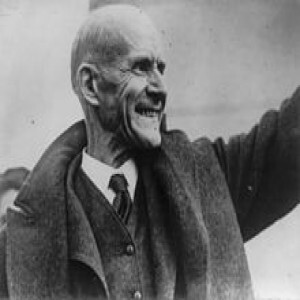
That was the day President Warren G. Harding ordered Eugene V. Debs released from prison.
The Socialist Party leader had been convicted of Sedition in 1918 and sentenced to ten years in prison for an anti-war speech he made in Canton, Ohio earlier that year.
He noted in that speech, “Wars throughout history have been waged for conquest and plunder… And that is war, in a nutshell. The master class has always declared the wars; the subject class has always fought the battles… To turn your back on the corrupt Republican Party and the corrupt Democratic Party—the gold-dust lackeys of the ruling class—counts for something.
It counts still more...to join a minority party that has an ideal, that stands for a principle, and fights for a cause.”
His arrest and conviction was part of a wider crackdown against dissent during World War I of anti-war activists, including the Socialist Party, IWW, labor unions, and immigrants.
From his jail cell, he won close to a million votes on the Socialist Party ticket in the 1920 presidential elections.
He was also stripped of his citizenship, posthumously restored in 1976. “On the day of his release, the warden ignored prison regulations and opened every cell-block to allow more than 2,000 inmates to gather in front of the main jail building to say good-bye to Eugene Debs,” according to historian Howard Zinn. “As he started down the walkway from the prison, a roar went up and he turned, tears streaming down his face, and stretched out his arms to the other prisoners.”
Sunday Dec 24, 2023
Sunday Dec 24, 2023
On this day in labor history, the year was 1936.
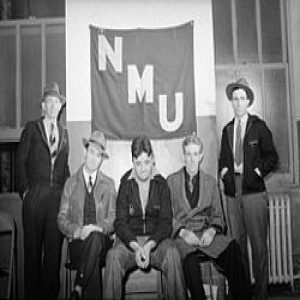
That was the day some fifty policemen wielding blackjacks, attacked picketers from the National Maritime Union on the Houston docks.
West Coast Maritime workers had shut down ports that fall. The East Coast maritime unions called their members out in sympathy and the strike soon spread to Gulf ports as well.
In many ports around the country, workers were fighting shippers and the AFL-led, International Seaman’s Union.
Sailors in Houston complained of atrocious working conditions, where rotting food and disease, including tuberculosis were widespread on board most ships.
When in port, they suffered exploitation at the hands of shipping agents who also acted as boardinghouse keepers.
They found the ISU was incapable of defending their interests and readily struck when organizers from the new, CIO-led, National Maritime Union put out the call.
During the strike, NMU and ISU organizers clashed, and strikers faced repression.
Early in December, ISU business agent shot down NMU militant John Kane in Houston.
During the same month, ISU seaman Peter Banfield died in Galveston after a brawl with NMU strikers.
According to historians, George Norris and Michael Botson Jr., many NMU seamen came to believe “there wasn’t much difference between Port Arthur under the oil companies and Hamburg under the Nazis.”
Then on Christmas Eve, police attacked about 150 strikers, and eighteen were sent to the hospital for their injuries.
The nationwide strikes were called off the following February, with mixed results.
But the NMU won union recognition that summer.
They succeeded in establishing union hiring halls and fought hard against segregation, racial discrimination and Jim Crow hiring practices in Texas ports and nationwide.
Saturday Dec 23, 2023
Saturday Dec 23, 2023

A daily, pocket-sized history of America's working people, brought to you by The Rick Smith Show team.

On this day in labor history, the year was 2008.
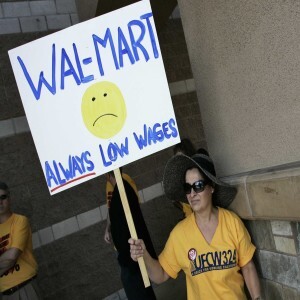
That was the day that Wal-Mart Stores agreed to settle sixty-three wage and hour lawsuits, across forty-two states, for at least $352 million and possibly as much as $640 million.
Wal-Mart and Sam’s Clubs were accused of failing to pay overtime, requiring workers to work off-the-clock, erasing hours from time cards and preventing workers from taking meal and rest breaks, as guaranteed by state laws.
The lawsuits involved hundreds of thousands of then current and former employees.
You’d think they would have learned their lesson after having to shell out that amount of money.
In fact, they have had to settle at least seven more class action, wage and hour lawsuits and remain a defendant in dozens more!
By 2012, Wal-Mart had settled at least nine Equal Employment Opportunity Commission cases related to disability, gender, racial and religious discrimination in hiring and sexual harassment.
Egregious labor violations have persisted throughout their stores.
Systematic wage theft, health and safety dangers and abusive conditions on the job have continued for years.
Chronic short staffing creates unsafe working conditions.
In 2012 alone, they were repeatedly cited and fined by OSHA for serious violations such as blocked emergency exits, lack of safety procedures for control of power hazards, and other problems.
Employees who worked with OurWalmart organizers often found they were targeted with threats, reduction in hours and terminations.
More recently, Wal-Mart has had to settle a discrimination suit over health insurance benefits for same-sex spouses.
The high cost of labor violations and low wages at Wal-Mart cost taxpayers on average, $6.2 Billion a year in public assistance for many of their workers.
Thursday Dec 21, 2023
Thursday Dec 21, 2023
On this day in labor history, the year was 1919.
That was the day Red Scare deportations began.
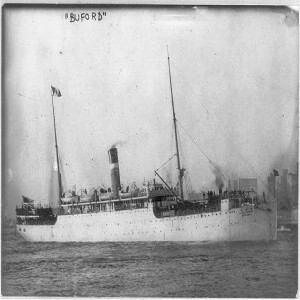
Two hundred forty-nine radicals, including anarcho-feminist, Emma Goldman, were packed onto the USS Buford and deported to Russia.
The year 1919 had seen massive social convulsions.
The Seattle General strike had kicked off the year.
It was followed by coal strikes and steel strikes, bombings and race riots.
There were increasing fears of Communist ideas and influence in the wake of the Bolshevik Revolution.
These events touched off a draconian response by the US federal government.
Together with the young J. Edgar Hoover, Attorney General, A. Mitchell Palmer conducted mass raids and arrests of more than a thousand “suspected” working class radicals.
The Department of Labor agreed that proclaimed membership in the Union of Russian Workers was a deportable offense and received the USS Buford on loan from the War Department to carry out the deportations.
The ship set sail and docked in Finland, where trains transferred the deportees into the Soviet Union.
The vast majority of those deported had no criminal records, and had never participated in acts of terrorism.
They were expelled for speaking out about their political opinions.
According to Regin Schmidt, author of Red Scare: FBI and the Origins of Anti-Communism in the United States, Employers’ Association fueled the anti-radical climate.
They were engaged in an intense open-shop counter-attack against post-war organizing campaigns and strike activity.
“The main goal was to discredit unions as subversive, Bolshevistic and alien to basic American values.”
Donning the name, ‘The American Plan,’ closed shops were referred to as ‘Sovietism in disguise,’ and propaganda campaigns were waged to ensure blacklists, internal union dissension, yellow dog contracts and strikebreaking.
Wednesday Dec 20, 2023
Wednesday Dec 20, 2023
On this day in labor history, the year was 1860.
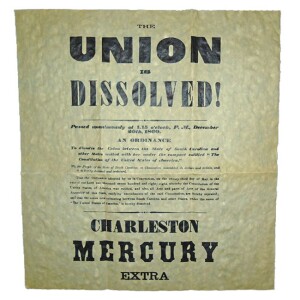
That was the day South Carolina announced, “The Union is Dissolved!”
The pronouncement was a direct response to the presidential election of Abraham Lincoln a month earlier.
South Carolina was the first of eleven states to secede from the Union.
They were resolved to preserve their system of slave labor.
Many debate the reasons why and will cite States’ rights or tariffs and taxes as primary causes.
But South Carolina issued a “Declaration of Immediate Causes” just four days after its State legislature passed the Ordinance of Secession.
According to James Loewen, author of The Confederate and Neo-Confederate Reader, this declaration opposed Northern states’ right of refusal to support slavery.
It stated there was “an increasing hostility on the part of the non-slaveholding States to the institution of slavery… that the Northern states had failed to fulfill their constitutional obligations” by interfering with the return of fugitive slaves to bondage.
South Carolinians were also upset they could no longer travel to Northern states with their slaves in tow.
They were furious that New England states allowed black men to vote.
The declaration complains that Northern states have “denounced as sinful the institution of Slavery; They have permitted the open establishment among them of societies whose avowed object is to disturb the peace and eloign the property of the citizens of other states.
They have encouraged and assisted thousands of our slaves to leave their homes: and those who have remained, have been incited by emissaries, books and pictures to servile insurrection.”
Other Confederate states would craft similar documents.
The Civil War to end slavery would begin in Charleston, South Carolina the following April.
Tuesday Dec 19, 2023
Tuesday Dec 19, 2023
On this day in labor history, the year was 1945.
That was the day workers ended their ninety-nine-day strike against the Ford Motor Company in Windsor, Ontario.
Just across the river from Detroit, workers from UAW Local 200 fought and won a union shop and dues check off.
They had to fight hard to get it.
The plant was organized during World War II.
Workers put off many demands to help with the war effort.
After the war, Ford refused to agree to a new contract and laid off 1,500 workers.
Workers voiced their rage and issued new demands.
They wanted vacation and layoff pay, better grievance procedures and medical benefits.
They also wanted compensation for work on Sundays and holidays.
When Ford wouldn’t budge, 14,000 workers took to the picket line and went on strike.
By October, they also shut down the powerhouse that brought light, heat and power to the plant.
Management complained machinery would be damaged if the power remained off.
The Ontario Provincial Police and Royal Canadian Mounted Police were called in to reopen the plant.
When they arrived, they found a barricade of some 2000 cars and trucks reinforcing the picket lines.
Then, 8,000 workers from Amalgamated Local 195, which included Chrysler workers, walked out in sympathy, joined the picket lines and stayed out for a month.
The women’s auxiliary organized to feed strikers.
They had financial support from unions, churches and small businesses from across the country.
Returning soldiers marched in solidarity rallies along with much of the community.
Because of this strong show of support, negotiations were jump-started and soon workers were ratifying a new contract.
This victory allowed what is now UNIFOR 584 to win unprecedented gains for its members for more than three decades.