
A daily, pocket-sized history of America's working people, brought to you by The Rick Smith Show team.
Episodes
Wednesday Feb 07, 2024
Wednesday Feb 07, 2024
On this day in labor history, the year was 1894.
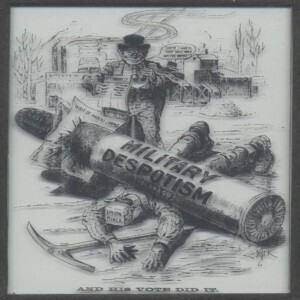
That was the day, gold miners in Cripple Creek, Colorado walked out on strike.
Mine owners increased the workday from 8 to 10 hours.
They refused to increase workers pay accordingly.
Workers immediately affiliated with the Western Federation of Miners. Local 19 leader, John Calderwood demanded a return to the 8-hour day at the previous wage, but the mine owners refused.
About 6 weeks into the strike, the larger gold mines imported scabs.
Violence soon followed.
The El Paso county sheriff demanded the governor call out the state militia.
But Colorado’s governor, Davis Waite was Populist. He recalled the troops upon learning they would be used as strike breakers.
Soon the mine owners raised their own private army of 100 troops, which grew to over 1200.
By May, miners armed themselves.
They took over a mine in Victor and blew it up when deputies arrived with scabs.
Governor Waite ordered the owners’ private army disbanded and called the militia out to defend strikers.
The mine owners agreed to return to the 8-hour workday at no loss in pay, but refused to disband their army.
They arrested and beat hundreds of miners.
The owners finally disbanded the forces when the governor threatened the militia’s presence in Victor for a month to keep the scab army immobilized.
It was the first and probably only time a state militia was called out in defense of striking workers.
According to Erik Loomis, “It was arguably organized labor’s biggest win in the Gilded Age.” Waite lost the next election.
But the victory meant enormous organizing gains for the WFM throughout the Rocky Mountain region.
Wednesday Feb 07, 2024
Wednesday Feb 07, 2024
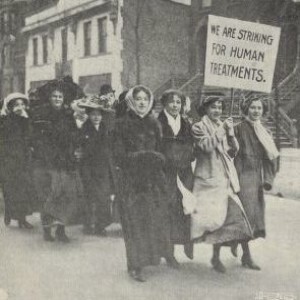
The strike began just five days before Christmas. 7,000 young women walked out of area factories when they learned their shops were receiving orders from struck shops in New York City.
Often referred to as the ‘Uprising of the 20,000,’ striking New York City garment workers had rocked the industry.
The number of strikers in Philadelphia soon grew to over 15,000.
The young women crafted their own demands.
They wanted shorter workdays, uniform wages, better pay and union recognition.
Close to 300 arrests were made in the first weeks of the strike.
Labor leaders like Big Bill Haywood and Mother Jones addressed picketers, walked the lines and offered financial support.
Mother Jones declared, “Let us live together or starve together. We will let New York know that we can also fight. We will march up and down the streets of Philadelphia in solid ranks until victory is ours.”
Strikers marched throughout the area to call out workers in many of the smaller shops.
Tragically, at least 7 were killed and a dozen or more seriously injured in a fire at a smaller shop that continued to operate throughout the strike.
When manufacturers agreed to some concessions but refused union recognition, the women would not settle, stating, “We will go back to work as a union or starve.”
Historian Daniel Sidorick notes the gains won “demonstrated the resolute determination of the strikers to see their struggle through to victory, even in defiance of their union leaders, when necessary, and to the amazement of almost all observers.”
Wednesday Feb 07, 2024
Wednesday Feb 07, 2024
On this day in labor history, the year was 1900.
That was the day the newly formed Building Contractors Council locked out 40,000 building tradesmen in Chicago.
The Contractors Council was founded in opposition to the power of the Building Trades Council.
Solidarity among the trades galvanized their ability to determine wages and working conditions throughout the city.
Hard-won gains included use of sympathy strikes, restriction of laborsaving machinery and apprentices, and work pace and production limits.
In 1899, citywide building trades contracts expired.
Backed by financiers, manufacturers and engineers, the new council demanded the unions abandon these gains and cut all ties with the Building Trades Council.
The contractors cited the more than 20 walkouts at the Montgomery Ward construction site as but one example.
The bosses’ were driven to destroy what historian Andrew Wender Cohen refers to as ‘craft governance’ in the city.
Incredulous, the crafts refused to recognize the contractors council or its demands.
The contractors locked them out.
They brought in 6000 scabs to continue construction work throughout the city.
Pitched battles continued daily in the streets between locked out tradesmen and scabs.
Many contractors brought in cots and food to non-union workers, keeping them on job sites until completion.
Labor-friendly Mayor Carter Harrison II offered to mediate, but refused police protection of scabs.
The contractors built up their own private force.
Then they injected an added racial dimension to the conflict.
Among the non-union workers, some were black tradesmen, briefly hired as construction workers and job site guards.
The lockout ended in a 1901 defeat for the Building Trades, whose ranks were decimated by 90%.
The building trades bounced back and were soon a formidable force in Chicago.
Wednesday Feb 07, 2024
Wednesday Feb 07, 2024
On this day in labor history, the year was 1937.
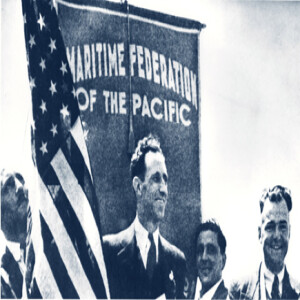
That was the day victorious West Coast Maritime Workers ended their 99-day strike.
40,000 members of the Maritime Federation of the Pacific reasserted control of hiring halls, and won greater union recognition and wage increases.
The Federation was a short-lived coalition to unite longshoremen and seamen that anticipated the rise of the ILWU.
Since the 1934 strike, ship owners aimed to break the authority of union leader, Harry Bridges.
They engaged in relentless red baiting and deportation drives against Bridges.
In the weeks leading up to the strike, the ship owners looked to smash the solidarity among seamen and longshoremen through a planned lockout the previous September.
They stockpiled their warehouses, built up additional funds and promoted anti-union hysteria up and down the coast.
They entered into talks with the Federation during the summer of 1936, hoping to renegotiate terms originally set by arbitration awards soon to expire.
Three main West Coast shipping companies, Matson, Dollar and American-Hawaiian wanted to reverse earlier agreements regarding control of the hiring halls.
The unions stood strong against this attack on what was a cornerstone of union power.
They voted overwhelmingly to strike and walked out October 30.
As in 1934, the unions fought to defend its right to control the hiring hall.
This kind of control was the only mechanism that could prevent favoritism, discrimination, corruption and pay-offs in hiring.
In Irving Bernstein’s Turbulent Years, he notes that in addition to retention of control of hiring halls, the federation gained coast-wide uniformity in working conditions, in load limits and standardized rates.
The Federation may have been short-lived, but the roots of lasting ILWU power were firmly established.
Wednesday Feb 07, 2024
Wednesday Feb 07, 2024
On this day in labor history, the year was 1908.
That was the day the Supreme Court ruled on the Loewe V. Lawlor case, also known as the Danbury Hatter’s Case.
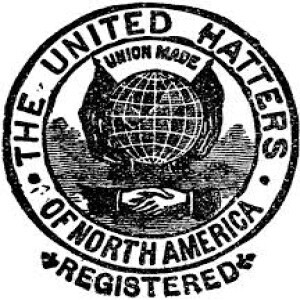
In 1902, the United Hatters of North America attempted to organize the fur hat company, D.E. Loewe & Company.
Loewe refused to meet with the union.
The union struck and called for a nationwide boycott of Loewe hats.
The AFL assisted in popularizing the boycott.
They worked to convince retailers and customers not to buy from Loewe.
The company sued the union’s business agent and hundreds of its members.
Loewe claimed the union violated the Sherman Antitrust Act of 1890 by interfering with interstate commerce.
The Sherman Act had been designed to control business monopolies, trusts and cartels, like Standard Oil company.
An 1893 case, United States v. Workingmen’s Amalgamated Council of New Orleans, established that the Sherman Act applied to labor unions as well.
In the Danbury Hatter’s Case, the Supreme Court ruled that the union combined to restrain trade or commerce among several states.
The union countered by arguing that the union did not interfere with the transportation of hats and were not themselves engaged in interstate commerce.
But the union lost.
In addition to violating the Sherman Act, the Court argued that individual union members could be held personally liable for damages incurred by their union.
The union was eventually held liable in damages amounting to about $235,000.
The AFL pushed back, demanding reforms in the Sherman Act.
Partial reforms came with the Clayton Anti-Trust Act of 1914.
But it would be another 20 years before the Norris-LaGuardia Act would exempt organized labor from antitrust injunctions.
Wednesday Feb 07, 2024
Wednesday Feb 07, 2024
That was the day the Treaty of Guadalupe Hidalgo was signed.
It signaled the end of the Mexican-American War.
The war began in May 1846 when the United States sought to expand its annexation of Texas.
It immediately became a partisan issue between pro- and anti-slavery forces.
Southern Democrats and slave plantation owners favored war with Mexico.
They hoped to undercut rising Northern industrial power with the expansion of slave territory.
Whigs and Northern abolitionists opposed the war for the same reason.
After almost two years of fighting, the war ended.
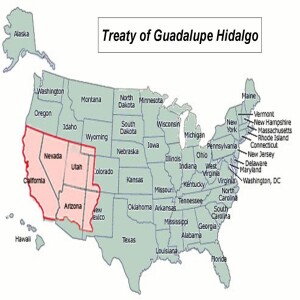
In exchange for $15 million, the United States gained 525,000 square miles of land.
This territory included all or parts of Arizona, California, Colorado, Nevada, New Mexico, Utah and Wyoming.
Mexico gave up all claims to Texas and the Rio Grande was established as the border.
The initial Treaty promised protection of land and civil rights, and full citizenship for those Mexicans who stayed on the newly acquired territory.
These guarantees were deleted from the final ratification.
Expansionist aims reignited debates about the extension of slavery.
The newly formed Free Soil Party gained traction with its campaign “to limit, localize and discourage slavery.”
Their banner read “Free Soil, Free Speech, Free Labor and Free Men.”
Antagonisms were briefly tempered with the Compromise of 1850.
This allowed California to be admitted as a free state.
It also prevented the outlawing of slavery in the new territories.
The slave trade was banned in the District of Columbia.
But a new and more stringent Fugitive Slave Law was enacted.
Debates regarding expansion of slavery would rage on throughout the 1850s, culminating in the Civil War.
Thursday Feb 01, 2024
Thursday Feb 01, 2024
On this day in labor history, the year was 1937.
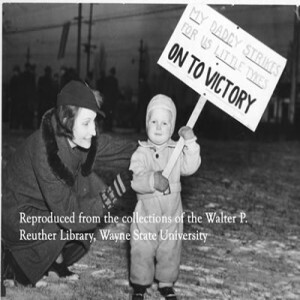
That day marked a pivotal moment in the continuing Flint sit-down strike.
The nationwide strike against GM started in Flint in late December.
By late January, UAW organizers agreed that nearby Chevrolet Engine Plant #4 had to be shut down.
It was a massive facility.
It employed 4000 workers on two shifts
The plant superintendant had been firing union activists.
Armed guards patrolled every inch of the facility to prevent a sit-down.
Union organizers knew there were company spies in their ranks.
They planned the takeover by staging distracting job actions at nearby Chevrolet plants #9 and then #6.
This would draw the guards away from plant #4.
And so, on this day, just as the day shift was ending, workers sat down at Chevy plant #9.
The company guards were ready to launch an attack.
They began beating and gassing the sit-downers.
The Women’s Emergency Brigade smashed plant windows to dissipate the gas.
The diversion worked. Guards left Chevy #4 unattended.
Workers there turned off all the machines and barricaded themselves in.
The plant guards tried to reenter and were met with pistons, connector rods and fire hoses.
The Women’s Emergency Brigade gathered outside the plant and locked arms.
UAW organizer Joe Sayen announced, “We want the whole world to understand what we are fighting for. We are fighting for freedom and life and liberty. This is our one great opportunity. What if we should be defeated? What if we should be killed? We have only one life. That’s all we can lose and we might as well die like heroes than like slaves.”
Thursday Feb 01, 2024
Thursday Feb 01, 2024
On this day in labor history, the year was 2006.
That was the day 7,000 teachers and staff at the Orleans Parish School District in New Orleans, Louisiana were fired.
The public schools were considered some of the worst in the country.
The school district was also bankrupt.
It was unable to account for $71 million dollars in federal funds.
After Hurricane Katrina, the school district lost nearly its entire tax base.
The district cancelled all pay and health insurance for its teachers and staff.
Then, the state of Louisiana seized control of most of the city’s 128 schools.
A majority were either closed or turned over to charter school operators.
The school district fired its remaining teachers and staff.
It was a union-busting maneuver against the United Teachers of New Orleans.
The union was an AFT affiliate.
Organized in 1972, it was the first integrated education union in the South.
Its membership overwhelmingly consisted of African-American women.
After the schools were turned over to the charters, they were replaced by inexperienced Teach for America workers.
Many of these new teachers did not have any teacher certification.
A class-action lawsuit followed.
In 2014, Louisiana’s Fourth Circuit Court of Appeals found that teachers and staff were not given due process and had the right to be rehired as schools reopened after Katrina.
The damages could amount to $1.5 billion.
Ten years after Katrina, a New York Times article asked, “Was Hurricane Katrina ‘the best thing that ever happened to the education system in New Orleans,’ as Education Secretary Arne Duncan once said?”
The answer has been resounding, no.
In the years since, the union has fought successfully to organize many of the charter schools in New Orleans.
Tuesday Jan 30, 2024
Tuesday Jan 30, 2024
On this day in labor history, the year was 2011.
That was the day California first celebrated its state holiday, known as Fred Korematsu Day of Civil Liberties and the Constitution.
Born on January 30, 1919, Fred Korematsu was among those victimized by President Roosevelt’s wartime Executive Order 9066, mandating Japanese-American internment.
Born in Oakland, California, Korematsu worked as a shipyard welder.
He was arrested and eventually convicted after refusing to report to authorities for internment.
The ACLU took his case, hoping to test the legality of 9066.
Korematsu and his family were relocated to the Central Utah Wars Relocation Center in Topaz, Utah.
There he worked eight hours a day for $12 a month and waited for his case to travel through the legal system.
It eventually reached the Supreme Court.
In Korematsu v. United States, the Court held that compulsory exclusion, though constitutionally suspect, is justified during circumstances of "emergency and peril.”
After his release, Korematsu worked odd jobs, and faced discrimination and wage theft.
He eventually resettled in Oakland with his wife and children.
In 1983, Korematsu’s conviction was finally vacated.
Fifteen years later, he was awarded the Presidential Medal of Freedom.
He became a tireless activist for civil liberties and worked to ensure internment could never happen again.
Before his death in 2005, he served on the Constitution Project’s Liberty and Security Committee.
He warned, "No one should ever be locked away simply because they share the same race, ethnicity, or religion as a spy or terrorist. If that principle was not learned from the internment of Japanese Americans, then these are very dangerous times for our democracy.”
Fred Korematsu Day is also celebrated in Hawaii, Virginia and Florida.
Tuesday Jan 30, 2024
Tuesday Jan 30, 2024
On this day in labor history, the year was 1912.
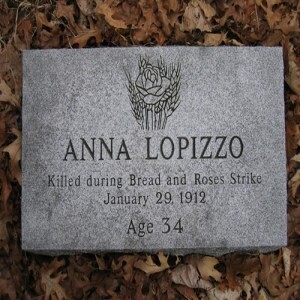
That was the day striking worker, Anna LoPizzo was shot and killed by local police during the pivotal Bread and Roses strike in Lawrence, Massachusetts.
In what is considered one of the most important strikes in American labor history.
The Industrial Workers of the World had organized a strike that brought out more than 30,000 textile mill workers at the American Woolen Company.
Workers had been on strike for most of the month, picketing, marching, giving speeches and stopping scabs.
Their banners demanded a living wage and dignity: Bread and Roses.
That day, there were workers parades among pitched battles between strikers, police and scabs.
Gunfire erupted.
According to Big Bill Haywood, nineteen witnesses saw Police Officer Oscar Benoit shoot Anna LoPizzo.
But the shooting provided the mill owners with an opportunity to crack down on the strike.
Martial law was instituted and all public meetings and marches were banned.
The leading IWW strike organizers, John Ettor and Arturo Giovannitti were arrested for her murder, despite the fact that they were two miles away from the scene.
Though they were eventually acquitted, their imprisonment removed them from directing the day-to-day work of the strike.
But who was Anna LoPizzo?
According to Bruce Watson, author of Bread and Roses: Mills, Migrants, and the Struggle for the American Dream, “If America had a Tomb of the Unknown immigrant paying tribute to the millions of immigrants known only to God and distant cousins compiling family trees, Anna LoPizzo would be a prime candidate to lie in it.”
And indeed she was for 88 years until retired IBEW 2321 business manager, David Morris worked to get a headstone, decorated with the Bread and Roses symbol–grain stalks and a rose, for her pauper’s grave.