
A daily, pocket-sized history of America's working people, brought to you by The Rick Smith Show team.
Episodes
Thursday Mar 28, 2024
Thursday Mar 28, 2024
On this day in labor history, the year was 1979.
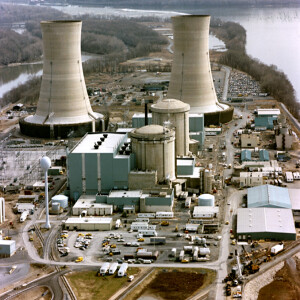
That was the day The Three Mile Island Unit 2 reactor partially melted down near Middleton, Pennsylvania.
A combination of equipment failure and human error has long been attributed as the cause of the meltdown.
An initial overheating and reactor shut down had occurred.
But a pressure valve remained stuck open, allowing coolant to escape.
Design flaws in control equipment failed to indicate the position of the valve.
Workers then mistook the increased pressure as a result of excessive coolant.
They shut off the emergency water system that could have cooled the core.
Fears of radiation release and hydrogen bubbles led to voluntary evacuations that included over 140,000 residents.
Authorities assured the public that the partial meltdown had been contained.
President Carter convened a commission to investigate the causes.
It concluded that while the operators took inappropriate actions, the training they received was inadequate as were the procedures they were required to follow.
Plant designers, Babcock and Wilcox were held responsible for poor design.
The company failed to notify operators of repeated valve failure and a previous near duplicate of the potential catastrophe at the Davis-Besse plant.
Metropolitan Edison, General Public Utilities and the NRC were also held responsible for poor quality control, poor maintenance, communication lapses and poor training.
Fears regarding public health and safety intensified, fueling health studies of those exposed and the anti-nuclear power movement.
The aftermath brought about sweeping changes involving emergency response planning, reactor operator training, human factors engineering, radiation protection, and many other areas of nuclear power plant operations.
It also caused the NRC to tighten and heighten its regulatory oversight. All of these changes significantly enhanced U.S. reactor safety.
Wednesday Mar 27, 2024
Wednesday Mar 27, 2024
On this day in labor history, the year was 1941.
That was the day Indiana State Police began cracking heads of picketers in front of the Richmond International Harvester plant.
The Farm Equipment Workers Organizing Committee, or FEWOC, called a strike at six Midwestern plants earlier in the year.
14,000 workers walked out, demanding an elimination of piecework, wage increases, reemployment guarantees for draftees and union recognition.
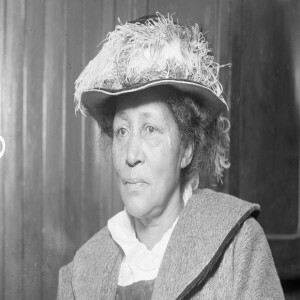
Lucy Parsons addressed strikers in Chicago.
She reminded them of her husband’s frame-up and murder in 1886.
She added that the McCormicks and International Harvester had continued their unending war against labor for over 50 years.
In Richmond, workers voted 5 to 1 for a strike.
By March 27, Harvester officials there planned to reopen the plant with members of the ‘independent union.’ FEWOC battled these so-called unions at all the plants.
They were the rehashed old company unions the National Labor Relations Board had ordered disbanded.
Reports varied widely as to the number of workers ready to betray the strike at the Richmond plant.
When they marched towards the gate that morning, strikers closed ranks and sang, “Solidarity Forever.”
The battle began as strikers, armed with bricks and bats, fought police to prevent the scabbing.
More than 80 strikers were arrested on charges ranging from assault and battery to attempted murder.
The State Police and Richmond officers then raided strike headquarters and downtown CIO offices.
Records and correspondence were seized and furniture demolished. FEWOC leader Cliff Kerr avowed, “They are not going to get away with this brutal, undemocratic attack on the workers.
The union intends to fight. The combined efforts of the city… the police… and the Harvester Company are not going to break this strike.”
Tuesday Mar 26, 2024
Tuesday Mar 26, 2024
On this day in labor history, the year was 1946.
That was the day Pennsylvania State Police attacked striking UE members at the gates of Westinghouse in East Pittsburgh.
200,000 UE members went on an industry-wide strike January 15 for a $2 a day raise.
They were on strike against the Big Three: GE, Westinghouse and the electric division at GM.
It was part of the post-war strike wave that brought millions out onto the picket lines nationwide.
By the middle of March, the UE had settled with GM and GE.
But 75,000 Westinghouse workers were still out on strike.
Westinghouse initially refused to negotiate at all.
When they made a first offer, they falsely claimed theirs matched the GE and GM agreements.
Federal mediators withdrew from the case in frustration, stating the company had made negotiations impossible.
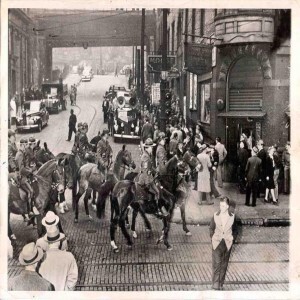
Then on March 26, Alleghany County Sheriff Walter Monaghan and Governor Edward Martin called in 800 state troops.
Some were on horseback, others on foot detail. Many troops arrived in cars with machine guns and tear gas.
They patrolled the picket lines and nearby streets and set up roadblocks leading to the Westinghouse gates.
They began to forcibly disperse the crowd of 1000 picketers.
Then they ushered through several hundred non-production workers.
Some were pelted with eggs.
Others were struck in the face by some of the women strikers.
Three UE leaders were arrested for refusing to shut down their sound system they used to blast staffers for crossing picket lines.
The State Police stayed for the duration of the strike to enforce injunctions against mass picketing and ensure the crossing of picket lines.
The strike finally ended after 115 days with strikers winning an 18-cent an hour raise.
Monday Mar 25, 2024
Monday Mar 25, 2024
On this day in labor history, the year was 1947.
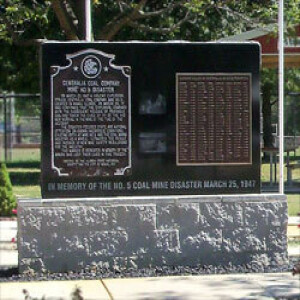
That was the day Centralia Coal Mine #5 exploded, killing 111 miners in Centralia, IL
The explosion occurred just as the day shift was ending.
Those not killed instantly were trapped and died from their burns or the afterdamp.
Words scrawled on the walls of the mine read, “Look in our pockets. We all have notes. Please give them to our wives.”
State inspectors had been forewarning mine owners about the dangers of accumulated, combustible coal dust for years before the explosion, but were ignored.
Illinois Mine Inspector Driscoll Scanlan had been filing reports since 1942 about deteriorating conditions.
The demand for coal during wartime had increased production at the expense of safety.
In the aftermath of the explosion, John L. Lewis, president of the UMWA, called a work stoppage in memory of the dead miners.
He also held Secretary of the Interior, Julius Krug, guilty of criminal negligence.
Lewis accused Krug of having failed to enforce existing mine regulations.
In response, Krug ordered that 518 mines remain closed for inspection.
The House and Senate proceeded to organize hearings on mine safety.
They demanded that the Bureau of Mines continue to pass inspection findings onto the proper state agencies.
Given the power mine owners held at the state level, these instructions ensured no improvements in mine safety would occur.
It would be another 22 years before any real change occurred at the federal level.
Sunday Mar 24, 2024
Sunday Mar 24, 2024
On this day in labor history, the year was 1989.
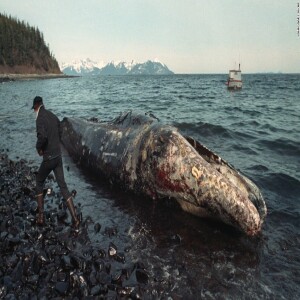
That was the day the Exxon Valdez oil tanker spilled 10.8 million gallons of oil in Prince William’s Sound, off the coast of Alaska.
The ship ran aground and collided with Bligh’s Reef.
Most people remember the captain was held primarily responsible for the spill.
By his own admission, he had passed out after a night of heavy drinking.
But a number of factors also contributed to the environmental disaster.
The National Transportation Safety Board issued its final report over a year later.
In it, the Board concluded that fatigue, reduced crews and problems with regulations and procedures regarding Exxon’s drug and alcohol program, all contributed to the spill.
Union officials reported great concern regarding chronic fatigue of its members on merchant ships, reduced crews due to greater automation and reduced scheduled ship maintenance.
Crewmembers on the Exxon Valdez routinely worked 20 or more hours a day during routine cargo handling operations.
The NTSB also concluded that Vessel Traffic Service under the U.S. Coast Guard failed to properly track the Exxon Valdez.
They had the ability to select a higher radar scale but didn’t.
The Coast Guard suffered from reduced crews burdened with increased job duties as well.
They also found that remote communications sites were inoperative on the night of the spill.
The equipment was old, deteriorating from harsh weather conditions.
Requested funding for new equipment had not been forthcoming.
The Alyeska Pipeline Company for its part, failed to have an oil spill barge loaded and ready.
Major cleanup efforts were conducted during spring and summer months through 1992.
But marine life and the environments were devastated.
Long-term efforts at monitoring and cleanup continue today.
Saturday Mar 23, 2024
Saturday Mar 23, 2024
On this day in labor history the year was 2005.
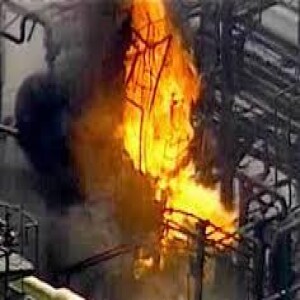
That was the day 15 workers were killed and another 170 were seriously injured in an explosion at the BP refinery in Texas City, Texas.
Workers were re-starting a unit down for repairs.
As they filled a tower with gasoline, it overflowed, sending a geyser into the air.
The igniting hydrogen vapor cloud created a chain of explosions that destroyed the nearby trailers, housing temporary contract workers.
The explosion shed light on many key problems throughout the industry: the increasing use of contract workers, safety short cuts and qualitative lack of industrial process controls.
A 2007 Chemical Safety Board report found that “years of cost-cutting, poor worker training and a safety culture with “serious deficiencies” left the plant ‘vulnerable to catastrophe,’ but company leaders ignored the warning signs.”
OSHA fined BP $21.3 million and more, but ultimately settled for $13 million.
For years, the catastrophe was studied closely to eliminate the hazards.
But 10 years later, a 2015 joint investigative series by The Texas Tribune and Houston Chronicle found that “there is little evidence that the 15 lives lost on that March day bought much of anything: The death toll at U.S. refineries has barely slowed… At least 64 energy company employees and contractors were killed in the decade before the blast. At least 58 have died in the 10 years since…
The Department of Energy has tracked nearly 350 fires at refineries in the last eight years — almost one every week.
Refinery workers have gone on strike demanding, among other issues, an increased emphasis on safety.”
For the United Steelworkers, it is a daily fight to implement the critical safety actions the union developed in the aftermath of the blast.
Friday Mar 22, 2024
Friday Mar 22, 2024
On this day in labor history, the year was 1972.
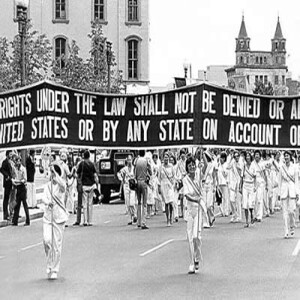
That was the day the Equal Rights Amendment passed the Senate and moved to the states for ratification.
It had passed the House the previous fall.
Alice Paul and Crystal Eastman of the National Women’s Party first wrote the ERA in the 1920s.
It was introduced to Congress in 1923.
The revised version that Congress passed in 1971 and 1972 stated simply “equality of rights under the law shall not be denied or abridged by the United States or by any State on account of sex.”
The amendment needed 38 states to ratify by March 1979, in order to pass.
35 states ratified the amendment, but 5 states later rescinded ratification.
The 38-state requirement was never met.
The decades long debate among women’s rights advocates often centered on formal equality vs. protective legislation for women workers.
But an amendment establishing equality meant the end to restrictive, discriminatory laws.
These included: laws imposing restrictions on a woman's right to buy or sell property or to conduct a business; the age at which women could marry; differing admissions standards for boys and girls in tax-supported educational institutions; laws establishing different jail sentences, by sex, for identical crimes; regulations denying unemployment compensation payments to pregnant women who are still able and willing to work and much more.
The far Right and religious fundamentalists of all faiths fiercely opposed the ERA, fearing it would erode traditional gender roles.
Many Progressives and the labor movement also opposed it for many years on the basis that hard-won protective legislation would be lost.
It is striking that as of 2017, there is still no clear legal codification of women’s equal status to men.
Thursday Mar 21, 2024
Thursday Mar 21, 2024
On this day in labor history, the year was 1947.
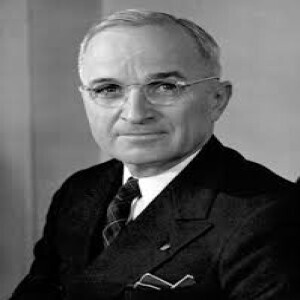
That was the day President Harry S. Truman signed Executive Order 9835.
It is commonly referred to as the ‘loyalty order.’
It required the screening of millions of federal civil servants and applicants.
9835 is considered one of the key preconditions for the rise of the McCarthyite Red Scare.
It established the criteria for investigation, review and dismissal.
These included a Loyalty Review Board, a master index of those investigated and definitions determining alleged disloyalty.
Disloyalty could mean sedition, espionage, or advocating revolution.
It could also mean membership or sympathetic association with movements considered totalitarian, fascist, communist or subversive.
Soon, the Attorney General’s List of Subversive Organizations was published.
It amounted to a black list.
In their book, The Fifties, Douglas Miller and Marion Nowack comment: “Between the launching of his security program in March 1947 and December 1952, some 6.6 million persons were investigated. Not a single case of espionage was uncovered, though about 500 persons were dismissed in dubious cases of ‘questionable loyalty.’ All of this was conducted with secret evidence, secret and often paid informers, and neither judge nor jury. Despite the failure to find subversion, the broad scope of the official Red hunt gave popular credence to the notion that the government was riddled with spies.”
President Dwight Eisenhower would revoke 9835 with his Executive Order 10450.
But this order dismantled the Loyalty Boards by transferring power to federal agencies.
It also expanded investigations to include those engaged in “immoral” or “disgraceful” behavior.
This included what it considered sexual deviance and led to the witch hunting of and discrimination against gays and lesbians in the civil service.
Wednesday Mar 20, 2024
Wednesday Mar 20, 2024
On this day in labor history, the year was 1905.
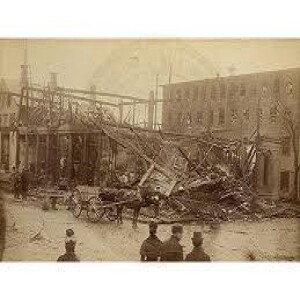
That was the day a boiler explosion destroyed the R.B. Grover Shoe Factory in Brockton, Massachusetts.
The boiler exploded as workers arrived for the day shift.
58 workers were killed and another 150 were injured.
The boiler reportedly shot up through all three floors, and the roof of the building.
The floors collapsed and walls caved in.
Those who survived the initial explosion were fatally trapped by debris and machinery.
Fires spread rapidly throughout the plant, ignited by broken gas lines and industrial solvents.
The entire block, including nearby homes and businesses were leveled to the ground.
Many of the dead were never positively identified.
The leatherworkers union provided financial assistance.
So did civic leaders and R.B Grover, who was ruined financially by the disaster.
Boiler inspectors concluded the explosion was caused by a manufacturing defect that was virtually impossible to detect.
The courts held no one liable.
By 1890 over 100,000 boilers providing steam heat were in use.
Over 2000 had exploded during the 1880s alone.
The American Society of Mechanical Engineers had been in existence for some 25 years by the time the boiler exploded at Grover.
They had released some guidelines.
But it was clear that inspections were rare and standards were needed.
The public outcry only grew in Massachusetts after another industrial boiler explosion occurred the next year.
The state passed measures establishing rules of operation.
By 1914, the American Society of Mechanical Engineers had successfully pushed back against manufacturers and railroad managers who opposed boiler regulations.
They published the first edition of the National Boiler and Pressure Vessel Code.
A national board of inspectors soon followed.
Since then, regulations ensuring safe operation and maintenance have saved countless lives.
Wednesday Mar 20, 2024
Wednesday Mar 20, 2024
On this day in labor history, the year was 1917
That was the day the United States Supreme Court upheld the Adamson Act.
The Act had initially been passed and signed into law the previous September to avoid a nationwide railway strike.
It established the eight-hour day and overtime pay for interstate railroad workers.
The four railroad brotherhoods--the Engineers, Fireman, Brakemen and Conductors had been pushing for these terms since at least 1915.
When the railroads refused to budge, the unions prepared to strike.
It was the first federal law that sought to determine minimum wages and maximum hours for private industry.
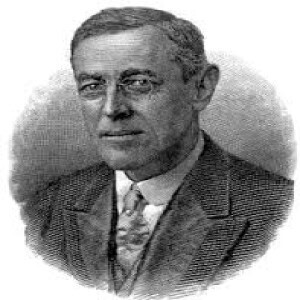
The railroads were furious with President Woodrow Wilson for demanding quick passage of the law.
They filed the case, Wilson v. New, which challenged the constitutionality of the Act.
The railroads refused to abide by the new law while they waited for their case to be heard, ultimately by the Supreme Court.
The four railroad brotherhoods grew tired of waiting and organized for another strike.
The Court rejected the railroad’s claims and upheld the Act.
President Wilson had hoped to ensure labor peace, as the United States was on the cusp of entering World War I.
Seen as a powerful victory for the unions, other railway employees pressed for similar demands.
When the industry looked as though it was headed for yet another strike, President Wilson exercised the Army Appropriations Act and issued an executive order at the end of 1917 that placed the railroads under federal control.
This nationalized the railroad industry into three divisions under the newly established United States Railroad Administration between the years 1917 and 1920.