
A daily, pocket-sized history of America's working people, brought to you by The Rick Smith Show team.
Episodes
Oct 18, 2024
Oct 18, 2024
1 min
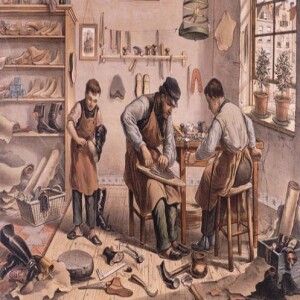
On this day in Labor History, and we are going all the way back to 1648. More than a hundred years before the American Revolution, an early trade organization was founded in the Colony of Massachusetts. They called themselves the “Company of Shoemakers.”
Oct 17, 2024
Oct 17, 2024
1 min
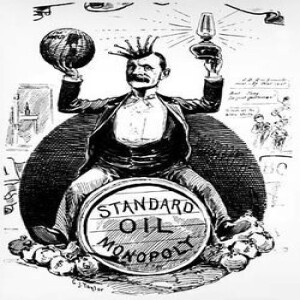
On this day in Labor History, the year was 1877. That was the day that John D. Rockefeller, and his company Standard Oil struck a deal with the Pennsylvania Railroad that would cement his monopoly on the nation’s oil refineries. In the early 1870s Rockefeller was building his oil empire out from its center in Cleveland, Ohio.

Oct 16, 2024
Oct 16, 2024
1 min
On this day in Labor History, the year was 1859. That was the day that abolitionist John Brown led a raid at the armory in Harpers Ferry, in what is now West Virginia. His goal was to strike a blow toward ending slavery.
Oct 15, 2024
Oct 15, 2024
1 min
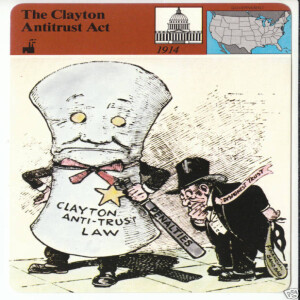
On this day in Labor History, the year was 1914. That was the day that President Woodrow Wilson signed the Clayton Antitrust Act. The act also became known as Labor’s “Magna Carta.”
Oct 14, 2024
Oct 14, 2024
1 min
On this day in labor history, the year was 1976.
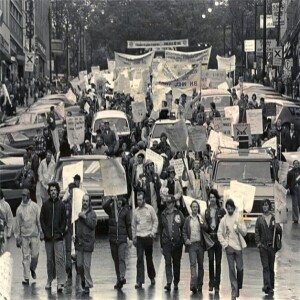
That was the day more than a million Canadian workers walked off the job in a Day of Protest.
The Canadian Labour Congress called the general strike.
Workers downed their tools against a three-year wage controls plan implemented by then Prime Minister Pierre Trudeau.
Trudeau had actually campaigned against wage controls during the 1974 elections.
A year later, the Liberal government introduced the C-73 Anti-Inflation Bill.
It was considered the worst attack on labor since the 1930s, when bargaining rights were first legalized.
Trudeau’s wage controls suspended collective bargaining rights for all workers and amounted to deep wage cuts.
Public sector workers were hit hardest as many hospital, school and municipal workers teetered on the edge of desperation from already low wages made worse.
But for a day at least, many industries across Canada came to a screeching halt.
Forestry, mining and auto production all completely shut down.
Many towns and cities were one hundred percent on strike, even among the non-union workforce.
Saint John in New Brunswick, Sudbury, Ontario, Sept Iles, Quebec and Thompson in Manitoba were all cities where the strike was most successful.
But elsewhere, the strike was uneven.
Many public sector workers stayed on the job, while in cities like Vancouver, pickets successfully shut down bus service and newspaper deliveries.
Most heralded the Day of Protest as a fierce show of power against a years’ worth of wage controls.
But others argued that a one-day action was not enough.
To combat the attacks on labor, any general strike would have to keep the country shut down until the program of wage controls was finally defeated.

Oct 14, 2024
Oct 14, 2024
1 min
On this day in labor history, the year was 2010.
That was the day thirty-three Chilean miners were finally pulled to safety after being trapped for sixty-nine days.
Workers had been mining copper and gold twenty three hundred feet down, at the San Jose mine near the northern city of Copiapo, when the mine caved in, in early August.
The Compania Minera San Esteban Primera waited several hours to notify authorities and rescue efforts only began two days later.
Trapped miners initially tried to escape through ventilation shafts but found required ladders missing.
Each route they attempted was blocked by fallen rock or threatened additional collapse.
A state owned mining company took over rescue efforts and soon they began, as Geologist Sorena Sorensen noted, prospecting for people.
Initial exploratory boreholes failed to locate miners because mineshaft maps had never been updated.
Rescuers had no idea whether miners were even still alive.
Finally, seventeen days later, the eighth borehole reached them.
The miners tapped on the drill and taped notes to it, alerting rescuers above they were indeed alive and well.
Food, medicine and other supplies were lowered down to them as rescue efforts intensified.
Mini cameras were also lowered down and the miners videotaped messages of their continued ordeal.
They told how they continued to search for possible escape routes and agreed to ration their limited food supplies so they could all survive.
The first of three drilling plans to free the miners began.
It was an international effort.
The Chilean Navy consulted with NASA to design and construct the rescue pods.
Throughout the entire process, rescuers worked to prevent additional cave-ins and rock falls.
Finally the extraction process began and in less than 48 hours all emerged as heroes.
Oct 14, 2024
Oct 14, 2024
1 min
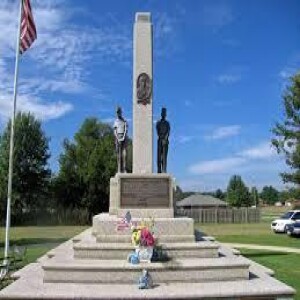
Bury me with my boys in Mt. Olive, and let no traitor draw breath over my grave.” Such was the last wish of labor leader Mother Jones. She wanted her final resting to place to be alongside the coal miners who gave their lives in the struggle to bring fair wages and a safe working environment to Virden, Illinois.
Oct 11, 2024
Oct 11, 2024
1 min
On this day in labor history, the year was 1965.
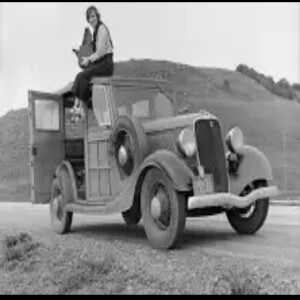
That was the day acclaimed photojournalist Dorothea Lange died.
She is celebrated for her work documenting the Great Depression for the Farm Security Bureau.
Lange’s photos captured images of migrant workers, sharecroppers and the rural poor.
Her iconic photo, Migrant Mother, is probably her most well known image.
It depicts a despondent, Dust Bowl mother surrounded by her hungry children.
Lange was born in Hoboken, New Jersey in 1895.
She suffered the effects of polio as a child, which left her with a permanent limp.
She studied photography at Columbia University in New York, and eventually settled in the Bay Area.
When the Great Depression hit, she began photographing labor strikes, breadlines and soup kitchens, the homeless and unemployed.
The Resettlement Administration hired her soon after.
Nowadays, we can access images from around the world at a moment’s notice that broaden our understanding of current events.
But until the 1930s, few Americans could access media that adequately depicted the desperate social conditions engulfing the nation.
Federal programs that funded projects like Lange’s brought Depression-era images into the public eye.
Americans soon realized their suffering wasn’t caused by personal failure; that millions across the country were experiencing destitution brought on by broader economic forces.
During World War II, Lange worked for the War Relocation Authority, where she documented forced evacuation and internment of Japanese-Americans.
Her images, especially of Manzanar, were withheld from the public until after the war and were accessible to the public through the National Archives.
After the war, she taught at San Francisco’s Art Institute and cofounded the magazine Aperture.
She has been heralded as an innovator and has influenced generations of documentary photography.
Oct 11, 2024
Oct 11, 2024
1 min
On this day in labor history, the year was 1965.
That was the day acclaimed photojournalist Dorothea Lange died.
She is celebrated for her work documenting the Great Depression for the Farm Security Bureau.
Lange’s photos captured images of migrant workers, sharecroppers and the rural poor.
Her iconic photo, Migrant Mother, is probably her most well known image.
It depicts a despondent, Dust Bowl mother surrounded by her hungry children.
Lange was born in Hoboken, New Jersey in 1895.
She suffered the effects of polio as a child, which left her with a permanent limp.
She studied photography at Columbia University in New York, and eventually settled in the Bay Area.
When the Great Depression hit, she began photographing labor strikes, breadlines and soup kitchens, the homeless and unemployed.
The Resettlement Administration hired her soon after.
Nowadays, we can access images from around the world at a moment’s notice that broaden our understanding of current events.
But until the 1930s, few Americans could access media that adequately depicted the desperate social conditions engulfing the nation.
Federal programs that funded projects like Lange’s brought Depression-era images into the public eye.
Americans soon realized their suffering wasn’t caused by personal failure; that millions across the country were experiencing destitution brought on by broader economic forces.
During World War II, Lange worked for the War Relocation Authority, where she documented forced evacuation and internment of Japanese-Americans.
Her images, especially of Manzanar, were withheld from the public until after the war and were accessible to the public through the National Archives.
After the war, she taught at San Francisco’s Art Institute and cofounded the magazine Aperture.
She has been heralded as an innovator and has influenced generations of documentary photography.
Oct 10, 2024
Oct 10, 2024
1 min
On this day in labor history, the year was 1912.
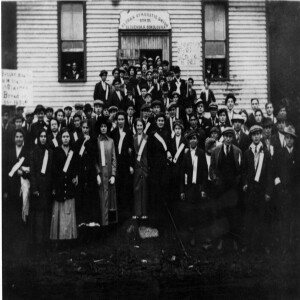
That was the day mill workers began to walk off the job at the Phoenix and Gilbert Knitting Mills in Little Falls, New York.
The strike was sandwiched between the Bread and Roses strike in Lawrence, Massachusetts and the 1913 Paterson textile strike.
American, Hungarian, Polish and Italian workers, over 70% of them women, struck against wage reductions.
Their hours had just been cut from 60 hours a week to 54, and their wages adjusted accordingly.
A recent factory inspection commission investigation revealed deplorable working and living conditions, among the worst in the state.
As a result, state legislators passed protective legislation restricting women’s work hours.
Many social reformers pushed for laws like these in the hopes of improving women’s quality of life by minimizing their exploitation on the job.
But the reduction in hours spelled disaster for these mill women, who then faced a loss of income that ranged from 75 cents to $2 a week.
Socialists in nearby Schenectady, including the socialist mayor George Lunn, arrived in town and were promptly arrested for giving open-air speeches in support of the strikers.
IWW organizers soon followed to help organize picketing, daily strike parades and strike committees at each of the factories.
They quickly established IWW Local 801, National Industrial Union of Textile Workers.
By the end of the month, mounted police closed in on the women strikers and began clubbing them, many into unconsciousness.
The police raided strike headquarters and arrested IWW strike committee leaders.
But the women strikers stood strong and were celebrating victory by the beginning of the year.
They won full reinstatement and 60 hours pay for 54 hours work.