
A daily, pocket-sized history of America's working people, brought to you by The Rick Smith Show team.
Episodes
Saturday Aug 31, 2024
Saturday Aug 31, 2024
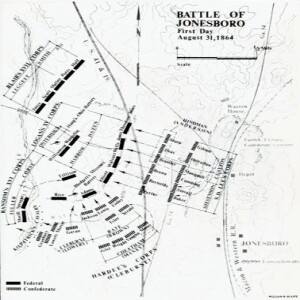
On this day in labor history, the year was 1864.
That was the day the final battle of the Atlanta Campaign began with the Battle of Jonesborough.
The Union had been embroiled in a civil war with Confederate forces to end the slave labor system for three and a half years.
It had been a difficult summer.
Battles were increasingly bloody, with casualties on both sides numbering in the tens of thousands.
Criticisms intensified against key Union generals like Sherman and Grant.
Pressure mounted against President Lincoln to end the war and withdraw the Emancipation Proclamation if necessary.
General William T. Sherman mounted the Atlanta Campaign earlier that year, in May.
His forces scored a number of victories throughout the summer, but could not decisively defeat Confederate forces.
By August, Northern morale was so low that the Republican National Committee deemed Lincoln unelectable.
The Democratic National Convention, convening in Chicago, had declared the war a failure and planned to ride to victory over Lincoln in the November elections.
But Lincoln’s commitment to emancipation was unwavering.
And Sherman did not disappoint.
He understood that Atlanta was, as historian Eric Foner describes it, “a key railroad hub and the communications and transportation center for the entire Southeast.”
Sherman’s forces had been marching down from Chattanooga for most of the summer.
Finally, they marched to the south of Atlanta to cut the last key rail line.
On this day, Union forces positioned themselves at the Flint River and at the Macon and Western Railroad.
Over the next two days, they would successfully beat back multiple Confederate assaults, destroy the rail line and force Confederate forces to abandon Atlanta.
The city was now fully under Union occupation.
Friday Aug 30, 2024
Friday Aug 30, 2024
On this day in labor history, the year was 1907.
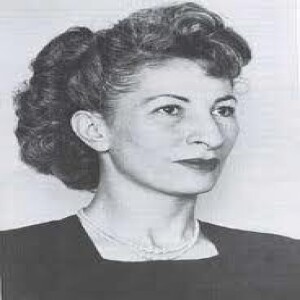
That was the day labor leader Luisa Moreno was born in Guatemala City.
As a young woman, she fought for the admission of women into Guatemalan universities.
After attending journalism school in Mexico City, Luisa moved to New York with her husband and worked as a seamstress.
Outraged by low pay, racial discrimination and poor working conditions, she led organizing efforts on the job.
During the Depression she worked as a full-time union organizer, first with the AFL organizing black and Latina cigar rollers in Florida.
But she also became active with the Communist Party and joined CIO efforts to organize cannery workers.
Luisa led unionizing efforts of pecan shelling women workers in San Antonio, Texas and then of cannery workers in Los Angeles.
In 1938, Luisa helped organize the Spanish-speaking Peoples Congress.
During World War II, she fought against discrimination in hiring of Mexicans in oil and war-related industries.
In the 1940s she became centrally involved in high profile legal defense cases of Mexican-American youth prosecuted on frame-up charges.
These included work around the 1942 Sleepy Lagoon case and then of victims of the Zoot Suit riots a year later.
She continued union work in California, helping to organize and represent walnut pickers.
By 1950 she was caught in the cross hairs of the McCarthy-era witch-hunts.
Luisa was targeted by Operation Wetback, and offered citizenship status in return for testimony against radical labor leader, Harry Bridges.
When she refused, she faced deportation on the accusation that she had once been a member of the Communist Party.
She returned to Guatemala and continued organizing workers throughout Central America.
Luisa Moreno died in Guatemala in 1992.
Thursday Aug 29, 2024
Thursday Aug 29, 2024
On this day in labor history, the year was 1941.
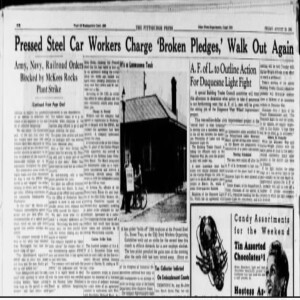
That was the day 2500 steel workers at the Pressed Steel Car Company near McKees Rocks, Pennsylvania walked off the job.
It was the second walkout in two weeks.
Workers effectively shut down production of armor plate for the Navy, shell forgings for the Army and railroad cars used to transport military materiel.
The company had gone back on promises of holding a collective bargaining election.
Steelworkers Organizing Committee sub-regional director, Abe Martin told The Pittsburgh Press that while the union had not called the strike, workers had “walked out themselves because they are fed up with the company’s discrimination against them.”
SWOC had been trying to organize the plant for years.
But the company had engineered an election for a so-called, independent union 18 months earlier, when the complex was only operating at half capacity.
Workers walked out at the beginning of the month and ended their strike on the guarantee that negotiations for a new election would begin.
But when they returned, they found that some were stripped of seniority while others were forcibly transferred to new departments.
The day before, machine shop workers on the afternoon shift were fed up and dropped their tools.
Word spread throughout the evening and by early morning, picket lines were solid and production had come to a complete standstill.
When the company tried to force reopening of the plant after Labor Day, 1500 workers formed picket lines at the gates to stop scabbing.
They returned to work 10 days later in compliance with a request by the National Defense Mediation Board.
The NLRB rejected SWOC’s election petition two months later, but SWOC persisted and won exclusive bargaining rights the following June.
Wednesday Aug 28, 2024
Wednesday Aug 28, 2024
On this day in labor history, the year was 1934.
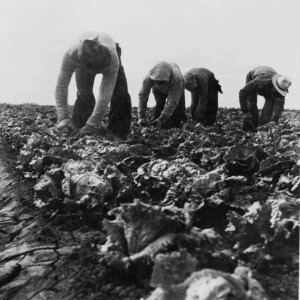
That was the day 7,000 white and Filipino lettuce workers in California’s Salinas Valley walked out on strike.
Salinas was the lettuce capital of the world.
The division of labor in the Valley was largely ethnically based.
Filipinos did much of the field labor, while whites worked in the packing sheds.
At the time, Filipinos made up 40% of the total agricultural workforce in the Salinas Valley.
They had founded the Filipino Labor Union a year earlier.
White packing shed workers had organized into the AFL’s Vegetable Packers Association.
While the VPA had been reluctant to work with the FLU, they now sought to join forces in strike action.
Both unions agreed neither would return to work until both had achieved victory.
Together, they demanded wage increases, union recognition and better working conditions.
Losing $100,000 a day, the growers soon imported scabs of all races.
They enlisted California Highway Patrols to arrest striking Filipinos on incitement and vagrancy charges.
Soon the VPA agreed to arbitration, leaving the FLU to continue the strike alone.
Some speculated the members were threatened with the loss of their charter if they refused to return to work.
The striking Filipino workers continued to organize job actions and experienced increased retaliation as a result.
VPA leaders publicly distanced themselves from the Filipino strikers and racially charged vigilante violence intensified.
It culminated in the burning down of the labor camp where hundreds of Filipino workers lived a month after the strike began.
Vigilantes then drove as many as 800 Filipinos from the Valley at gunpoint.
The strike was officially called off and those that remained returned to work.
By October, both unions had won wage increases.
Tuesday Aug 27, 2024
Tuesday Aug 27, 2024
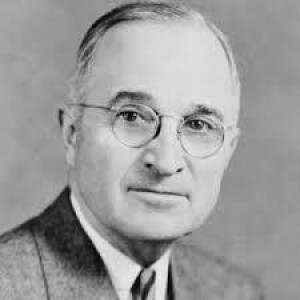
On this day in Labor History the year was 1950. At 4 pm that day the US Army completed its take-over of the country’s railroads.
They were acting on the orders of President Truman.
Monday Aug 26, 2024
Monday Aug 26, 2024
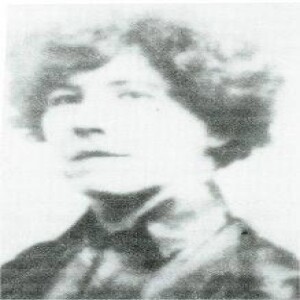
On this day in Labor History the year was 1919. That was the day that Fannie Sellins and Joseph Starzeleski were murdered while standing up for workers’ rights. Fannie was born in New Orleans, and then married a garment worker in St. Louis.
Sunday Aug 25, 2024
Sunday Aug 25, 2024
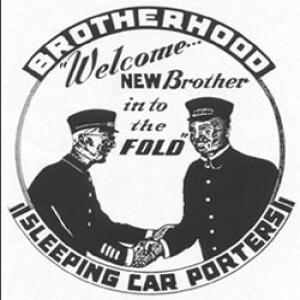
On this day in Labor History the year was 1925. 500 African American sleeping car porters gathered at the Elks Hall at 129th Street in Harlem. The meeting was called by A. Philip Randolph.
Sunday Aug 25, 2024
Sunday Aug 25, 2024
The year was 1877.
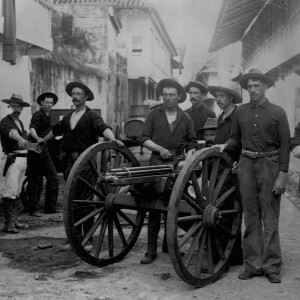
That summer during what came to be known as “The Great Upheaval,” police, the US Army, and the National Guard brutally crushed a national railroad strike. The simmering anger of working people had many elected officials and industrialists on edge.
Friday Aug 23, 2024
Friday Aug 23, 2024
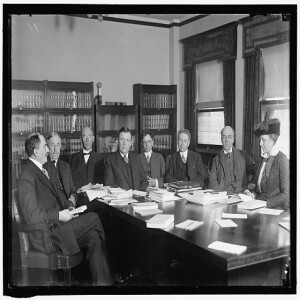
On this day in Labor History the year was 1912. That was the day the US Congress approved the formation of the Commission on Industrial Relations. In the early 1900s the terrible work conditions and entrenched resistance to union organizing had led to increasing labor unrest.
Friday Aug 23, 2024
Friday Aug 23, 2024
On this day in Labor History the year was 1945. That was the day five women working for United Airlines formed the first union for airline stewardess. Those women were Ada Brown, Frances Hall, Edith Lauterbach, Sally Thometz and Sally Watt.