
A daily, pocket-sized history of America's working people, brought to you by The Rick Smith Show team.
Episodes
Sunday Nov 17, 2024
Sunday Nov 17, 2024
On this day in labor history, the year was 1785.
That was the day the General Society of Mechanics and Tradesmen of the City of New York was founded.
Twenty-two skilled craftsmen, with the motto, “By Hammer and Hand All Arts Do Stand,” met on Pine Street to form a benevolent organization that could provide cultural, educational and social services to craftsmen and their families.
Two months later, founders met for their annual meeting.
They represented many of the city’s trades including hatters, butchers, sail makers, bolters and comb makers.
In his book, Chants Democratic, historian Sean Wilentz states, the General Society was “intended to be a semi-political umbrella organization for all of the city’s independent mechanics, to help oversee the trades and secure favorable legislation from local and national government. The group captured the ideal of mutuality and craft pride essential to artisan fraternities since the Middle Ages.”
The General Society opened one of the city’s first free schools at a time when there were no public schools.
It established a tuition-free Mechanics Institute, the General Society Library and Lecture Series.
The Mechanics Institute, founded in 1858, continues to provide free evening trades-related instruction.
The Library, established in 1820 is the second oldest library in New York City.
It is also one of the few remaining membership circulating libraries.
Its collections and archives span two centuries.
The General Society continues its tradition of public lectures in the form of The Labor, Literature and Landmarks Series.
More recently, it has added the Artisan Lecture Series that features lectures by master artisans.
The series also promotes the work and art of skilled craftsmen.
The General Society has been at its current location at 20 west 44th Street since 1885.
Saturday Nov 16, 2024
Saturday Nov 16, 2024
On this day in labor history, the year was 2006.
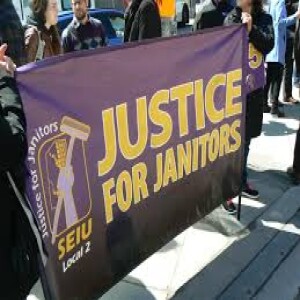
That was the day mounted police charged 50 janitors and their supporters during a protest in Houston.
SEIU’s Justice for Janitors campaign had been organizing for years throughout the South and Southwest.
Modeled on success achieved in California, SEIU broadened their campaign to Houston and Miami.
The union called a month long strike against the cities’ largest cleaning companies.
Protests and civil disobedience actions continued throughout the strike.
Hundreds of strikers routinely marched through the streets of Houston, beating drums and hauling bags of garbage into the middle of intersections to highlight the key services they provided to the city.
They were subject to repeated threats of firings and arrests.
When police charged at the janitors, it served to turn public support in favor of the strikers.
By the end of the month, Tom Balanoff and SEIU Local 1 in Chicago claimed victory for 5300 Houston janitors.
The Chicago local had been central to the three-year campaign in Houston.
Incomes doubled and janitors finally had health insurance, paid vacations and holidays.
The Chicago Tribune detailed the campaign in a November 25 article.
The union lobbied building owners and major corporations who held contracts with the cleaning companies.
The union worked to gain a foothold among the janitors, sending in seasoned Latino janitors from Chicago to help with organizing.
The SEIU also committed millions of dollars to the organizing drive, setting aside $1 million alone in strike funds.
At a victory rally, union leader Flor Aguilar proclaimed, “No one thought that a group of poor Latinos form Houston would be able to win anything, but today we can lift our heads up very high.”
Friday Nov 15, 2024
Friday Nov 15, 2024
On this day in labor history, the year was 2014.
That was the day four workers were killed and a fifth injured during a chemical leak at a DuPont insecticide plant near Houston.
The plant used methyl mercaptan in its production of insecticides.
24,000 pounds of the deadly chemical were released through two valves in a poorly ventilated building onsite.
The U.S. Chemical Safety Board found numerous flawed safety procedures, design problems and inadequate planning.
Days earlier, liquid methyl mercaptan had solidified in piping, causing a blockage.
Workers attempted to clear it by spraying the pipes with hot water.
They didn’t realize they had cleared the blockage, which then created high-pressure buildup of the chemical in other piping.
When two workers went to drain those pipes in a routine procedure, they were overcome by toxic vapor.
Another two workers answering the subsequent distress call were also killed.
DuPont blamed workers for the release of the toxic gas.
But the CSB found a number of violations.
The building where the release occurred had an inadequate toxic gas detection system, ventilation fans were not working and workers were not required to wear additional breathing protection for tasks they performed there.
Line-clearing procedures were faulty, routinely exposing workers to toxic fumes.
The Board also found that DuPont worked to conceal from environmental regulators, as many as four major releases of methyl mercaptan two days before workers were killed.
The CSB asserted that design flaws prompted months of clogs before the deadly incident.
More generally, they noted the design of the building that housed the pesticide unit inherently increased the threat of exposure to workers and the public.
DuPont opted to close the plant in 2016 rather than meet recommendations of federal regulators.

Thursday Nov 14, 2024
Thursday Nov 14, 2024
On this day in labor history, the year was 1978.
That was the day OSHA published its lead standard.
The standard reduced permissible exposure by 75% to protect nearly a million workers from damage to nervous, urinary and reproductive systems.
As early as 1908, Alice Hamilton, the mother of occupational medicine, noted that lead had endangered workers as far back as “the first half-century after Christ.”
In their book, Deceit and Denial: The Deadly Politics of Industrial Pollution, historians Gerald Markowitz and David Rosner add that “throughout her distinguished career, Hamilton was deeply involved in uncovering the relationship between lead and disease in the American workforce.”
Hamilton’s groundbreaking research on the effects of lead paved the way for a growing uproar against its continued use.
After the Occupational Safety and Health Act passed in 1970, occupational and public health activists pushed hard for a lead standard.
A new generation of industrial hygienists emphasized how unsound, industry-driven conclusions regarding “safe lead levels” impacted women workers and workers of color.
Industry had long asserted that women and African-Americans were simply more susceptible to lead poison, which served to justify discrimination in hiring.
Some unions accepted these terms, if only to demand a stringent lead standard that included immediate implementation of engineering controls.
But leading hygienists like Jeanne Stellman blasted these arguments.
Stellman insisted such conclusions reflected racial and gender bias rather than any credible scientific evidence.
She added that men, women and children, regardless of race or ethnicity, were all adversely affected by lead exposure.
The final standard adopted was considered a compromise.
Discrimination in hiring has continued and enforcement proves difficult.
But even a watered-down standard was too much for the lead industry.
They have been fighting it ever since.

Wednesday Nov 13, 2024
Wednesday Nov 13, 2024
On this day in labor history, the year was 1974.
That was the day Karen Silkwood was killed in a mysterious car crash.
Though her death was ruled a one car accident, some maintain she was forced off the road.
Silkwood was a union activist and representative for Local 5-283 of the Oil, Chemical and Atomic Workers.
She worked at Kerr McGee’s Cimarron plutonium plant in Crescent, Oklahoma, making plutonium pellets for nuclear reactor fuel rods.
Meryl Streep popularized her life in the 1983 film, Silkwood.
Karen’s union loyalty only grew after the company crushed a strike in 1972.
She was elected to the union bargaining committee just as the company moved to force a decertification election.
She also served as a union health and safety rep.
Silkwood found a number of apparent violations: routine contamination exposure, faulty respiratory equipment, falsified inspection records, and improper storage of radioactive material.
She met with OCAW leader, Tony Mazzocchi to highlight safety issues in a campaign to beat back decertification.
It worked.
Then Karen testified before the Atomic Energy Commission, worried about her own contamination.
It was clear her home was contaminated too.
She worked tirelessly to gather the documentation and the evidence, detailing the company’s life-threatening negligence.
And on this day, Karen Silkwood was headed to Oklahoma City to meet Mazzocchi’s assistant, Steve Wodka and a New York Times reporter to present evidence she collected.
She never made it.
Her car was found with rear end damage, near skid marks, in a ditch along Route 74.
While the company attempted to smear her as a drug addicted lesbian who deliberately contaminated herself, they would eventually settle with her family for nearly $1.4 million.
Karen Silkwood became a model and a hero for women workers and all those who fight for safe workplaces.
Tuesday Nov 12, 2024
Tuesday Nov 12, 2024
On this day in labor history, the year was 1954.
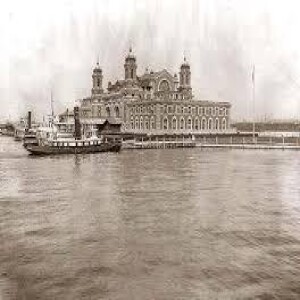
That was the day Ellis Island closed its doors.
More than 12 million immigrants had passed through its gates since its opening in 1892.
Those steerage and third-class passengers coming to America were processed at the island between 1892 and 1924.
They were routinely subject to medical inspections to determine they were free of disease.
Legal inspections included questions regarding birth, occupation, destination, finances and criminal record.
Its busiest year was 1907 with more than a million arriving to enter the United States.
During World War I, the Island was used as a detention center for presumed enemies and those considered foreign-born subversives.
After Congress passed the restrictive Immigration Act of 1924, arrivals entering the country slowed to a trickle.
Then Ellis Island became primarily a detention and deportation center.
During World War II, thousands of Germans, Italians and Japanese made up the majority of those detained, awaiting deportation.
It also served as a military hospital for returning servicemen and training center for the Coast Guard.
By 1950, Ellis Island served as a holding center for arriving Communists and Fascists, who were prevented entrance under the recently passed Internal Security Act.
A Norwegian seaman who had overstayed his leave was released the day the Island closed and told to catch the next ship back to Norway.
In 1965, President Johnson made Ellis Island part of the National Park Service.
A massive restoration of the Island began in 1984, organized by Lee Iacocca’s Statue of Liberty-Ellis Island Foundation.
It reopened as the Ellis Island Immigration Museum in 1990, featuring numerous exhibits, publicly accessible immigration records and the award-winning film documentary, “Island of Hope, Island of Tears.”
Monday Nov 11, 2024
Monday Nov 11, 2024
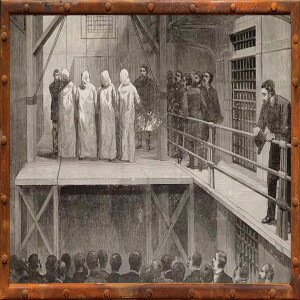
On this day in Labor History the year was 1887. That was a tragic day for the labor movement. Four men were hung in Chicago for their alleged role in the bombing at a labor rally at the city’s Haymarket Square a year earlier. In a sensational trial a total of eight men were convicted for Haymarket.
Sunday Nov 10, 2024
Sunday Nov 10, 2024
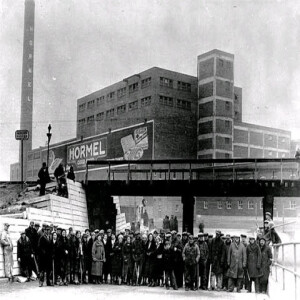
On this day in Labor History the year was 1933. That was the day that Hormel plant workers in Austin, Minnesota began a sit-down strike. Company head, Jay Hormel, boasted that his company was a benevolent dictatorship. Workers agreed that the company was a dictatorship but not very benevolent.
Saturday Nov 09, 2024
Saturday Nov 09, 2024
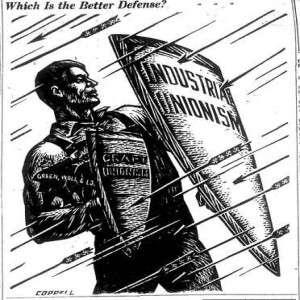
On this day in Labor History the year was 1935.The Committee for Industrial Organizations was created by eight unions, as part of the American Federation of Labor. United Mine Workers President John L. Lewis was the driving force behind this new committee
Friday Nov 08, 2024
Friday Nov 08, 2024
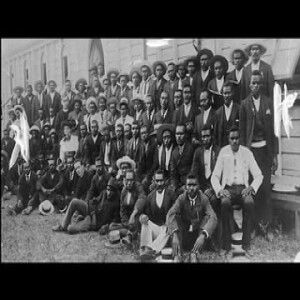
On this day in Labor History the year was 1892. That was the day that black and white workers in New Orleans began what is considered the first integrated general strike in United States history. The strike began when the New Orleans Board of Trade refused to enter into an agreement with the Teamsters Union because it included black members.