
A daily, pocket-sized history of America's working people, brought to you by The Rick Smith Show team.
Episodes

Wednesday Nov 27, 2024
Wednesday Nov 27, 2024
On this day in labor history, the year was 1936. That was the day 1200 production workers at Detroit’s Midland Steel sat-down for higher wages, an end to piecework and union recognition.
The strike was called just before noon. When 800 on the second shift arrived for work, they readily handed their lunches, cigarettes and newspapers through the windows to the sit-downers.
The UAW had embarked on a massive organizing drive throughout the country. Days earlier, the GM sit-down strike had begun in Atlanta, spread to Kansas City and would eventually reach Flint, Michigan. But the UAW was also organizing parts suppliers like Midland, who produced car body frames for the industry.
The UAW first used the tactic of the sit-down strike ten days earlier at the Bendix Products brake plant in South Bend, Indiana. There, workers had just organized with the UAW. They braved eight days in an unheated factory during winter, demanding the company union be dismantled.
At Midland, workers stayed in the plant, stating they would hold out till Christmas if they had to. Within a week, the Midland strike had idled 72,000 workers at Chrysler, Plymouth, Dodge, Desoto, Briggs and Ford’s Lincoln-Zephyr plants. Stakes were so high at Midland that strikers threw a suspected company spy out a second story plant window.
Just as Midland workers returned victorious to their job ten days later, thousands of others began sitting down at their jobs. Rubber workers in Akron, glass workers in Ottawa, Illinois, bus drivers in Flint, Kelsey Hayes brake workers and aluminum workers just two blocks from Midland were all sitting down for union recognition, wage increases and better working conditions. The massive strike wave had begun.

Tuesday Nov 26, 2024
Tuesday Nov 26, 2024
On this day in Labor History the year was 1867. That was the day that J.B. Sutherland of Detroit patented the first specialized refrigerated railroad car. Southerland’s design included ice tanks at both ends of the car and ventilation flaps on the floor, which used gravity to send a draft of cold air flowing throughout the car.

Monday Nov 25, 2024
Monday Nov 25, 2024
On this day in Labor History the year was 1946. That was the day that teachers in St. Paul, Minnesota went on strike. It was the first ever organized walkout of teachers in the United States. The strike was organized by the St. Paul Federation of Teachers Local 28.
Sunday Nov 24, 2024
Sunday Nov 24, 2024
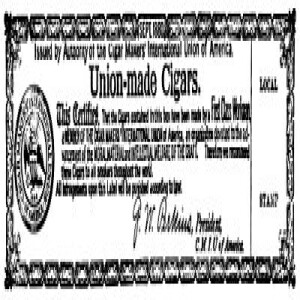
On this day in Labor History the year was 1875. That was the day that Samuel Gompers founded the Cigar Makers’ International Union Local 144 in New York City. The very first Cigar Marker’s Union local had been established in Baltimore in 1851 by craftsmen who opposed importation of lower-paid laborers from Germany.

Saturday Nov 23, 2024
Saturday Nov 23, 2024
On this day in labor history, we are going way, way, way back. The year was 1170 B.C. So the exact date is a bit of an estimate. Egyptian workers initiated what just might be the first recorded strike in world history. The workers were toiling on public works projects, including building tombs of the pharaohs, in the Valley of the Kings.

Friday Nov 22, 2024
Friday Nov 22, 2024
On this day in labor history, the year was 1919. That was the day four leaders of the Carpenters union were shot dead in Bogalusa, Louisiana.
The United Brotherhood of Carpenters and the International Union of Timber Workers had embarked on an organizing drive of white and black workers at Great Southern Lumber Company. Bogalusa functioned as a company town. Lumber bosses controlled company housing, local politicians and ruled the town with an iron fist.
By 1919, the two unions began organizing among loggers and sawmill workers in the region. The UBC initially organized among white skilled workers, while the IUTW organized among unskilled, mostly black workers. They soon stepped up efforts to organize jointly.
Historian Stephen Norwood notes that when Great Southern threatened to forcibly break up a union meeting among black workers, armed white union men arrived to defend the meeting. By September, 95% of the workforce was organized when the company instituted a lockout.
On November 21, a posse of local businessmen fired on the home of leading black organizer, Sol Dacus, who narrowly escaped. The following day, armed white union carpenter leaders, Stanley O’Rourke and J.P. Bouchillon escorted Dacus to the Central Trades and Labor Council offices. 150 special policemen were immediately dispatched. They began firing upon union headquarters, killing O’Rourke, Bouchillon and two other union leaders, Thomas Gaines and Lem Williams. Dacus was nearly lynched and escaped with his life to New Orleans.
Norwood concludes the gun battle “represents probably the most dramatic display of interracial labor solidarity in the Deep South during the first half of the twentieth century.” For historian William P. Jones, the anti-union violence and racial terror would culminate in 1923 with a massacre of the Florida lumber town of Rosewood.
Thursday Nov 21, 2024
Thursday Nov 21, 2024
On this day in labor history, the year was 1942.
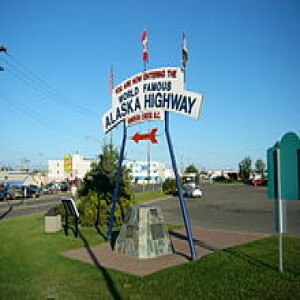
That was the day the completion of the Alaskan Highway or Alcan, was celebrated at Soldier’s Summit.
There had been proposals for a highway connecting the United States to Alaska since the early 1920s.
After the bombing of Pearl Harbor, President Franklin Roosevelt moved quickly to organize its approval and construction.
By March 1942, the U.S. Army Corps of Engineers broke ground on the $138 million project.
More than 10,000 troops were assigned to highway construction.
Over a third were comprised of newly formed black regiments.
Thousands of pieces of construction equipment were moved through the railroads, including steam shovels, blade graders, tractors, trucks, bulldozers, snowplows, cranes and generators.
In a matter of eight months, workers carved out 1700 miles of road between Dawson Creek, British Columbia, through the Yukon to Delta Junction in Alaska, under the most treacherous environmental conditions.
Workers arrived in wintery Dawson Creek, pitching their sleeping quarters in snowdrifts.
By spring , workers battled flooding rivers, equipment sinking into thick mud and fears of Japanese bombers.
By summer, mosquitoes, dubbed “bush bombers,” were so bad workers had to eat under netting.
Black workers also battled relentless racism.
The Army was still segregated.
Black troops faced racist presumptions about their capacity to carry out hard labor.
They were determined to break down stereotypes.
By fall, white and black bulldozer drivers coordinating the work together were celebrated in the pages of the Army’s Yank magazine, Time and the New York Times.
Some historians consider the integrated work crews a factor in President Truman’s later move to desegregate the armed forces.
According to The New York Times, the Federal Highway Administration calls the Alcan “the road to civil rights.”
Wednesday Nov 20, 2024
Wednesday Nov 20, 2024
On this day in labor history, the year was 1896.
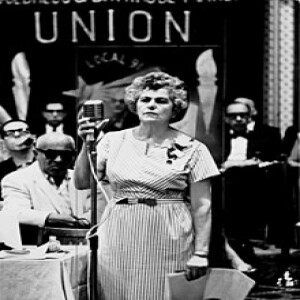
That was the day anarchist and labor activist Rose Pesotta was born.
Her name, Rakhel Peisoty, was changed, like so many others’, at Ellis Island.
She had fled tsarist Russia in 1913 as a teenager and soon found work in New York City’s garment shops.
She readily joined the ILGWU, becoming a national organizer by 1920.
In the late 1920s, Rose went to Los Angeles in an attempt to organize Latina sweatshop workers.
There she helped women workers establish a bilingual labor journal and assisted them in winning a key strike for recognition and higher wages in 1933.
She soon ascended to the position of union vice president and worked closely with the newly formed CIO.
Rose traveled far and wide to organize garment workers.
She led successful strikes throughout the United States and in Montreal and Puerto Rico.
By 1936, she was on the picket lines with striking rubber workers in Akron, Ohio and autoworkers in Flint, Michigan.
She increasingly found herself at odds with ILGWU head, David Dubinsky and other top male union officials over persistent sexism, her radical politics and her opposition to the no-strike pledge during World War II.
Rose resented the fact that though women comprised the overwhelming majority of the union’s membership, she continued to be the only woman union officer.
Frustrated by the chauvinism she experienced, Rose resigned from her post as vice president and later from the ILGWU executive board in 1944.
She continued as a sewing machine operator, remained active at the local level and published two memoirs.
Later in life, she aligned herself with the Civil Rights Movement.
Rose Pesotta died of cancer in 1965.
Tuesday Nov 19, 2024
Tuesday Nov 19, 2024
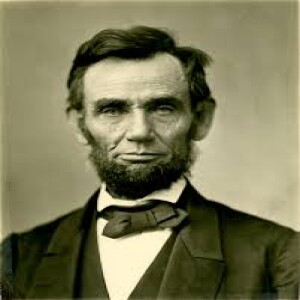
On this day in labor history, the year was 1863.
That was the day President Abraham Lincoln delivered the Gettysburg Address.
It is considered one of Lincoln’s greatest speeches.
Generations of students have been assigned to commit it to memory.
The two-minute speech carries a deep significance in our country’s history.
Lincoln delivered the speech at the dedication of the Soldiers National Cemetery in Gettysburg, Pennsylvania.
Four months earlier, the Union had defeated Confederate forces at the Battle of Gettysburg, the bloodiest battle of the Civil War.
Casualties on both sides totaled nearly 50,000 over the course of the three-day battle.
This battle, coupled with the fall of Vicksburg, is often considered a turning point in the war to end the slave labor system.
Lincoln’s speech served to redefine the war’s purpose.
Originally, the emphasis had been one of preserving the Union.
Now, Lincoln drew upon the Declaration of Independence to also highlight the national struggle for human equality.
Lincoln began his speech with the acknowledgment that the nation was “dedicated to the proposition that all men are created equal.”
He ended the Gettysburg Address stating, “this nation, under God, shall have a new birth of freedom—and that government of the people, by the people, for the people, shall not perish from the Earth.”
Most Republicans praised the speech.
But historian Eric Foner notes in his biography of Lincoln, that “many Democrats denounced Lincoln for unilaterally redefining the war’s purpose, which they insisted, had nothing to do with equality.”
In 2015, the Abraham Lincoln Presidential Library Foundation published an edited volume, Gettysburg Replies.
It features 272-word essays by presidents, historians, poets, actors, scientists and others about the lasting influence of the Gettysburg Address.
Monday Nov 18, 2024
Monday Nov 18, 2024
On this day in labor history, the year was 1993.
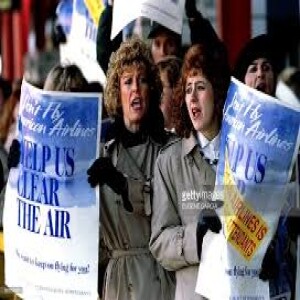
That was the day 21,000 attendants, mostly women, caught American Airlines by surprise in their first strike ever against the company.
80% of all fights were cancelled a week before Thanksgiving as solid picket lines formed at forty airports across the country.
CEO Robert Crandell, who commanded a $ million a year salary and preferred the nickname “fang,” was at a loss when flight attendants refused to be bullied by threats of scab replacements.
Hoping to smash seniority and scheduling rights, he cancelled all vacations for months.
Crandall’s claims to company losses could hardly be believed after the company reported third-quarter profits of $118 million.
Attendants were fed up with years of concessionary contracts that reduced their wages by as much as 40%.
One woman picketer summed up the company’s attitude: “We’re just a bunch of skirts.”
The strike was so popular that pilots and Teamsters often joined picketers.
In New York City, 200 members of Local 1199 hospital workers walked the picket line in solidarity.
Fed up machinists at United Airlines in Denver were so inspired, they staged a solidarity sickout the first day of the strike.
Four days later, President Clinton intervened to end the strike and force binding arbitration.
While many saw this as a victory, workers returned to their jobs under the same conditions that forced them to strike while they waited for arbitrators to render a decision.
Two years later, arbitrators finally rendered a decision.
They awarded American the right to reduce staffing on some flights.
But attendants would win a 17% wage increase and retain most work rules.