
A daily, pocket-sized history of America's working people, brought to you by The Rick Smith Show team.
Episodes
Monday Aug 15, 2016
Monday Aug 15, 2016
On this day in Labor History the year was 1989.
That was the day that Gerry Horgan was killed while walking the picket line.
Gerry was a chief steward for the Communication Workers of America Local 1103.
The Communication Workers were on strike against the telecommunications giant NYNEX company, which became part of the present day Verizon company.
At issue was management’s proposal to shift a greater share of the health care costs to the workers.
The strike wore on for a total of seventeen weeks.
In total, nearly 60,000 telephone workers in the Northeast participated in the walk out.
These included both CWA members as well as workers who were members of the International Brotherhood of Electrical Workers.
Gerry Horgan was part of the strike in the town of Valhalla,New York, about twenty-five miles north of New York City.
Gerry was struck by a vehicle driven by a strikebreaker while walking the picket line.
The driver was the daughter of one of the company managers.
She was never charged for hitting Gerry, although some at the scene claimed she accelerated after hitting him with her car.
One witness, Charles Pearce, recalled that “Gerry was rundown like a dog.”
The CWA honors Gerry’s memory by wearing red t-shirts.
In 2010, a CWA article titled “Why We Wear Red,” explained,“The idea started small, we asked our Members to wear red on Thursday to remind the company of the blood they had spilled and to show support for our fallen Brother. But it quickly spread nationwide as a sign of solidarity every Thursday at CWA locations.”
Gerry Horgan was killed standing up for the rights of workers and fighting for a better tomorrow for all workers.

Sunday Aug 14, 2016
Sunday Aug 14, 2016
On this day in Labor History the year was 1936.
That was the day that President Franklin Delano Roosevelt signed the Social Security Act into law.
The act was a key piece of the President’s “New Deal” a series of federal programs responding to the ravages of the Great Depression.
Social Security would provide an income for retirees and the disabled, to ensure they did no slide into complete destitution.
On signing the bill, President Roosevelt, known for delivering memorable speeches, addressed the press.
He said, “Today, the hope of many years’ standing in large part fulfilled. The civilization of the past hundred years, with its startling industrial changes, had tended more and more to make life insecure. Young people have come to wonder what will their lot when they come to old age. The man with a job has wondered how long that job will last. This Social Security measure gives at least some protection to 50 million of our citizens who will reap direct benefits through unemployment compensation, through old age pensions, and through increased services for the protection of children and the prevention of ill health.”
He went on to say, “The law will flatten out the peaks and valleys of deflation and inflation. It is, in short, a law that will care of human needs and at the same time provide the United States an economic structure of vastly greater soundness.”
Over the past few decades, politicians, have increasingly sounded the alarm that Social Security will not remain viable as the large baby boomer generation retires and draws benefits.
Yet despite those who seek to attack Social Security, it remains a bedrock of the social safety net for millions of Americans.

Saturday Aug 13, 2016
Saturday Aug 13, 2016
“Communists!” “Reds!” Long have these been the cries of the press and politicians seeking to undermine the labor movement in the United States.
But sometimes even labor leaders themselves got caught up in the anti-Communist hysteria.
On this day in Labor History the year was 1938.
President of the Metal Trades Department of the American Federation of Labor, John P. Frey, gave testimony before the Special Committee on Un-American Activities.
It was also known as the “Dies Committee.”
Texas Congressman Martin Dies, Jr. founded the effort to root out an alleged Communist threat in the U.S.
In his testimony Frey alleged three hundred leaders of the Congress of Industrial Organization were Communists.
At the time the AFL and CIO were two separate organizations.
The CIO had split off from the AFL to pursue more organizing in industries like auto making and steel.
Even after his testimony, Frey maintained a network of operatives in the labor movement to identify suspected communists.
A few days after Frey spoke before Congress, the Chicago Tribune ran a story explaining the perceived communist-labor threat.
The article declared, “If the communists in the United States continued to operate as the communist party they would have no influence on American foreign policy in the foreseeable future. But by making themselves leaders of labor and therefore powerful in Democratic counsels they can be of immediate value to the soviets.”
The paper warned that the communists were hoping to march the US into another European war.
War-weary after World War I, the public had little appetite for another major conflict.
The charge that the CIO was infiltrated by communists who wanted war took its toll on the radical labor organization, dividing workers by playing into the fears and hysteria of the era.

Friday Aug 12, 2016
Friday Aug 12, 2016
On this day in Labor History the year was 1919.
That was the day that the chorus girls of the Ziegfeld Follies formed a union.
They called their organization the Chorus Equity Association.
The Ziegfeld Follies were the hottest ticket on Broadway during the early 1900s.
The show was most famous for their chorus girls in elaborate costumes, bedecked with feathers and sparkles.
In 1919 performers on Broadway as well as Chicago were standing up for fairer wages and better treatment on the job.
The Actors Equity Association’s contract had expired, and the actors demanded a fair contract.
The producers banded together into the Producing Managers Association. Actors and producers faced off.
The actors held a meeting and decided not to go on stage unless the contract was settled.
Membership in the union swelled. Twelve shows in New York were cancelled.
When Florenz Ziegfeld, the head of the Ziegfeld Follies joined the producers’ group, the chorus girls took this a bad sign.
They decided it was time that they too joined the union movement.
A former chorus girl named Marie Dressler was elected the first union president.
The chorus girls joined the striking actors for a march down Broadway.
The Ziegfeld performers formally went on strike, and the curtain fell on the Follies.
Chicago theaters also went dark. In all, 37 productions are shut down in the two cities.
Finally, on September 7 the strike is settled and the Follies returned.
In 1955 Chorus Equity merged with the Actors Equity Association.

Thursday Aug 11, 2016
Thursday Aug 11, 2016
On this day in Labor History the year was 1894.
That was the day that federal troops pushed “Kelly’s Industrial Army” out of Washington D.C and across the Potomac River.
The “army” was a group of unemployed men who had come to the capitol to protest government inaction.
The country was in the grip of an economic depression.
The nation’s Agricultural regions in the South and Great Plains were also hit by a drought.
Times were hard for American workers and families.
The call had gone out across the nation for the unemployed to make their way to the doorstep of Congress.
The goal was to petition for public infrastructure projects to put people back to work.
Businessman Jacob Coxey had organized a march of the unemployed from Ohio.
Charles T. Kelly and his group came from California.
They rode the rails and made it to Des Moines, Iowa where they encamped.
After a while the local residents decided the unemployed group had outstayed their welcome.
The Iowans provided lumber so the Industrial Army could build flatboats and be on their way.
By the time Charles Kelly and his men made it to D.C., Coxey had already been sentenced to twenty days in jail for trespassing on the Capitol lawn.
Yet unemployed men from across the country kept coming into the nation’s capital.
1,200 men arrived from different points across the country.
One of those in Kelly’s group was a young Jack London.
The wrote of the experience, “Across the “wild and wooly West,” clear from California, General Kelly and his heroes captured trains; but they fell down when they crossed the Missouri and went up against the effete East.”
The marchers’
protests earned no help from the capitol.

Wednesday Aug 10, 2016
Wednesday Aug 10, 2016
On this day in Labor History the year was 1931.
That was the day that Air Line Pilots Association affiliated with the American Federation of Labor.
The need for pilots to organize became apparent as early as the mid-1920s.
The airline industry was new, and pilots often faced dangerous conditions.
They were often put under pressure to fly under adverse conditions, especially if they were tasked with delivering the mail.
As the Great Depression swept the country, pilots were asked to fly more and more hours for less money.
They organization of pilots started off small and in secret.
But soon it grew.
In 1930 the union got its unofficial start, holding its first convention the following year.
David Behncke was elected the first president.
Behncke had served as a flight instructor for the Army.
He then led the Behncke’s Flying Circus, performing airshows across the Midwest.
Then he went to work for a private airmail service.
As union president, Behncke established the organization’s headquarters in Chicago.
Over the years as plane technology has changed, the union has fought to ensure the continued safety of the pilots.
Pilot fatigue, as well as security concerns, especially after the terrorist attacks of 911, have also been important issues for the union.
Today the Air Line Pilots Association represents more than 50,000 pilots flying for 31 airlines in the United States and Canada.
Their mission statement begins with the commitment to “promote and champion all aspects of aviation safety throughout all segments of the aviation community.”

Tuesday Aug 09, 2016
Tuesday Aug 09, 2016
On this day in Labor History the year was 1979.
That was the day that young women workers at the YH Trading Company in Seoul, South Korea staged a sit-in.
The women made wigs for export.
The company had been one of the leading exporters in the nation.
But then the managers began to move the profits from the wig company to a shipping company under the same ownership, as well as to a film production company.
This drained the profits from the wig factory and left it in debt.
The owner shut down the company without warning, firing all of the employees.
These women did not only lose their jobs.
Water and electricity were turned off at the factory dormitories where they lived.
A union represented the young women.
The union planned a strike at the building, but the police were called in to break it up.
The workers decided move their protest to the local headquarters of the New Democratic Party.
The party was in opposition to the leader of Seoul, President Park Chung Hee.
The fired women were welcomed at the New Democratic Party office.
There they decided to stage a sit-in to bring attention to their situation.
The worker’s sit-in only lasted three days.
Then 1,000 police stormed the building.
They overturned furniture and broke windows.
They dragged the women out of the building violently.
One woman, 21-year old Kim Kyong-sook died in the raid
She fell from the roof of the building in a clash with the police.
Four of the union leaders were sent to prison.
More than two hundred of the workers were expelled out of Seoul, back home to rural areas.

Monday Aug 08, 2016
Monday Aug 08, 2016
On this day in Labor History the year was 1850.
That was the day that two tailors who were out on strike in New York City were killed in a confrontation with the police.
It is thought they were the first workers to die while participating in a strike in the United States.
They certainly would not be the last.
The United States has one of the bloodiest labor histories of any industrial nation.
It is estimated that at least 700 people have lost their lives to violence during a strike.
The vast majority of those slain were workers.
Some of the most-bloody conflicts included the Great Upheaval of 1877.
Across the country 100 workers lost their lives in an uprising of railway labor.
Then in the 1892 strike against Carnegie Steel in Homestead, Pennsylvania nine strikers and three Pinkerton agents died.
Two years later, thirty workers died across the country in a strike and boycott against the Pullman Palace Car Company.
One of the most infamous labor massacres occurred in Ludlow, Colorado in 1914.
During this coal mining strike gun thugs hired by the company rained machine gun bullets and fire down on a tent colony of the striking workers.
At least nineteen people were killed.
Eleven of them were children.
In 1937, ten workers died on Memorial Day at a demonstration against Republic Steel in Chicago.
These are just some of the battles, massacres and murders that shaped the American labor movement.
Too often the toll of this blood-shed is not taught in history classes.
Sunday Aug 07, 2016
Sunday Aug 07, 2016
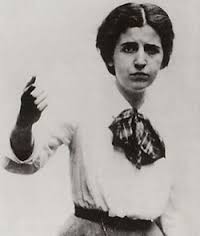
On this day in Labor History the year was 1890. That was the day that one of the heroines of the US labor movement, Elizabeth Gurley Flynn was born in Concord, New Hampshire. Elizabeth learned her progressive politics at a young age. Her father was a socialist and her mother was a feminist
Saturday Aug 06, 2016
Saturday Aug 06, 2016
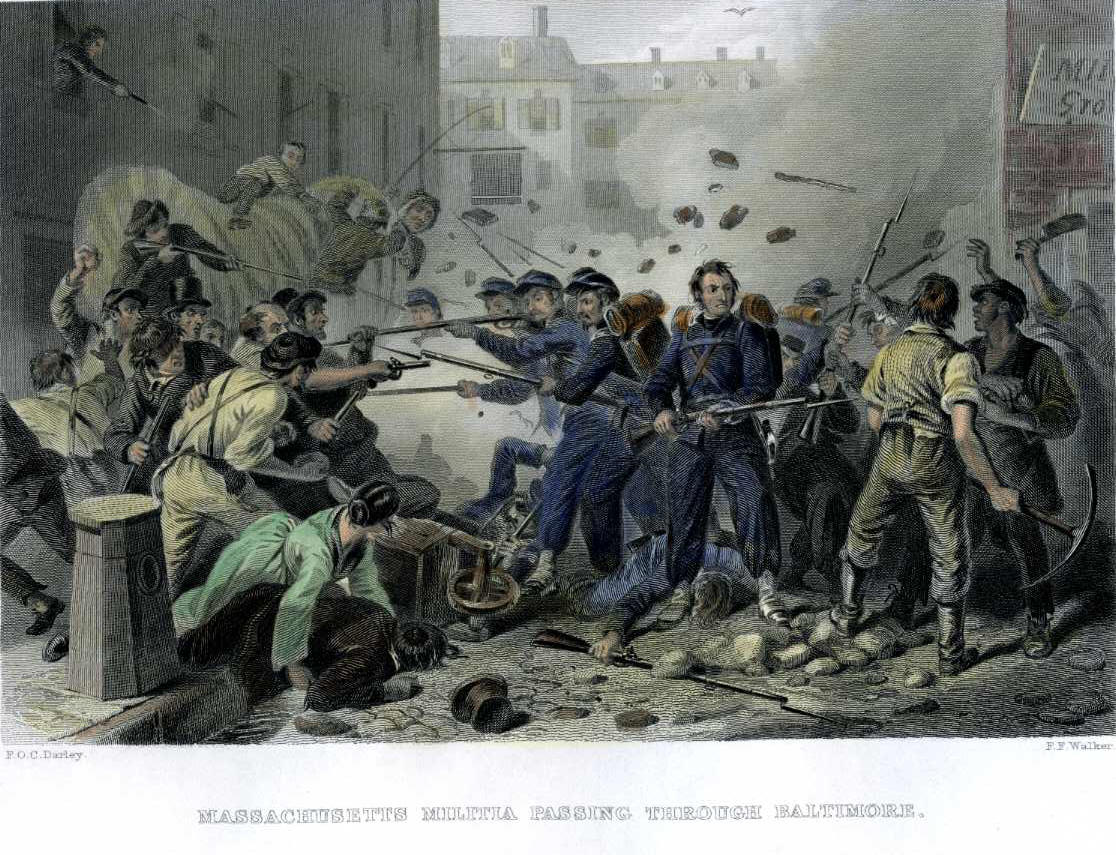
On this day in Labor History the year was 1835. That was the day that began the “Baltimore Bank Riot.” The Bank of Maryland had failed in 1834. Thousands of people who had deposited money in the bank saw their savings vanish. For nearly a year-and-a-half the depositors waited for their money to be returned. Anger grew.