
A daily, pocket-sized history of America's working people, brought to you by The Rick Smith Show team.
Episodes
Thursday Nov 04, 2021
Thursday Nov 04, 2021
On this day in Labor History the year was 1879.
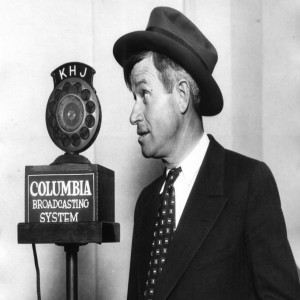
That was the day that Will Rogers was born in Oologah, Indian Territory, in what later became Oklahoma.
Rogers grew up on a ranch, and by 10th grade had dropped out of school to be a cowboy.
Skilled with a lasso, he became a cowboy entertainer first in vaudeville then in silent film.
Rogers also had a syndicated column and a radio show where he became a popular political commentator.
With quick wit and humor Rogers helped to shape public opinion.
He brought humor to serious issues in a way later echoed by the likes of John Stewart and Stephen Colbert.
Rogers often talked about the plight of the American worker.
In 1931 he was asked to give a radio address for President Herbert Hoover’s Organization on Unemployment.
Rogers expressed the urgency of the unemployment that was sweeping the nation during the Great Depression.
He said, “The only problem that confronts this country today is at least 7,000,000 people are out of work.
That’s our only problem. There is no other one before us at all. It's to see that every man that wants to is able to work, is allowed to find a place to go to work, and also to arrange some way of getting a more equal distribution of the wealth in country…So here we are in a country with more wheat and more corn and more money in the bank, more cotton, more everything in the world—there’s not a product that you can name that we haven't got more of it than any other country ever had on the face of the earth—and yet we’ve got people starving.”
Wednesday Nov 03, 2021
Wednesday Nov 03, 2021
On this day in Labor History the year was 1979.
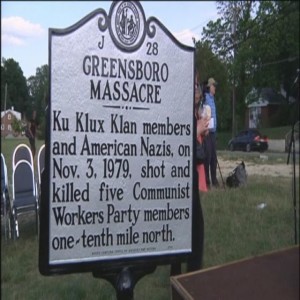
That was the day that became known as the Greensboro massacre.
Members of the Ku Klux Klan and American Nazi party shot and killed five participants in a demonstration held by the Workers Viewpoint Organization, later called the Communist Workers Party.
Workers Viewpoint organizers had come to Greensboro in an effort to strengthen the unions at the Cone Mills textile plants.
At the time, Cone Mills was the largest producer of denim in the world.
African American millworkers faced discrimination and dangerous conditions, including breathing in textile dust that was known to potentially cause brown lung disease.
Tensions between the communist organizers and the Ku Klux Klan began to mount.
Disagreements also arose between the communists and other union organizing efforts in Greensboro.
The Workers Viewpoint group decided to hold a “Smash the Klan” demonstration.
They coordinated the route of the march with the local police.
But on that fateful day no police were there to provide protection.
In broad daylight cars filled with Klansmen and Nazi members drove up and opened fire on the demonstrators.
Five people fell dead.
A criminal trial was held in 1980, and a federal Civil Rights trial took place in 1984.
Both times the defendants were acquitted by all-white juries.
In 2004, Greensboro began a “Truth and Reconciliation Commission” to address their community history.
The second chapter of the final report, recounts how Milano Caudle, the Nazi who owned one of the vehicles driven that day, later bragged in an interview “that the Klan “destroyed the damn union” with its actions against the marchers.”
After the tragedy, there was a strong backlash in the press against the communist organizers.
Tuesday Nov 02, 2021
Tuesday Nov 02, 2021
On this day in Labor History the year was 1955.
That was the day that the song “Sixteen Tons” first made an appearance on the Billboard country music chart.
It would reach the top spot and stay there for ten weeks.
Sixteen Tons told the story of the hard lives faced by coal miners.
The song talks about falling into debt at the “company store” a reality faced by many coal mining families.
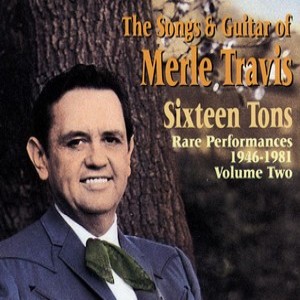
The song had first been recorded by Merle Travis in the mid 1940s.
The song borrowed lyrics from things that Merle heard from his father, who was a coal miner.
Merle Travis sung the songs of working people.
He was labeled a Red and Communist, and during that era many stations would not play his music.
Sixteen Tons was recorded again by “Tennessee” Ernest Jennings Ford in 1955.
“Tennessee” Ernie’s grandfather and uncle had both worked in the mines.
Tennessee began to perform Sixteen Tons to enthusiastic crowds.
He then recorded it as a B side to his single “You Don’t Have to Be a Baby to Cry” for Capitol Records.
But the B side recording became the hit.
The song was so popular, it jumped off the country charts, and took the pop music number one spot for eight weeks and became a Gold Record.
Since then Sixteen Tons has been covered by a variety of artists from Johnny Cash to Tom Jones and Tom Morrello to ZZ Top and has become a true labor standard.

Monday Nov 01, 2021
Monday Nov 01, 2021
On this day in Labor History the year was 1918.
That was the day that bringing in a scab driver to run an elevated train in Brooklyn, New York ended in tragedy.
Members of the Brotherhood of Locomotive Engineers were out on strike against the Brooklyn Rapid Transit Co..
The company had fired several union members for wearing union pins.
To keep the trains moving, the company hired replacements and put them to work with little preparation.
Edward Luciano received far less than the 60 hours of training that operators typically received before he made his fateful run.
The next day the New York Times reported on the deadly results.
A Brighton Beach Train of the Brooklyn Rapid Transit Company, made up five wooden cars of the oldest type in use, which was speeding with a rush hour crowd to make up lost time on its way from Park Row to Coney Island, jumped the track shortly before 7 o-clock last evening on a sharp curve approaching the tunnel at Malbone Street, in Brooklyn, and plunged into a concrete partition between the north and south bound tracks.”
At least 93 people died.
Some estimates were more than 100 were killed.
The operator and several company officials were put on trial for manslaughter.
No one was found guilty.
The company did however pay out damages to some families.
Negotiations between the company and the union would continue until 1920.
The union eventually won most its demands.
In the years after the crash new safety measures were implemented for elevated trains to help guard against human error.

Sunday Oct 31, 2021
Sunday Oct 31, 2021
On this day in Labor History ghosts and goblins are going door to door to gather up candy. But did you know that some of that candy is made by union workers?
In Hershey, Pennsylvania, tagged the Sweetest place on earth you’ll find the nation’s chocolate center.
It wasn’t always so sweet for workers who in 1937 tried to win union recognition.
Then the company laid off some of the union organizers, and claimed it was due to seasonal cutbacks.
Outraged, 600 workers began a sit-down strike in the plant.
Local dairy farmers relied on Hershey to purchase their milk.
They grew increasingly angry at the strikers.
They joined with workers not participating in the strike, and other community members.
The angry mob stormed the plant to oust the strikers.
Twenty-five strikers were severely beaten and the sit-in strike ended.
But the next year, the Hershey workers tried again to form a union.
This time they affiliated with the Bakery and Confectionery Workers' International Union of America and established Local 464.
They are not the only union members who help make Halloween sweet.
Today the Bakery, Confectionary, Tobacco and Grain Millers Union Local 1 in Chicago, Illinois makes tootsie rolls.
If your candy of choice is Clark Bars or Thin Mints, you might want to thank a member of Local 348 in Cambridge Massachusetts.
And Local 125 makes Ghirardelli Chocolate in San Francisco.
Unfortunately things are not always so sweet. In September of 2016, 400 union workers at the Just Born candy factory in Bethlehem, Pennsylvania went out on strike. The company decided to change their pensions to 401ks for new hires and reduce health care contributions.
They make such iconic candies as Peeps, Mike & Ike’s, and Hot Tamales.
One strike slogan rang out “no pensions, no peeps!”

Saturday Oct 30, 2021
Saturday Oct 30, 2021
On this day in Labor History the year was 1929.
On that Wednesday morning, people across the United States woke up to newspaper headlines informing them that something had gone horribly wrong on Wall Street the day before.
Black Tuesday, as the day came to be known had capped off a devastating drop in the market that had begun with the Great Crash the prior Thursday.
Twenty-five billion dollars was lost in the crash, which would be about three hundred billion in today’s money.
The crash helped spark the Great Depression that saw unemployment soared to twenty-five percent and nearly half of the banks in the United States fail.
But the day after the crash, the news reports were not all doom and gloom.
While Variety declared in big, bold letters “Wall St. Lays an Egg” others headlines struck a different tone.
The New York Times’ wordy headline stated “Stocks collapse in 16,410,030-Share Day; But rally at close cheers brokers; bankers optimistic to continue aid.”
The Chicago Tribune went with the more concise “Stock Slump Ends in Rally.”
Newspaper reporters attempted to explain the crash.
The Denver Post blamed the downturn on “gamblers,” the Philadelphia Evening Ledger blamed “the propagandists of gloom and economic terror” and the New York Times blamed “the reckless Wall Street speculators.”
But many papers also attempted to quell panic over the badnews from New York.
The Kansas City Star assured readers “once the adjustment is completed, the country will move forward to newlevels of prosperity.”
The Nashville Banner similarly predicted “The reaction had to come, and the country will be betteroff for the lesson it has had, costly though it be.”
That costly lesson became a devastating global depression.

Friday Oct 29, 2021
Friday Oct 29, 2021
On this day in Labor History the year was 1975.
That was the day that the National Organization for Women, or NOW, called for a strike by women across the nation.
They called the action, “Alice Doesn’t Day.”
This referred to a critically acclaimed movie by director Martin Scorsese that came out the year before, entitled “Alice Doesn’t Live Here Anymore.”
The main character in the film is Alice Hyatte, who pursues her dream of being a singer after she is widowed.
It was lauded by feminists as a story of women’s empowerment.
NOW used the film title, and asked women to participate with the slogan “Alice doesn’t...you fill in the blank.”
Women were encouraged to participate in the day however they could, including refraining from volunteering, shopping, and if possible working for one day to demonstrate their importance to the economy.
Women who could not skip work, were asked to wear arm bands to show their solidarity with the cause.
In an interview published in the Chicago Tribune, NOW President Karen DeCrow explained, “There is a myth that women in the work force could go home, but if they did our economy would stop. If all the secretaries did not come to work, all things would stop.”
But not all women were excited about the day.
Some anti-feminist women decided to protest the day by wearing pink, baking cookies and performing other stereotypical female tasks.
While NOW called the event a success, Time magazine deemed it “spectacular failure.”
One critique was that the event reflected the white, middle class dominance of the women’s movement.
Working class women, and especially women of color, had a much more difficult time withholding their labor.

Thursday Oct 28, 2021
Thursday Oct 28, 2021
On this day in Labor History the year was 1861.
That was the day that the Pony Express made its last run and passed into legend.
The mail delivery service had lasted only a year-and-a-half, until it folded under competition from the newly completed transcontinental telegraph.
The idea for a faster western mail delivery service came from the owners of the wagon freight company Russel, Majors and Waddell.
At the time the railroad terminated in St. Joseph, Missouri.
The goal of the Pony Express Route was to cover the 2,000-mile route from St. Joe to San Francisco in ten days—half the time of competitors.
Riders would travel between one station and another station on horseback, switching horses as they went.
For this arduous job, the company targeted young men, sometimes in their teens.
The goal was to hire small men to keep the weight low for the horses.
The riders had to sign a pledge not to drink, gamble, fight or swear.
To back up the clean living, they were each issued a bible.
Riders were paid a minimum of $50 per month, in addition to room and board.
The riders faced many hazards from bad weather to thieves.
They often traveled across lands in dispute between the U.S. government and Native Americans, adding potential danger.
The fastest Express delivery ever was Lincoln’s Inaugural address, which made it to California in under eight days.
Perhaps the most famous person who claimed to be a pony express rider, was Buffalo Bill Cody, although it is unlikely he ever carried the mail.
He incorporated the pony express into his Wild West Show, turning the mail service into the stuff of legend.
Wednesday Oct 27, 2021
Wednesday Oct 27, 2021
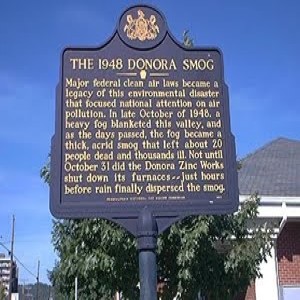
On this day in Labor History the year was 1948.
That was the day that a thick yellow fog rolled over the town of Donora, Pennsylvania just south of Pittsburgh.
Donora was a mill town, nestled in a valley on the bank of the Monongahela River.
By 1948, the town had grown to 14,000 people, who came to work in the town’s steel mills and the Donora Zinc Works.
For years the local residents had complained about the pollution that spilled from the plants.
Smog was a regular occurrence.
But this fog was even worse than usual.
A layer of cold air was trapping a noxious blend of nitrogen dioxide, sulfuric acid and fluoride pollution.
Twenty-four hours passed, and still the fog grew denser.
The police and local doctors began to receive reports of people having difficulties breathing.
The fog became so thick that residents could not see to drive.
For five days the smog hung over the town, until a rain fall began to break it up.
Nearly half of the towns’ residents became ill.
Twenty died.
U.S. Steel refused to take blame for the fog, even though they continued to run the plant as the deadly toxins continued to build.
According to a 2010 article by the Pittsburgh Post-Gazette, “Despite the efforts of industry to cast the tragedy as an “act of God,” the fatalities in Donora received national attention. The event changed the way air pollution was viewed, moving it rapidly from an aesthetic issue to a public health concern, and spurred local, state and federal officials to control toxic air pollution.”
In 2008 a Smog Museum opened with the motto “Clean Air Started Here.”
Tuesday Oct 26, 2021
Tuesday Oct 26, 2021
On this day in Labor History the year was 1837.
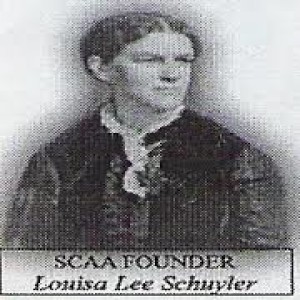
That was the day that Louisa Lee Schuyler was born in New York City.
She was dedicated to the causes of public health and welfare, especially for the poor.
This led her to help found the Bellevue Training School for Nurses in 1873.
It was the first nurse’s school in the United States based on the principals of Florence Nightingale, the English social reformer who established modern nursing practices.
Louisa had become concerned with the conditions found at the city’s public hospitals.
Along with three other women, she toured Bellevue hospital finding poor lighting, dire sanitary conditions, and even a laundry that had run out of soap.
The women wrote up a report about their findings.
They made the case that a professionally trained nursing staff would help remedy the situation.
The work of women during the Civil War had shown the potentially important role of nurses in providing medical care.
The women’s request was approved on a trial basis at Bellevue.
Bellevue hospital had opened its doors in 1736, making it the oldest continually running public hospital in the United States.
The first class of nursing students included just six women.
Early training focused on improving sanitary conditions at the hospital and seeing to patient comfort.
But instruction grew quickly to include basic medical training.
By 1879 enrollment had grown to more than sixty trainees.
Proud of their accomplishments, graduates wore a school pin.
Designed by Tiffany & Company, the pin portrayed a crane in the middle of a wreath of poppies.
The school operated for nearly a century, until the training program was incorporated into Hunter College.